




Beyond utility-scale: GCL targets off-grid growth with EcoPower Mate
Across many regions of the world, energy access is still heavily dependent on diesel generation, particularly in remote industrial sites, mining operations, and off-grid facilities. While reliable and widely available, diesel-based power comes with increasing economic and environmental pressures, from volatile fuel prices to tightening decarbonisation targets. At the same time, the rapid cost decline and maturity of solar PV, battery storage, and hybrid systems is reshaping how distributed energy solutions are designed and deployed.
Within this evolving landscape, GCL System Integration is positioning itself beyond its traditional role as a solar component manufacturer, expanding into integrated and flexible energy solutions. One of the latest examples of this strategy is EcoPower Mate, a prefabricated, modular and relocatable solar-based power system designed for fast deployment in off-grid and challenging environments.
To better understand how EcoPower Mate fits into GCL’s global energy strategy, its competitive positioning in the hybrid microgrid market, and the technical and commercial logic behind its design, Review Energy spoke with three representatives from the company: Yang Yuan, System Director; Jin Xiang Lan, Investment & Finance Manager; and Gerbert van der Weijde, Senior Director BESS Europe.
In this Q&A, they explore the system’s role in replacing or hybridising diesel generation, the importance of plug-and-play deployment, the financial models supporting adoption, and the markets where GCL sees the strongest near-term potential for this type of solution.
Review Energy (R.E.): GCL has a long track record in the solar value chain. How does EcoPower Mate fit into its global energy strategy?
Yuan: In many regions in the world, energy users today still rely on diesel generators rather than utility grids for their power supply. Although these diesel generators are reliable, technically mature and easy to operate, their customers face some important disadvantages:
- Cost: Many countries are not oil producers and depend on imported oil, resulting in high and volatile fuel costs for diesel generated power. Especially in remote areas, transporting the oil to site increases the cost even further.
- Emissions: With carbon neutrality and environmental protection becoming the global consensus amongst political and industry leaders, customers are looking for cleaner alternatives to supply their energy.
With our ground- and roof-mounted PV modules, we have already helped many of our global customers mitigate these problems. However, this is not always feasible:
- Harsh on-site conditions: If our customers projects are in remote environments with, for example, extreme heat or desert environments, prolonged on-site construction and commissioning activities are not desirable and expensive. A PV system that is already prefabricated in the factory reduces the time on-site significantly.
- Project life time: Often PV power plants are required for periods much shorter than the typical lifetime of 20 years. A relocatable solution gives the flexibility to transport the system to a new site and recommission it there once the need for energy on a particular site is over, without high construction, commissioning and decommissioning costs.
EcoPower Mate is our prefabricated, relocatable PV power plant that serves those customers for whom ground- or roof-mounted PV installations are not feasible. And thus it forms an important part of our product portfolio.
Lan: In addition, EcoPower Mate is a cornerstone of GCL System Integration’s global strategy, as we transition from mainly being a component manufacturer to becoming a provider of integrated, high-value energy solutions to our customers. And with solutions, we do not only speak about technical solutions: we also offer financing solutions that reduce the investment challenges that our customers face.
EcoPower Mate is a vital "physical entry point" to those markets and customers that Yuan already mentioned. The flexibility to relocate these mobile light-weight units when necessary, eliminates the concerns for a fixed asset becoming obsolete. Combining this with an attractive levelized cost of electricity (LCOE) and with our "Sales + Financial Leasing" financing model, EcoPower Mate is not about just selling hardware: we are deploying flexible and bankable energy solutions.
R.E.: The off-grid hybrid solutions market is growing rapidly. What makes GCL’s offering competitive compared to other international players?
Yuan: For industrial or commercial facilities that cannot connect to a robust public utility grid, affordable electricity has always been a challenge. As a result, they must rely on diesel generators. And while these units are highly reliable, their emissions and power production costs are typically higher than those of large power plants.
A reliable, cleaner and more affordable approach is to use a so-called hybrid microgrid: a combination of cost-effective renewable energy sources, such as PV, with battery energy storage systems and traditional diesel or gas-fired generation. The “brain” of the hybrid microgrid is the energy management system (“EMS”). The EMS can intelligently analyze diesel engines, loads, and photovoltaic power to achieve stable energy control and optimize the allocation of energy sources, thereby maximizing cost efficiency and energy cleanliness. By integrating energy flow monitoring and analysis, the system can ultimately achieve functions such as unattended operation, safety monitoring, real-time alarms, and automatic response, ensuring an integrated approach that ranges from guaranteeing a secure energy supply to ensuring safe production and operations.
However, integrating all those different building blocks into a working system requires a lot of know-how and experience. We have expertise in advanced energy and materials, large-scale manufacturing capabilities, energy system integration capabilities, and global deployment capabilities. Also, we own and operate our own power plants (multiple GWs), and support our customers in doing so. Using all this expertise, we can provide customers with solutions that don’t only promise a reliable and affordable energy supply, but that also actually work.
And for those customers where ground- or roof-mounted PV is not a feasible option, EcoPower Mate is the core of these solutions.
R.E.: Why is GCL focusing on mobile and modular solutions at this time, rather than concentrating solely on large-scale projects?
Lan: Large-scale, grid connected PV projects have been and will remain a foundational pillar for GCL. However, we have observed a significant and growing demand for solutions in off-grid application scenarios and are committed to providing all of our global customers with affordable and sustainable energy solutions.
EcoPower Mate is mobile, modular and truly plug-and-play. This approach enables us to quickly support those customers, for example in industrial, mining, or off-grid areas. And I will spare you the details, but standardized, modular equipment is exceptionally well-suited for those financial leasing structrues I mentioned before.
R.E.: One of the key points is the plug & play concept. What are the actual deployment times being achieved in the field?
Yuan: With a traditional solar power plant, the construction timeline is measured in months; now, the installation and construction with EcoPower Mate are measured in days—in fact, the installation of a single EcoPower Mate container unit can be completed in just a few hours. We could say that the EcoPower Mate solution is more than 10 times faster to deploy than traditional solar power plants.
However, it’s not just about speed. With EcoPower Mate, we move some of the work that would typically be done on-site to the factory, where work is standardized and where the products can be tested before shipment. This results in higher and more consistent quality and reliability.
R.E.: To what extent does EcoPower Mate address an already established market demand versus representing a technological bet anticipating future needs?
Yuan: Globally speaking, market demands have evolved from simply addressing power supply issues to requiring a stable and reliable power supply, then to reducing power costs, and finally to transitioning to clean energy, with the ultimate goal of achieving both cost-effectiveness and optimal energy cleanliness.
At GCL, we are committed to delivering valuable solutions tailored to our clients' diverse needs. At the same time, we are keeping pace with the evolution of the energy sector—specifically, the global shift towards new power systems with increasing renewable penetration and the widespread optimization of clean energy. We aim to contribute meaningfully to this transition.
Gerbert: Indeed, I agree with Yuan. In addition, PV and BESS have matured and costs have decreased significantly over the years. Where initially those technologies were technically and economically most feasible for fixed installation, currently relocatable solutions can be feasible as well in situations where fixed installation is not possible. And that we are working on concrete projects with large industrial players that require those solutions only confirms this.
R.E.: Which key performance indicators (KPIs) do you use to evaluate system performance in real operational conditions?
Yuan:
- Delivery & installation speed: The speed of on-site installation and delivery of EcoPower Mate, saving customers time and on-site construction costs
- Low maintenance: As opposed to diesel generators, EcoPower Mate requires virtually no maintenance, apart from panel cleaning.
- Attractive LCOE: for specific projects, we can support the customer determining the LCOE of EcoPower Mate, e.g. by providing reliable energy output figures or technical input required for assessment of total project cost, as basis for the development of a bankable project.
R.E.: The range includes different configurations such as WG20-A, RG20-A, and RG20-M. What are the main technical differences, and which applications are best suited for each?
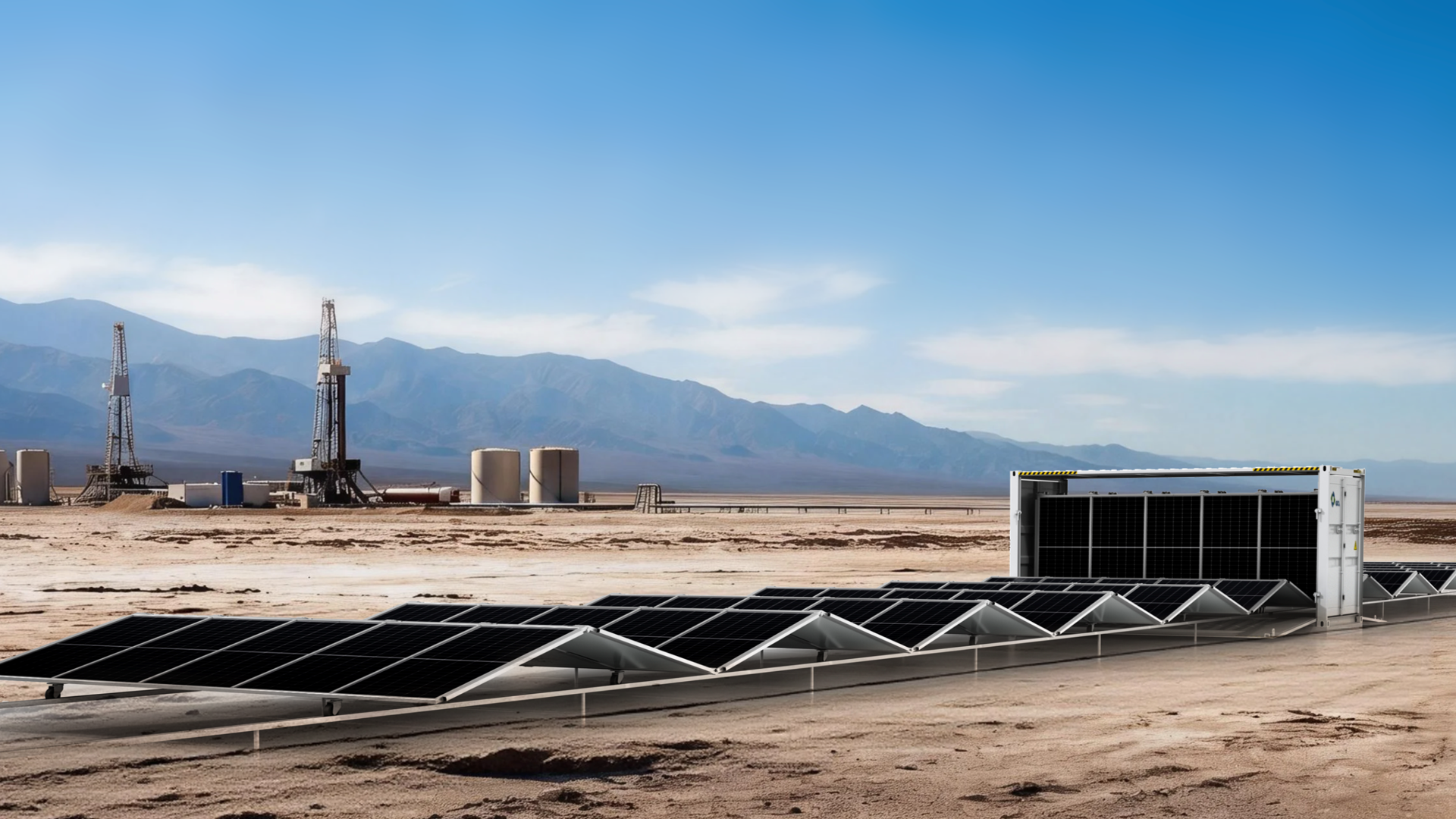
Yuan: EcoPower Mate is a prefabricated solar array solution with factory-fitted modules, mounting structures, and DC string cables. It requires fewer installation hours on site and less land than a conventional PV plant and is easy for relocation. BESS and inverters can optionally be included as well, in discussion with project partners. The primary technical differences between these models lie in whether they require automated deployment and retraction capabilities, as well as their differing requirements for site ground level.
- The WG20-A is the wheeled automated container version, primarily designed for rapid installation. It allows for the automated deployment or retraction of solar modules into the container at any time, offering the highest level of flexibility. It is ideal for scenarios where installation speed and the frequent deployment and retraction of solar modules are critical.
- The RG20-A is the rail-mounted automated container, suitable for sites with uneven terrain where automation is desired.
- The RG20-M is a Rail-Mounted Manual Container, suitable for sites with uneven terrain where cost-effectiveness is a priority.
R.E.: In scenarios where diesel has been the dominant solution, what level of replacement are you actually achieving in the field?
Yuan: In most cases, the optimal solution is not to replace stand-alone diesel generators with stand-alone solar power, but to create a microgrid combining solar power, energy storage, and diesel generators. This approach ensures a stable, efficient, and clean power supply. The diesel generator transitions from being the sole power source to serving as a backup power source for the entire microgrid system, operating only during a small portion of the year to reduce the solar-storage system’s reliance on weather conditions.
Gerbert: The exact degree of replacement of fossil energy by solar energy will differ from project to project, as the location of installation determines the generation profile and as the customer’s load profile and flexibility in this profile are never identical. We are happy to support interested customers in making this assessment for their projects.
R.E.: How does the system perform in particularly challenging environments, such as deserts, tropical zones, or regions with high humidity?
Yuan: Over the past few decades, PV modules and systems have been deployed across a wide range of harsh environments worldwide, from deserts and tropical zones to areas of high humidity. Built to withstand these conditions, GCL's PV solutions utilize components rigorously tested in accordance with IEC standards. Moreover, the EcoPower Mate system is designed with a key protective feature: its modules can be fully retracted into the container during severe weather, effectively preventing damage.
R.E.: From a global perspective, which markets are considered a priority for deploying these types of solutions, and why?
Lan: We are prioritizing three key market segments where we see that EcoPower Mate can deliver maximum impact:
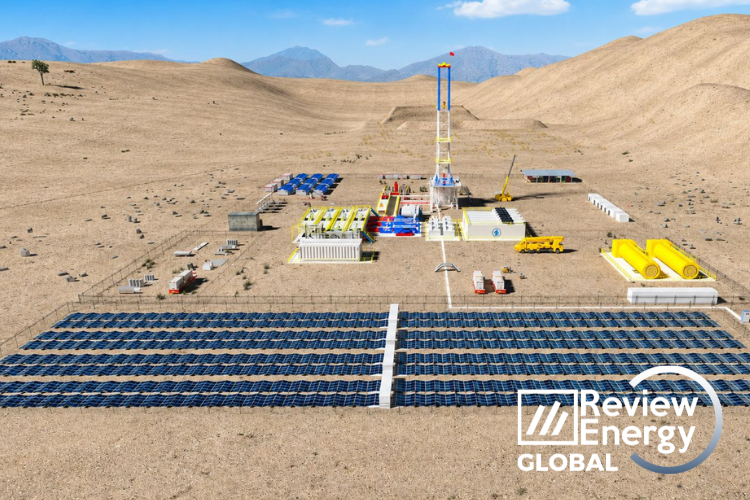
- Middle East: In the Middle East, we are specifically targeting oil and gas sites in desert regions, where rugged, off-grid reliable power is critical for continuous operations. Here we are also deploying the first EcoPower Mates.
- Africa: In Africa we are actively partnering with other companies, aiming at developing microgrids in mining regions, as well as upgrading existing gas stations with charging points for electric vehicles, as a true "PV + Storage + Charging" asset operator.
- Europe: In Europe, the grid is reaching its physical limits, with the degree of renewable energy penetration and parallel electrification within industry and households. Therefore, in Europe we’ll be focusing on commercial peak-shaving applications.
Yuan: In fact, EcoPower Mate was developed specifically keeping in minds the needs of customers in these regions. For example, in desert environments where temperatures are extremely high, customers may want to use solar power plants but believe that long-term construction on-site would be difficult. Or, in the case of a mining project, a customer might want to use a solar power plant but, given that the specific mine has maybe 5-10 years of remaining operational life, would prefer that the solar power plant be relocatable once mining operations move to other areas.
Gerbert: Yuan’s example is a good one, also highlighting the many mining sites in Latin America. I have the feeling that our partners and customers there will be quite excited about this product as well, so I hope we can launch first projects in LATAM soon.

Comentarios
Sé el primero en comentar...