





California sees shift in electricity mix: solar up, natural gas down
Although natural gas still provides more electricity than any other source in California, its generation has declined over the past several years, while solar output has steadily increased, according to the U.S. Energy Information Administration (EIA).
Data from EIA’s Electric Power Monthly show that California generated 140.9 billion kilowatthours (BkWh) of electricity from January through August 2025, up 8% from the same period in 2020. The growth in generation has been largely driven by solar power. Utility-scale solar plants produced 40.3 BkWh in the first eight months of 2025, nearly double the 22.0 BkWh generated during the same months in 2020. Compared with January–August 2024, solar output rose 17%, or 5.9 BkWh.

During the same period in 2025, natural gas supplied 45.5 BkWh of electricity, an 18% decline from 2020 levels. While natural gas output temporarily increased in 2021 due to reduced hydroelectric generation during drought conditions, it has fallen steadily since. The largest year-over-year drop occurred this year, with a 9.5 BkWh, or 17%, decrease compared with 2024.
In low-water years, natural gas use can spike. For example, hydroelectric output fell to 10.3 BkWh in the first eight months of 2021, causing natural gas generation to rise to 63.5 BkWh.
Natural gas generation typically decreases during midday hours when solar production peaks. Between noon and 5:00 p.m. in May and June, solar generation rose from 10.2 gigawatts (GW) in 2020 to 18.8 GW in 2025, according to the California Independent System Operator (CAISO). CAISO updated its methodology for reporting natural gas in December 2023, meaning data prior to that date are not directly comparable.
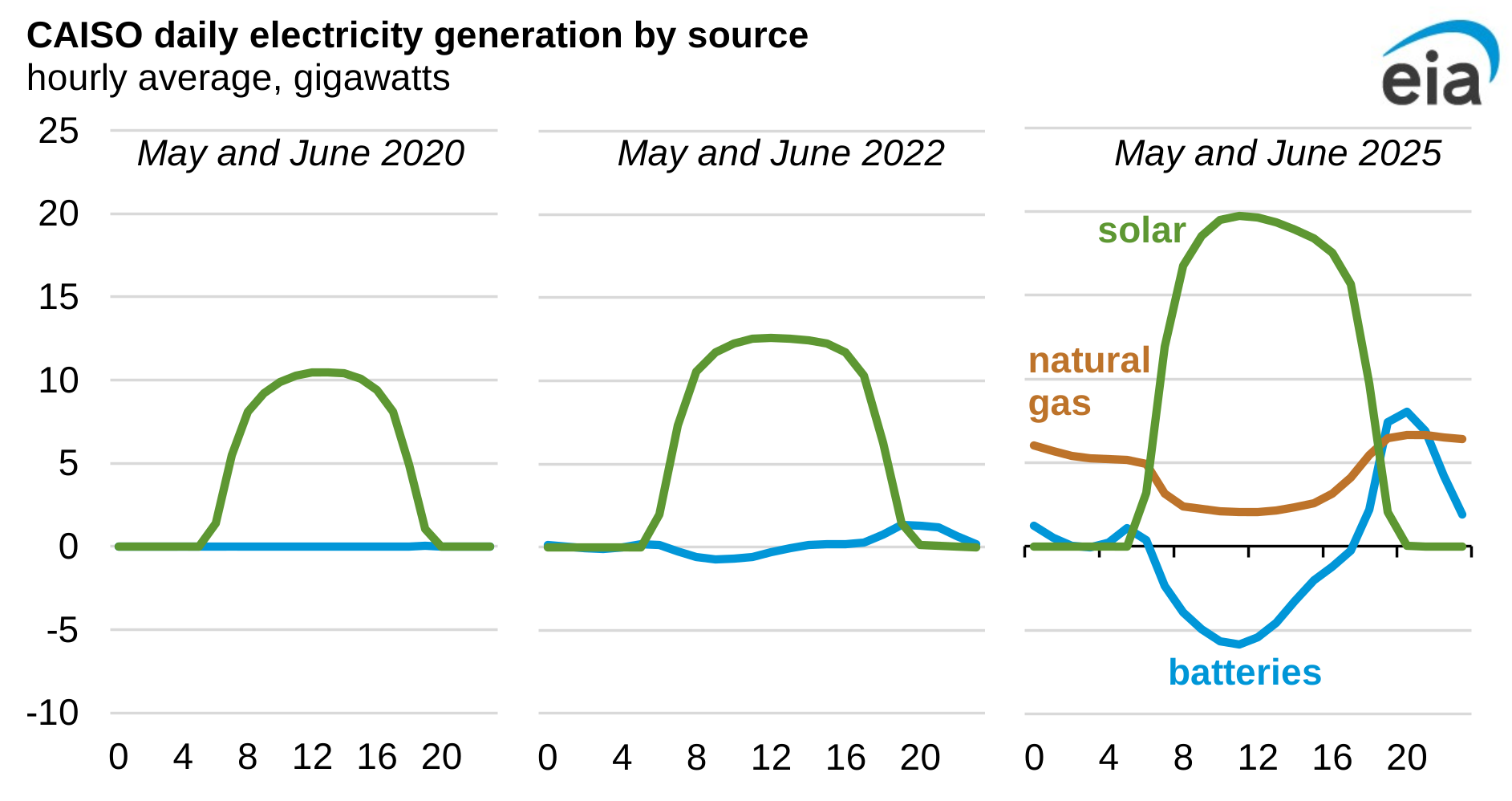
EIA and CAISO data also show that battery storage is increasingly displacing natural gas during evening peak hours. Between 5:00 p.m. and 9:00 p.m., battery output from stored solar energy grew from under 1 GW in May–June 2022 to 4.9 GW in 2025. Overall, hourly data for 2025 indicate a significant reduction in natural gas generation during midday when solar production is at its highest.





Comentarios
Sé el primero en comentar...