


EU could slash energy costs and imports with accelerated solar and storage deployment
With less than five years to meet its 2030 climate and energy targets, the European Union faces a widening gap between ambition and delivery. Against a backdrop of geopolitical instability and continued dependence on fossil fuels, a new report argues that the question is no longer whether to accelerate the energy transition, but how to do it effectively.
The report, “Solar+: An EU pathway to achieve renewable targets, price affordability, and energy security”, presented by SolarPower Europe with analysis from Rystad Energy, positions solar power combined with battery storage as the most immediate and cost-effective solution to address Europe’s energy trilemma: sustainability, affordability and security.
According to the analysis, accelerating the deployment of solar and storage could halve EU power system operating costs by 2030 compared to current trajectories. The study contrasts a business-as-usual scenario with a more ambitious Solar+ pathway, concluding that higher renewable penetration significantly reduces reliance on fossil fuels while delivering tangible economic benefits.
One of the key findings is the impact on electricity prices. In the Solar+ scenario, renewable sources such as wind and solar set electricity prices more frequently—19% of the time compared to 14% in the baseline—leading to lower average prices. Day-ahead wholesale electricity prices could fall by around 14% by 2030 compared to 2025 levels, with reductions reaching up to 25% in high-price markets like Germany.
The report also identifies a “sweet spot” in which consumers benefit from lower prices without undermining investment in solar energy. Despite higher shares of renewables, the number of negative price hours remains stable—below 500 hours annually—while overall price levels decline, preserving the business case for large-scale solar projects.
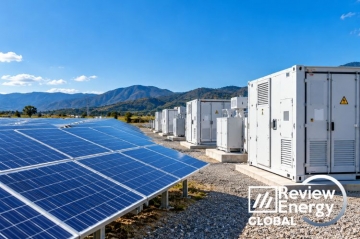
Battery storage emerges as a central pillar of this transition. Installed capacity could reach 171 GW and nearly 600 GWh by 2030 under the Solar+ scenario, compared to 116 GW and 267 GWh in the baseline. Longer-duration batteries will also play a growing role, improving system flexibility and helping balance supply and demand.
Beyond cost reductions, the report highlights solar energy’s role in strengthening Europe’s energy independence. In just two months following the onset of the Middle East crisis, solar generation has already saved €8.5 billion in gas imports. Under a more ambitious rollout, these savings could exceed €50 billion annually by 2030.
However, the study stresses that the main barriers are no longer technological but regulatory and structural. It calls for decisive policy action, including the adoption of an EU-wide flexibility strategy supported by a dedicated battery storage action plan, and a coordinated electrification strategy across industry, transport and buildings.
The report concludes that scaling up solar and storage is not only a climate solution but an economic and strategic imperative. With the right policy framework, Europe could secure a cleaner, more affordable and more resilient energy system within this decade.

Comentarios
Sé el primero en comentar...