
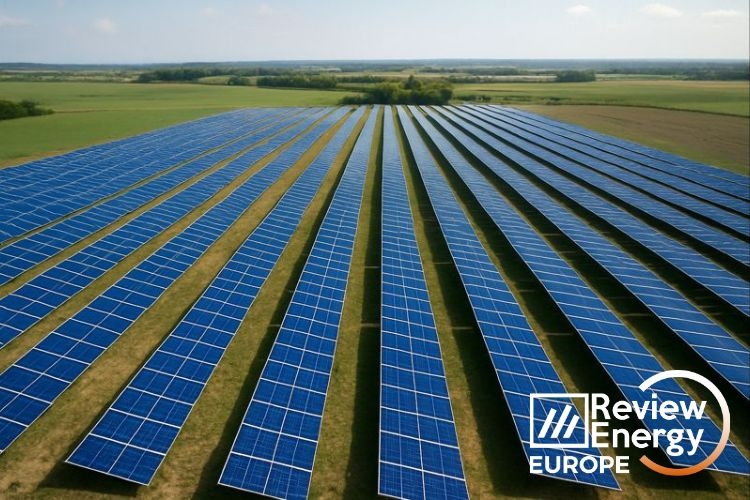


EU installs 65.1 GW of solar in 2025, slowing down after years of record growth
The EU installed 65.1 GW of new solar PV in 2025, marking a slight 0.7% decline from 65.6 GW in 2024. This is the first year-on-year drop since 2016 and signals a slowdown that is expected to continue in 2026 and 2027. According to SolarPower Europe’s EU Solar Market Outlook 2025-2030, the market is only expected to return to 2025 installation levels by the end of the decade.

Despite the contraction, the EU has reached its 2025 solar target of 400 GW, with total installed capacity now at 406 GW. However, the bloc’s 2030 goal of 750 GW appears increasingly out of reach, with projections indicating total capacity will likely reach only 718 GW under the most-likely scenario.

According to SolarPower Europe, the slowdown is partly attributed to the residential solar segment, which contributed 28% of newly installed EU capacity in 2023 but only 14% in 2025. Solar farms, meanwhile, now account for over half of new installations, but standalone solar faces growing profitability challenges due to rising numbers of negative pricing hours.
"The number may seem small, but the symbolism is big. We hit our 2025 solar target, but for the first time, our 2030 target is falling out of reach. Solar is now delivering for Europe — 13% of Europe’s electricity was solar powered in 2025, and in June it provided the most power of any source in the EU. Policymakers must implement robust frameworks for electrification, system flexibility, and energy storage to ensure solar leads Europe’s energy transition for the rest of this decade," Walburga Hemetsberger, CEO of SolarPower Europe, said.
Across EU countries, Germany and Spain maintained their positions as the largest solar markets, driven by utility-scale projects as rooftop incentives slowed. France overtook Italy to become the third-largest market, thanks to commercial and utility-scale expansion, while Italy’s rooftop sector contracted sharply after support schemes ended. Romania and Bulgaria entered the top 10 for the first time, driven by rapid growth and national recovery funding, while the Netherlands fell to eighth place due to a slowdown in rooftop installations.

SolarPower Europe highlights common EU-wide barriers, including permitting delays, unstable rooftop support, and supply chain challenges. The report recommends redefining energy security around renewables, adopting system flexibility strategies, improving permitting procedures, boosting rooftop solar, and making solar supply chains more sustainable and resilient to meet future EU targets.



Comentarios
Sé el primero en comentar...