


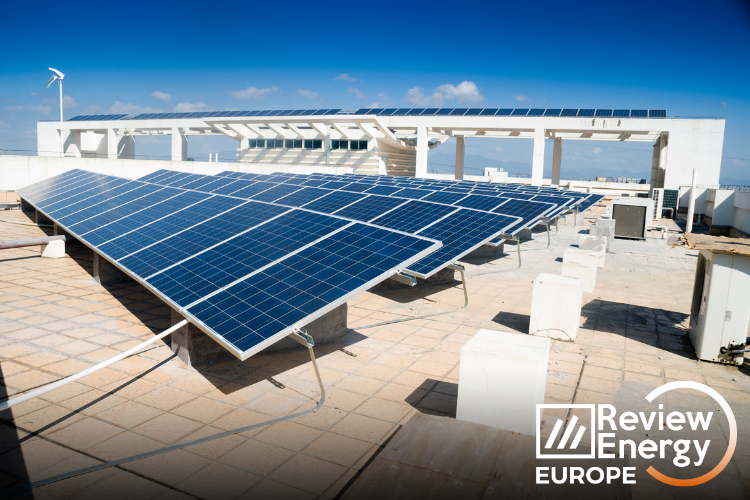


France reduces solar energy incentives, creating uncertainty in the sector
The decision by the government of François Bayrou to reduce photovoltaic energy targets, especially in the "small photovoltaic" sector installed on rooftops, has raised concerns in the renewable energy sector. The announcement, made in Bercy, is part of the new budget planning of the Multiannual Energy Plan (PPE), marking a shift that could impact the country's energy transition.
France Renouvelables, the main industry organization, has expressed its opposition to the measure, warning that the reduction in targets will not only slow down photovoltaic growth but could also affect France's energy sovereignty in an uncertain global context. The organization believes that dividing renewable technologies (rooftop photovoltaic, large-scale photovoltaic, and wind) is a strategic mistake, as they should complement each other in the pursuit of energy independence.
But the Minister of Industry and Energy, Marc Ferracci, defended the measure, arguing that the government seeks to redirect aid towards a more efficient development focused on self-consumption. Ferracci explained that in 2024, demand for photovoltaic installations exceeded initial forecasts, necessitating a readjustment of incentives.
A shift after a strong 2024 growth
The photovoltaic sector saw significant growth in 2024, with nearly 5 GW of new connections in the Enedis and RTE systems. However, the government has put forward a decree modifying support for installations on buildings, hangars, and canopies of less than 500 kWc, the most dynamic segment.
According to the Ministry of Industry and Energy, the measure responds to budget constraints. "The tariff order has enabled the creation of numerous photovoltaic installations in France in recent years. This enthusiasm demonstrates the sector's growing economic maturity and leads to an adjustment of support modalities," states an official press release.
Changes in incentives for different segments
-
0 to 9 kWc: Self-consumption will be encouraged by reducing the investment premium (already cut by 40% in 2024) by half. Additionally, the surplus electricity buyback rate will drop from 12.7 to 4 cents/kWh.
-
9 to 100 kWc: The rate will remain at its current level but will be subject to a stronger reduction mechanism, calibrated at 92 MW per quarter.
-
100 to 500 kWc: The tariff level will be reduced to 95 euros/MWh for complete connection requests between February and April 2025. A 6% reduction will apply if the volume exceeds 1.25 times the planned amount (359 MW per quarter).
Additionally, from July 1, 2025, installations from 200 to 500 kWc will transition from a purchase obligation to an additional remuneration system. This model will remain in place until January 1, 2026, when a new simplified auction-based support mechanism will be implemented.
Impact on the industry and future regulations
The government also aims to boost national production of photovoltaic panels. From 2026, projects in the 100 to 500 kWc range must use panels that meet NZIA requirements. By 2028, these criteria will extend to modules and cells. This change will lead to an increase in the tariff (or maximum price) to 105 euros/MWh.
Regarding the "Petit sol" decree, the government intends to implement it with a limit of 250 MW per year and a reduction model similar to the 100-500 kWc segment.
A critical moment for energy policy
France Renouvelables warns that these changes could harm France's energy transition and its position in Europe's energy independence efforts. The organization also criticizes the lack of coherent energy taxation and the absence of a carbon tax that would favor clean energy. Amid growing geopolitical tensions and budgetary pressures, experts believe the government must rethink its policies to ensure a fair and sustainable transition.
With uncertainty surrounding future regulations and the impact of these decisions, France's photovoltaic sector faces a period of adjustments that could redefine its growth in the coming years.



Comentarios
Sé el primero en comentar...