


How agrivoltaics can drive the UK towards its net zero goal by 2050
A study by the University of Sheffield evaluated how agrivoltaic technology could help the UK achieve its solar (PV) energy goals and meet its commitment to reach net zero by 2050. According to the report, this solar technology could quadruple the UK's electricity demand without sacrificing agricultural land.
The government’s current plans to significantly increase ground-mounted solar farms, already in use across the UK, have proven controversial and unpopular both with farmers and the public. Concerns about the loss of high-quality agricultural land, potential impacts on food production and the cost of living, and the visual impact on landscapes are some of the factors driving criticism.
The study, focused on Great Britain, shows that the implementation of agrivoltaics could allow for the simultaneous production of crops, livestock, and renewable energy. Agrivoltaics has such high coverage potential that it could meet the UK government’s photovoltaic energy targets on its own while avoiding land use conflicts.
Regions identified for the effective deployment of agrivoltaic energy include Cambridgeshire, Essex, Lincolnshire, and the east and southeast of England in general.
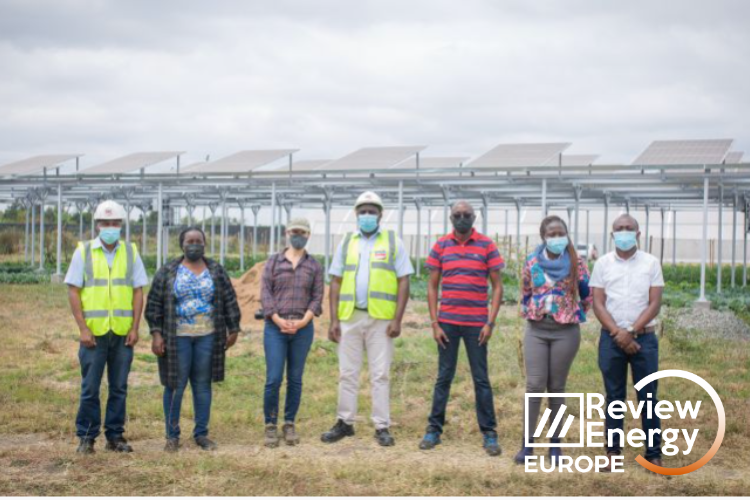
In this £1.4 million research project, agrivoltaic systems were installed on agricultural land in Tanzania and Kenya. The technology not only produced low-carbon electricity but also significantly increased crop yields and conserved water in regions highly vulnerable to the impacts of climate change. Researchers found that certain crops, such as corn, chard, and beans, thrived under the partial shade provided by the solar panels. The shade offered other benefits: it reduced water evaporation for more efficient water use, and the panels themselves collected rainwater to supplement irrigation needs.
Professor Sue Hartley, Vice-President of Research and Innovation at the University of Sheffield and co-author of the study, said, “Agrivoltaic technology is a possible solution to this dilemma. It allows us to use the same land area for both food and clean energy production, addressing some of the criticisms made about solar farms. This technology is commonly used in many parts of the world, including areas like Scandinavia, where there is less sunlight than in the UK, but it has yet to be adopted here.”
Dr. Richard Randle-Boggis, also a co-author and researcher of agrivoltaic energy at the University of Sheffield and now a research scientist at SINTEF, pointed out, “Agrivoltaic energy research is extensive in continental Europe, but very little has been done in the UK.”




Comentarios
Sé el primero en comentar...