


Inside the quiet race to scale perovskite
Solar energy is booming, but innovation has slowed. Costs are down, yet efficiency gains have stagnated and global scalability is lagging. Enter GCL: with next-generation granular silicon and factory-scale perovskite, the company is not just tweaking solar, it’s tearing up the rulebook.
The granular silicon breakthrough
GCL’s proprietary Fluidized Bed Reactor (FBR) granular silicon boasts monocrystalline-level purity and is produced using 70% less energy than the traditional Siemens process, slashing footprint by up to 42%. With over 480,000 tons/year capacity, the company is manufacturing at industrial scale, eliminating the “lab-to-factory” gap.
Most notably, GCL’s FBR granular silicon has been awarded ADEME certification for having the world’s lowest carbon footprint among all polysilicon products, a new industry benchmark for sustainable solar manufacturing.
Even more importantly, the switch to granular silicon results in a 75% reduction in carbon emissions during the silicon production stage, compared to traditional rod-shaped polysilicon, translating into 10.48 million fewer tons of CO? emissions released annually. This has a direct impact on partners’ Scope 3 emissions, offering meaningful decarbonization at the supply chain level.
Perovskite: Solar’s next superpower
GCL isn’t stopping at silicon. It has commercialized Single-junction perovskite solar modules, achieving 19.04% efficiency, TÜV-certified and field-tested in real-world environments.
Building on that success, GCL also introduced its tandem perovskite–silicon module, which achieved IEC 61730 certification from TÜV Rheinland at SNEC 2025.
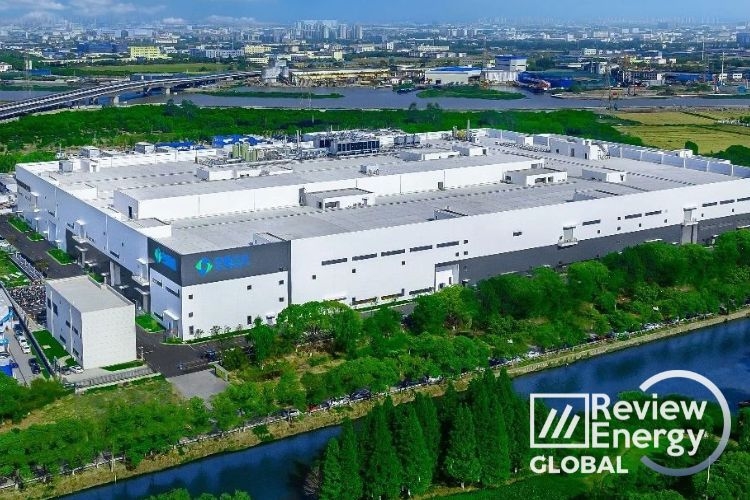
The company has now activated the world’s first GW-scale perovskite–silicon plant in Kunshan, aiming for 2 GW production capacity, backed by a ¥5 billion (~$700M) investment.
In parallel:
- The perovskite–silicon tandem modules have reached 29.51%, certified by China’s National Institute of Metrology.
- GCL aims to push close to 45% theoretical efficiency in future generations.
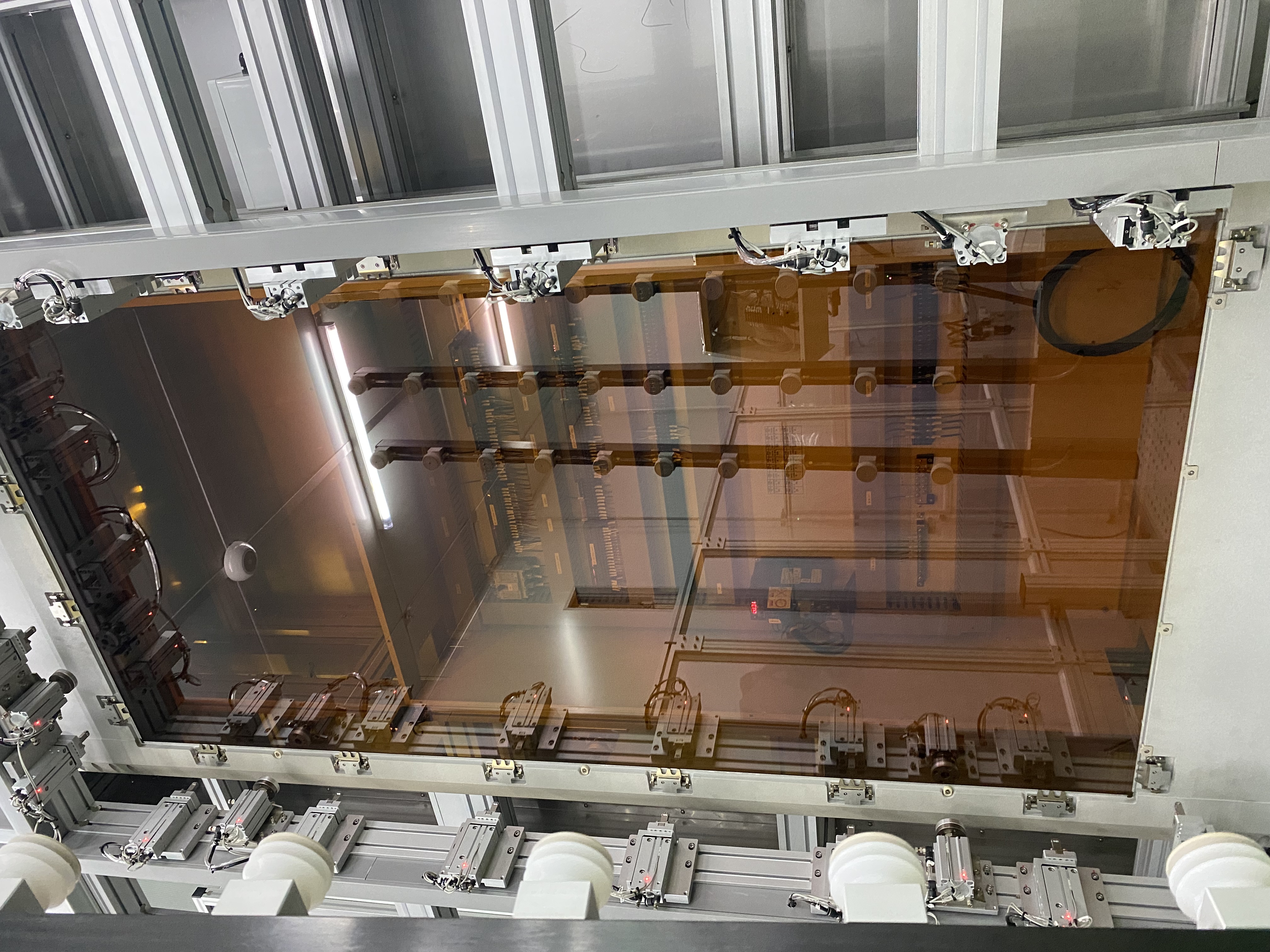
- Their high-throughput line produces 300 cells/day with batch variability under 0.75%, enabling large-scale consistency.
"The start of full-scale operations at GCL's GW-scale perovskite industrial plant marks a milestone after 13 years of dedicated technological innovation by GCL. This achievement not only represents a significant moment in GCL's history but also signals a global inflection point for photovoltaic technology. As the third generation (Gen 3) of PV technology, perovskite is positioned to fundamentally reshape industry priorities by balancing affordability, low-carbon impact, and high efficiency" said Zhu Gongshan, chairman of GCL Group.
Why This Matters
- Cost Disruption: GCL’s perovskite modules are projected to reach under $0.075/W, cutting costs by half compared to conventional silicon technologies without sacrificing performance.
- Speed & Scale: GCL moved from lab innovation to gigawatt-scale commercial production in under two years. This is an industry-first pace that redefines solar scalability.
- Real-World Deployment: GCL’s perovskite modules aren’t just efficient in the lab. They’re performing under pressure in some of the world’s harshest environments.
-> In September 2024, GCL won the contract for a perovskite demonstration plant for China Huaneng Qinghai Power Generation Co., Ltd., where its modules have shown stable performance in high-altitude conditions with intense UV radiation.
-> In April 2025, GCL secured another contract to supply 1.12 MW of perovskite modules to China Huaneng’s Clean Energy Research Institute at the New Energy Base in the southern Kubuqi Desert. This further proves the durability and reliability of the technology under extreme desert stress.
- Decarbonization by Design:
With a vertically integrated model from granular silicon to tandem modules and blockchain-enabled product traceability, GCL empowers customers to verify their carbon impact across the entire solar lifecycle.
The Final Challenge: Scale vs. Yield
Perovskite’s promise hinges on commercial yield and long-term durability. GCL’s modules are triple stress-tested and AI-monitored, but the industry still watches for proof of sustained performance at low LCOE.
“We will continue developing more and larger high-throughput experimental platforms. These platforms will be open to research groups worldwide and will offer data analysis services. Our primary goal is to support the academic community in rapidly addressing fundamental research challenges, accelerate the translation of laboratory discoveries into industrial applications, and drive innovation to facilitate the global energy transition.” said Dr. Fan Bin, CEO of GCL Perovskite.
Conclusion: A Solar Renaissance
For decades, solar has delivered incremental progress. GCL is bringing disruption, with cleaner silicon, scalable perovskite, and blockchain-powered traceability.
As the world races toward 2030 decarbonization targets, one question remains: Will we embrace solar’s smarter future or stay locked in yesterday’s tech?


Comentarios
Sé el primero en comentar...