


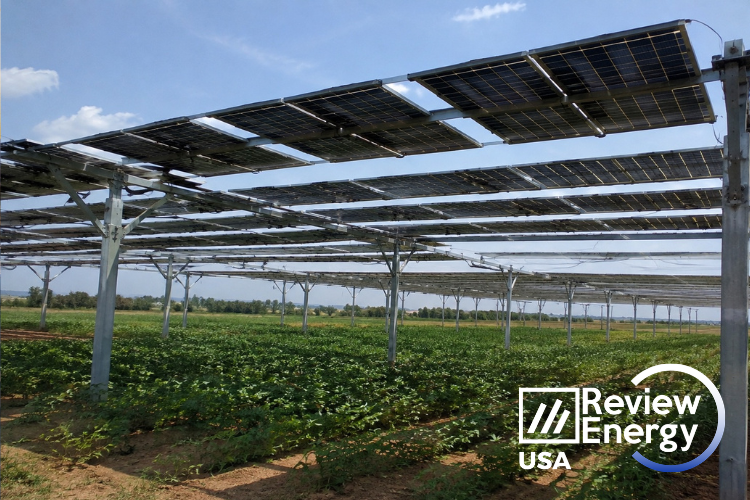


New Jersey awards 52 MW across 16 agrivoltaic projects
The New Jersey Board of Public Utilities (NJBPU) has awarded 16 agrivoltaic projects totaling 52.06 MW in the first solicitation of the state’s Dual-Use Pilot Agrivoltaics Program, supporting the development of solar projects alongside active agricultural production.
The awards were approved by the NJBPU on August 17, 2026, under the pilot established through New Jersey’s Dual-Use Solar Energy Act of 2021. The program is being implemented by the NJBPU in cooperation with the New Jersey Department of Agriculture, Department of Environmental Protection, State Agriculture Development Committee and Rutgers University’s Agrivoltaics Program.
According to the NJBPU, the 16 projects will be developed on farms across Atlantic, Cumberland, Gloucester, Hunterdon, Mercer, Monmouth, Salem and Warren counties. The installations will combine solar generation with agricultural activities including the cultivation of soybeans, hay, grains, vegetables, fruits and specialty crops, as well as livestock production.
The program is designed to keep farmland in active agricultural or horticultural use while allowing solar generation to be deployed on the same land. In agrivoltaic systems, photovoltaic panels are installed above or among crops, grazing areas or other agricultural operations rather than converting farmland entirely to energy production.
“This pilot dual-use program will enable us to support New Jersey farmers in making their operations more profitable while adding capacity to the grid,” NJBPU President Ben Hertz-Shargel said in the announcement. He added that the approach is intended to maintain agricultural production while providing additional clean electricity to the grid.
Pilot targets up to 200 MW over three years
The first awards represent part of a wider program that may support up to 200 MW over three years. Individual projects are generally limited to 10 MW.
To qualify, projects must be located on unpreserved farmland that is already in active agricultural or horticultural use. Project teams must also include a landowner, a farmer and a solar operator, with farmers required to participate meaningfully in project planning and operations.
Interest in the program exceeded the number of projects selected in the first solicitation. The NJBPU received 33 preliminary proposals totaling approximately 140 MW, according to the board.
New Jersey Agriculture Secretary Ed Wengryn said the pilot will provide an opportunity to assess how utility-scale solar can operate alongside active agricultural production and allow both sectors to identify practical challenges and potential benefits.
Projects spread across eight counties
The 16 selected projects are distributed across eight New Jersey counties. FFP Origination, LLC accounts for eight of the awarded projects, while NJ Solar 2000, LLC has seven projects and AETS Development Holdings, LLC has one.
The awarded projects are:
- FFP Origination, LLC — Salem County
- FFP Origination, LLC — Warren County
- NJ Solar 2000, LLC — Cumberland County
- NJ Solar 2000, LLC — Monmouth County
- FFP Origination, LLC — Gloucester County
- FFP Origination, LLC — Mercer County
- NJ Solar 2000, LLC — Salem County
- NJ Solar 2000, LLC — Cumberland County
- NJ Solar 2000, LLC — Cumberland County
- NJ Solar 2000, LLC — Warren County
- NJ Solar 2000, LLC — Cumberland County
- FFP Origination, LLC — Salem County
- NJ Solar 2000, LLC — Cumberland County
- FFP Origination, LLC — Cumberland County
- AETS Development Holdings, LLC — Atlantic County
- FFP Origination, LLC — Hunterdon County
For New Jersey, the pilot is also intended to generate practical evidence for future policy. Senator Bob Smith, who sponsored the state's Dual-Use Solar Energy Act, said the projects demonstrate the potential to combine food production and renewable energy generation on the same land.
Senator Andrew Zwicker similarly highlighted agrivoltaics as a way to increase electricity supply while maintaining agricultural activity, describing the pilot as an opportunity to generate data and experience that could inform future deployment across the state.
The NJBPU said lessons from the full three-year pilot will be used to inform the development of a permanent agrivoltaics program in New Jersey, potentially providing a framework for expanding dual-use solar beyond the pilot phase.





Comentarios
Sé el primero en comentar...