
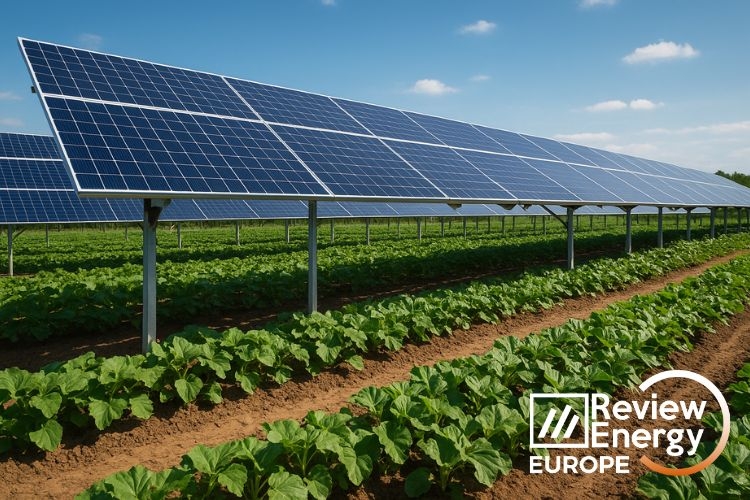


New policy map exposes uneven agrisolar frameworks in Europe
SolarPower Europe has launched its new Agrisolar Policy Map, a comprehensive tool designed to assess and compare regulatory frameworks for agrisolar (Agri-PV) across 18 EU Member States. The initiative identifies best practices and policy gaps to accelerate the deployment of agrisolar solutions that combine renewable energy generation with agricultural productivity.
“The Agrisolar Policy Map is a vital step in unlocking the full potential of agrisolar,” said Lina Dubina, Policy Advisor at SolarPower Europe. “By identifying where Member States are leading or lagging, we can better inform EU-level reforms and empower farmers to harvest the sun twice.”
The Map evaluates six key policy areas: legal definitions, land use and zoning, support schemes, technical requirements, agricultural productivity, and environmental safeguards.
Among the key findings, only 5 out of 18 countries currently have a legal definition of agrisolar (Agri-PV). Environmental Impact Assessment (EIA) requirements vary significantly, while financial support mechanisms and eligibility under the Common Agricultural Policy (CAP) remain inconsistent — limiting farmers’ access to funding.
SolarPower Europe is calling on EU policymakers to harmonise agrisolar regulations and provide clear guidance under the CAP to ensure fair and efficient development of the sector.
The Agrisolar Policy Map was officially presented during the Agrivoltaics Industry Forum in Milan on 21–22 October, following the European Commission’s recent recognition of solar PV in its “Vision for Agriculture and Food” strategy and the European Parliament’s acknowledgment of the role of Agri-PV.
Some Country Highlights
-
France: The Law on the Acceleration of Renewable Energy Production (APER) establishes a clear legal definition for Agri-PV, focusing on dual land use and agricultural service requirements. A detailed “AgriPV Application Decree” was issued in May 2024, followed by a technical guide from the Ministry for Ecological Transition (DGEC) in February 2025.
-
Czech Republic: Defines agrivoltaic plants as solar systems installed on agricultural land that continues to be cultivated under farming regulations. Projects require consent from the Agricultural Land Protection Authority, with land remaining part of the agricultural fund.
-
Italy: No legally binding national or regional definition exists. Current legislation distinguishes “ground-mounted photovoltaics” from “agrivoltaics,” creating uncertainty about low-mounted systems.
-
Spain: No national legal definition currently exists, although the term is used in specific funding contexts, such as pilot programmes under the Recovery and Resilience Facility.
Overall, 10 out of 18 countries allow Agri-PV systems on agricultural land under existing land-use regulations. However, most lack dedicated dual-use policies. In Germany, Agri-PV projects up to 2.5 hectares benefit from a simplified permitting process, while in France and Italy, project approvals remain lengthy and complex.




Comentarios
Sé el primero en comentar...