
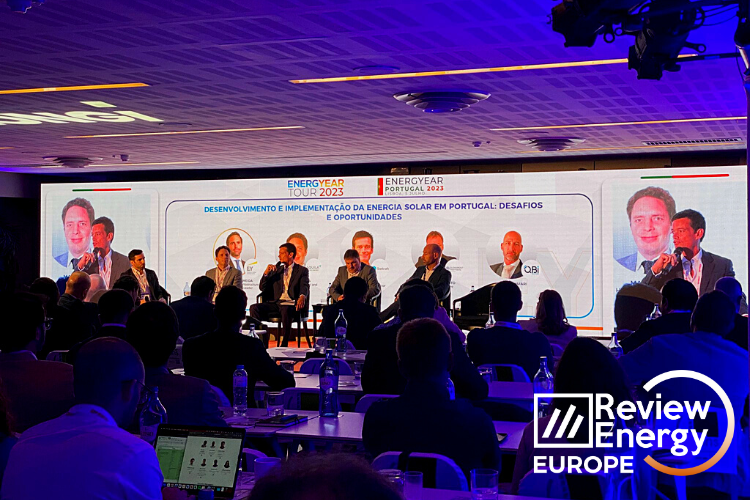


Public-private collaboration in Portugal is essential to adapt to rapid developments in the solar sector
Energyear Portugal 2023 is framed in a very important moment for the renewable sector, the publication of the first draft of the National Energy and Climate Plan (PNEC) of the country, which has brought great objectives to be met in the coming years, especially for the development of photovoltaic solar energy, which is the one with the most ambitious growth targets. It was therefore necessary to address this issue during the leading networking event, where experts spoke about the need to modify the current legislation in order to deal with all the new developments that the sector is constantly bringing and, to do so, it is necessary to work with the private sector.
João Schmidt, Business Development Director Portugal at Statkraft, highlighted the need for this collaboration and the need to be proactive in the sector. "The solar industry is expanding. Everyone wants solar energy as fast and as cheaply as possible. The national and local authority need time and resources to adjust to this which is going to happen before 2030 and I think renewable companies have a part of the responsibility and we have to help the authorities to deal with this challenge. We have to be proactive, balanced and always think about biodiversity and local communities," he explained.
Schmidt defines three key points for the development of solar projects: using up-to-date technology to reduce the impact on the territory, deepening collaboration to deal with licensing and grid barriers, and working on the supply chain and investment systems.
Regarding grid bottlenecks, reinforcement is needed to increase the capacity of the system. "We private developers need flexibility with regard to the grid, i.e. using hybridisation and also battery systems and ancillary services," Schmidt added. Furthermore, he questions why not launching tenders for electricity-intensive industry, which would give consumers an important role and help the flexibility of the system. Another point raised by Schmidt would be to rethink export tactics and analyse the possibilities of exporting energy to the UK.
Another issue mentioned in the debate was public procurement, which for Manuel Silva, Head of Development and Construction at Aquila Clean Energy, is one of the biggest challenges in getting projects off the ground. "In the last three years it has been very difficult because of the supply chain, raw material prices going up or fierce competition in terms of components, prices and availability. What has been more recent for us is that we have seen a rapid increase in the cost of capital, on the one hand; and also high levels of prices, even though they have come down recently. This has meant that there is pressure and these barriers to deployment need to be addressed," Silva explained.
For Francesc Filiberto, Head of Development at Glennmont Partners, there are different challenges in the long and short term. For the short term, three different angles are needed: energy management, because regulators are needed to manage the growing demand; advancing the electrification of the mobility sector; and finally promoting the use of storage systems, not only to stabilise prices, but also to support the grid.
"In the long term we have to do a major reform of our marginal pricing system that was defined decades ago and was not designed for such a large penetration of renewables, it has to be adapted. Some governments are already pushing it and we have to be ready and work on it, using contracts to guarantee the maximum and minimum price for the producer," explained Filiberto.
Finally, Miquel Yafari, CRO of QBI Solutions, pointed out the current importance of digitalisation and the use of new technologies in all phases of projects to remedy some of these failures that are found in the achievement of projects. Increasingly, we are going to see the implementation of technology in asset management and the implementation of projects with greater digitisation. "From a technological point of view, we are experiencing a very asymmetric under-digitisation. We find a lot of digitalisation in the design phase and in the operational phase, but there are few tools to help us develop projects in other aspects," he said.
"In the asset lifecycle, we have to think about how to improve reliability and how to make this development phase more cost-effective and this is only done by improving projects. Having a single system that connects all documentation helps us improve internal processes and makes us more efficient, which contributes to project profitability," he concluded.


Comentarios
Sé el primero en comentar...