


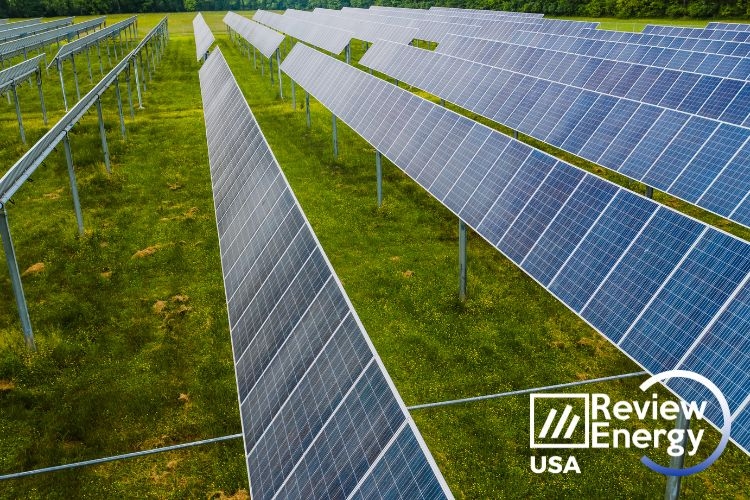


U.S. adds record solar capacity in 2025, hitting nearly 18 GW
According to the latest report from the Solar Energy Industries Association (SEIA) and Wood Mackenzie, the U.S. solar industry installed nearly 18 GW of new capacity in the first half of 2025. Solar and storage together accounted for 82% of all new energy added to the grid in the first six months of the year.
However, the One Big Beautiful Bill (HR1) and recent measures by the Trump administration targeting solar energy have significantly lowered deployment forecasts. The latest U.S. Solar Market Insight report warns that these policies put the country at risk of losing 44 GW of solar deployment by 2030, an 18% decrease. When compared to pre-HR1 projections, the U.S. could lose a total of 55 GW by 2030, equal to a 21% decline.
Abigail Ross Hopper, president and CEO of SEIA, stated that “solar and storage are the foundation of America’s energy future, delivering the majority of new power to the grid at the lowest cost for families and businesses. Instead of boosting this American economic engine, the Trump administration is deliberately slowing investment, raising energy costs for families and businesses, and jeopardizing the reliability of our electric grid. But regardless of the policies this administration enacts, the solar and storage industry will continue to grow, because the market demands what we offer: reliable, affordable, American-made energy.”
The report highlights that 77% of all solar capacity installed this year has been built in states won by President Trump, including 8 of the 10 leading states for new installations: Texas, Indiana, Arizona, Florida, Ohio, Missouri, Kentucky, and Arkansas. Additionally, the U.S. added 13 GW of new solar module manufacturing capacity in the first half of 2025, with new or expanded factories in Texas, Indiana, and Minnesota. This brings total module manufacturing capacity to 55 GW. Still, no new upstream manufacturing investments were recorded in Q2, as federal policies threaten to stall the momentum of solar manufacturing and put billions of dollars in private capital at risk.
The report further shows that solar deployment is expected to be 4% lower by 2030 compared to the pre-HR1 baseline. Short-term growth remains supported by projects already underway, a push to meet tax credit deadlines, and rising demand for energy as new gas generation becomes more costly and less available.
The downside risk scenario details how recent executive measures could harm the industry, including a Department of the Interior (DOI) order that significantly limits the permitting process for solar projects. According to the report, these DOI measures are expected to impact about 44 GW of planned solar capacity, with Arizona, California, and Nevada most affected.
“Significant downside risk exists for the solar industry if the federal permitting framework places more restrictions on solar projects,” said Michelle Davis, head of solar research at Wood Mackenzie. “The solar industry is already dealing with drastic policy changes as a result of HR1. The added uncertainty from federal policy measures is greatly challenging the business environment for the solar industry.”
If solar deployment contracts as forecast, the Trump administration’s goal of winning the AI race will become even harder to achieve. Last week, SEIA released a grid reliability policy agenda outlining critical measures that local, state, and federal leaders must take to strengthen the U.S. electric grid with solar and storage technologies while meeting rising demand.




Comentarios
Sé el primero en comentar...