


Batteries could shift 34% of new solar generation into non-sunny hours
Battery storage is increasingly allowing solar power to move beyond its traditional daytime-only role, according to a new analysis by energy think tank Ember. The report finds that solar supplied a record 10% of global electricity in the first half of 2026, but its contribution still falls to near zero during non-sunny hours.
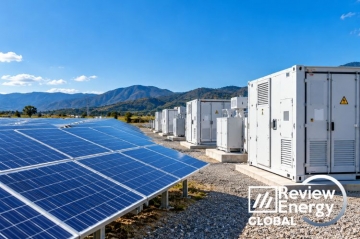
Ember’s analysis, published on 12 August 2026, argues that the rapid deployment of batteries is beginning to remove this daily limitation. Based on expected battery additions this year, storage could theoretically shift 34% of new daily solar generation into the evening and other non-sunny hours, up from 18% in 2025.
The report, Batteries have unlocked the era of anytime solar, examines hourly electricity data and compares solar growth with battery deployment across different markets. It concludes that the combination of solar and storage could enable further solar expansion while reducing reliance on fossil generation after sunset.
Solar reaches record global share
Solar’s share of global electricity generation rose from 8.9% in the first half of 2025 to just over 10% in H1 2026, almost doubling from 5.6% in H1 2023, according to Ember.
Generation from solar increased from 769 TWh in H1 2023 to 1,564 TWh in H1 2026. Over the same period, total global power generation grew by 12%, while solar generation increased at a much faster pace.
However, the growth remains concentrated during daylight hours. On an average day in the first half of 2026, solar met more than 25% of global electricity demand between 11am and 2pm, before falling to near zero between 8pm and 5am.
The difference is even more pronounced in mature solar markets. Countries where solar supplied more than 20% of electricity in H1 2026 saw solar meet more than half of midday demand, while its contribution again fell to almost zero after sunset.
Fossil generation remains strong after sunset
Despite the rapid growth of solar, fossil fuels continue to play a major role during non-sunny hours. Ember highlights India and the European Union as examples of markets where fossil generation has fallen more sharply around midday than during the evening.
In India, average fossil generation at 1pm fell to 125 GW in H1 2026, around 10 GW below the level recorded at the same hour in H1 2023. After sunset, however, fossil generation increased. Between 5pm and 7am, it averaged 168 GW in H1 2026, 22 GW more than in H1 2023.
The EU has experienced a similar but less pronounced pattern. Average fossil output between 11am and 2pm fell from 86 GW in H1 2023 to 69 GW in H1 2026. During the evening peak, from 7pm to 9pm, it declined by only 5 GW, from 106 GW to 101 GW.
For Ember, these patterns highlight the limitation of solar generation without sufficient storage: it can displace fossil generation during sunny hours but has a much smaller impact after sunset.
Battery deployment is catching up
The economics of battery storage have improved significantly, helping the technology move into mainstream power markets. Ember cites data showing that global average installed battery costs fell by 95%, from $2,634/kWh in 2010 to $140/kWh in 2025.
Battery additions are expected to reach 459 GWh globally in 2026, up 50% from 307 GWh in 2025. If all of this new storage were used to shift solar generation, Ember estimates it could move 34% of new daily solar generation into non-sunny hours.
The figure is a theoretical ceiling, however. Not every battery is used to shift solar, and some systems remain underutilised. The report therefore stresses that deployment alone is not enough: market rules need to allow batteries to access different revenue streams and operate efficiently.
Bulgaria and Chile lead the shift
Several markets are already showing how storage can extend solar generation beyond daylight hours. Bulgaria and Chile installed enough battery capacity in 2025 to theoretically shift 77% and 76%, respectively, of their new daily solar generation, according to Ember. Australia followed with 60%.
Bulgaria expanded its battery fleet particularly quickly. The country added around 3 GWh of new battery capacity in 2025, after having almost no storage the previous year. By May 2026, installed capacity had more than doubled again to 8.6 GWh.
Chile added 4 GWh of batteries in 2025, more than doubling its installed capacity to 7.6 GWh. Most of this new storage was co-located with solar plants, helping reduce curtailment and shift generation into the evening.
The United States added 58 GWh of battery capacity in 2025, enough to theoretically shift around a quarter of its new solar generation. California stands out within the country, having added more battery capacity than solar since 2021.
The European Union, meanwhile, remains below the global leaders. Its 27 GWh of battery additions in 2025 were equivalent to shifting around 16% of new solar generation. EU grid operators nevertheless expect installed battery capacity to quadruple between 2025 and 2030.
Solar and batteries are already supplying evening demand
The impact of storage is increasingly visible in electricity generation profiles. In California, solar combined with batteries met more than a quarter of electricity demand during the 7pm–9pm evening peak on the average day in H1 2026, compared with 6.8% in H1 2023.
Chile and Bulgaria have also undergone significant changes. In the first half of 2023, solar contributed virtually nothing to evening electricity demand in either country. By H1 2026, solar and batteries were supplying more than 10% of Chile’s evening electricity demand, while in Bulgaria they met 24% of demand between 7pm and 9pm.
Bulgaria also averaged 10% of electricity demand from solar and batteries between 7pm and 7am, according to Ember.
Storage does not solve every challenge
Although batteries can extend solar generation into the evening, Ember notes that they cannot address every challenge associated with variable renewable generation. Current battery economics are mainly suited to daily cycling, while longer-duration storage technologies are still developing.
Periods of several days with low solar and wind generation can create additional challenges, particularly in less sunny regions. The report points to Europe’s winter Dunkelflaute as an example of conditions in which batteries may have limited surplus renewable electricity available for charging.
For this reason, Ember expects power systems to continue relying on a combination of resources, including wind, hydro, nuclear and long-duration storage alongside solar and batteries.
Market design will determine the next phase
Ember argues that the next stage of solar growth will depend not only on deploying more batteries but also on ensuring that storage systems can operate effectively within electricity markets.
Where batteries can combine revenues from energy arbitrage, ancillary services and capacity payments, they can be used more efficiently. China illustrates the challenge: despite having the world's largest battery market, standalone batteries averaged 299 cycles in 2025, while co-located batteries averaged 199 cycles.
The report concludes that batteries are beginning to remove solar's daily limitation by shifting low-cost daytime generation into periods when the sun is no longer available. As storage deployment accelerates, the ability of power systems to integrate and optimise these resources will increasingly shape the pace of solar growth.
According to Ember, the “era of anytime solar” has begun, but its expansion will depend on both the continued deployment of batteries and the market frameworks that determine how effectively they are used.

Comentarios
Sé el primero en comentar...