


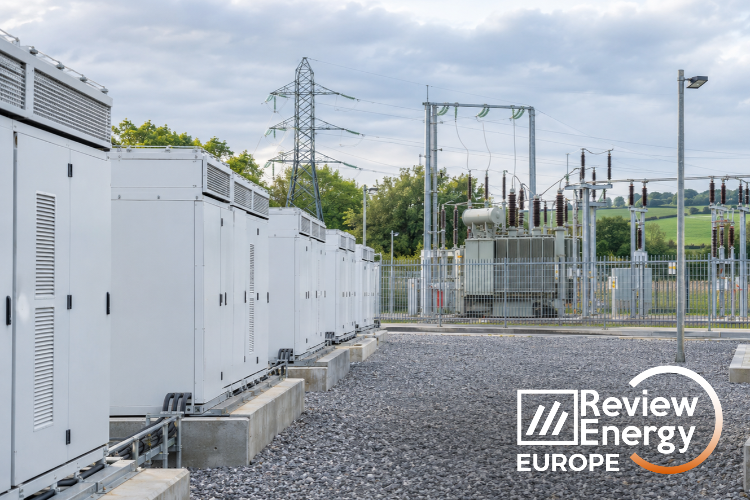


JRC identifies the main barriers to energy storage deployment in Europe
Energy storage is expanding across Europe, but its growth remains constrained by obstacles that extend beyond technology. This is the conclusion of Energy Storage Deployment in the EU: Drivers, Barriers and Policy Pathways, published by the Joint Research Centre (JRC), the European Commission’s science and knowledge service.
The analysis identifies grid connection delays as the most widespread barrier, while regulatory uncertainty and unpredictable revenues limit projects’ ability to secure financing.
The report combines market data, policy analysis and a stakeholder consultation that received 19 responses. The JRC treats these contributions as qualitative evidence rather than a statistically representative sample.
Grid connections remain the main bottleneck
Insufficient capacity at targeted connection points and lengthy procedures for securing connection agreements are delaying new installations.
In the report’s stakeholder consultation, insufficient grid capacity received an average severity rating of 4.1 out of 5, followed by long lead times for connection agreements, at 3.9 out of 5.
The study also highlights how applications for projects that fail to progress, or reserve several potential locations, can block capacity for developments that are ready to proceed. Measures examined include prioritising projects that demonstrate maturity, improving transparency on available grid capacity and simplifying administrative procedures.
Flexible connection agreements offer another route to earlier grid access. However, they may impose temporary network access restrictions that developers must account for in their business models.
Predictable revenues are critical to financing
The JRC warns that projects relying exclusively on market revenues still face difficulties attracting financing in many countries. Price volatility and uncertainty over future income make it harder for lenders to assess projects’ ability to repay debt.
There is also a risk that the entry of additional batteries and other flexible resources will erode some revenue opportunities, particularly in markets vulnerable to saturation.
The report identifies long-term contracts, capacity and flexibility remuneration mechanisms, and agreements combining renewable generation with storage as ways to improve revenue predictability.
It also examines tolling agreements, under which a counterparty pays an agreed fee for commercial use of a storage facility. These arrangements can support financing, although they transfer part of the risk to the counterparty and require an assessment of its creditworthiness.
Regulation still limits the value storage can capture
Fragmentation across national markets represents another obstacle. The report highlights double charging when storage withdraws electricity from and injects it into the grid, high network tariffs and incomplete rules for participation in certain markets.
It also finds that some services storage can provide, such as relieving local grid congestion, do not always receive adequate remuneration.
The JRC therefore argues that policies should reward measurable contributions to the electricity system—including duration, availability and security of supply—while maintaining technology neutrality.
Co-location with renewables creates opportunities
The report highlights the potential of installing batteries alongside solar or wind farms. These configurations can share infrastructure, capture electricity that might otherwise be curtailed and shift delivery to higher-value hours.
Power purchase agreements combining renewable generation and storage can provide an electricity supply profile better aligned with buyers’ requirements. However, securing financing requires clear contractual provisions on revenue allocation, operational responsibilities and risk sharing.
Modelling points to 172 GW of EU storage needs by 2030
The report cites PRIMES modelling results that put the European Union’s power sector storage requirements at 172 GW by 2030, combining batteries and pumped hydropower. For 2040, projected requirements range from 213 GW to 275 GW, depending on the scenario.
These figures represent modelled system requirements, rather than a specific binding storage deployment target.
The JRC concludes that accelerating deployment requires action on permitting, grid connections, market rules and revenue stability. Falling technology costs support growth, but converting that potential into operating projects also depends on a framework that enables developers to finance and connect their assets.




Comentarios
Sé el primero en comentar...