




Ofgem proposes financial guarantees to reduce Britain’s 83 GW battery connection queue
The British energy regulator has opened a consultation on a new financial commitment for BESS projects, starting at £3,000/MW and potentially rising to £25,000/MW while the volume of projects in the connection queue remains significantly above the system’s projected needs
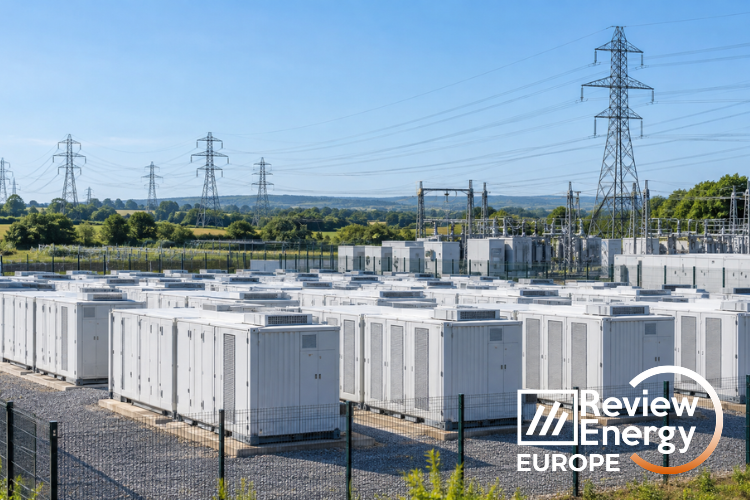
Ofgem has opened a consultation on a new financial mechanism initially targeting battery energy storage system (BESS) projects in Great Britain’s electricity connection queue, where 83 GW of prioritised battery capacity remains despite a significant reduction in projects following the recent connections reform.
The proposed mechanism, known as the Oversubscribed Technologies Commitment Fee (OTCF), would require projects using technologies whose connection queues significantly exceed projected system requirements to demonstrate a greater financial commitment to retain their position.
Ofgem’s preliminary view is to approve the CMP470 modification to the Connection and Use of System Code (CUSC), although a final decision has not yet been made. The consultation will remain open until 1 October 2026.
83 GW of batteries remain in the queue
Ofgem said the volume of battery projects currently under development remains substantially above the levels expected to be required by Britain’s electricity system.
Alongside the 83 GW of prioritised BESS capacity in the reformed connections queue, Great Britain already has around 7 GW of operational battery storage, bringing the combined capacity of operating and prioritised projects to approximately 90 GW.
This compares with projections from the National Energy System Operator (NESO) indicating that around 24 GW of battery storage could be required by 2030 to support the Clean Power 2030 target, increasing to approximately 29 GW by 2035.
According to Ofgem, the current prioritised pipeline is 14.8 GW above the upper end of the estimated 2030 requirement and 61.7 GW above the projected requirement for 2035.
Financial commitment could rise from £3,000/MW to £25,000/MW
Under the proposal, affected projects would initially face a financial commitment of £3,000/MW, with the amount potentially increasing progressively to a maximum of £25,000/MW if significant oversubscription persists.
The original CMP470 proposal would trigger the mechanism when the capacity of a particular technology in the queue exceeds the relevant capacity target by more than 50%. The commitment would cease to apply once oversubscription falls below 25%.
The OTCF would operate through existing user commitment arrangements. As a result, a project whose existing financial security already exceeds the amount required under the OTCF would not necessarily have to provide additional security solely because of CMP470.
NESO would monitor oversubscription levels and determine when the financial commitment should be activated or increased. Projects could provide the required security through instruments including letters of credit, guarantees or cash.
If a project subsequently leaves the connection queue before becoming operational and the commitment becomes part of its cancellation charge, the proceeds would ultimately be returned to consumers through Transmission Network Use of System (TNUoS) charges, according to Ofgem.
Connections reform already removed 40% of battery capacity
The proposal follows Britain’s wider connections reform, which has already removed approximately 40% of transmission-connected battery capacity that failed to meet the criteria established under the new process.
Despite that reduction, 83 GW of BESS projects have retained prioritised positions, prompting concerns that the remaining pipeline continues to substantially exceed the amount of storage expected to be required.
Ofgem said an excessively large pipeline makes it more difficult to determine which projects are genuinely likely to reach construction and can complicate decisions over future network investment.
Projects that ultimately fail to proceed can also occupy connection capacity and influence network reinforcement plans that may later prove unnecessary.
Ofgem and the Department for Energy Security and Net Zero (DESNZ) had already raised concerns in April that the volume of battery storage progressing through the reformed connections process remained significantly above projected requirements.
Some projects were protected during the reform because they had reached advanced development stages, including securing planning permission, Capacity Market contracts or near-term connection dates.
Targeting projects unlikely to be built
CMP470 was originally proposed by Field Energy Limited on 20 March 2026, with Ofgem subsequently agreeing that the modification should be progressed under an urgent timetable.
The proposal is intended to create an additional incentive for projects with a low likelihood of proceeding to withdraw from the queue earlier, freeing connection capacity and improving the information available for network planning.
Ofgem stressed that large-scale storage will remain important as electricity demand increases and greater volumes of renewable generation are integrated into the system. The regulator’s concern is therefore not the deployment of batteries itself, but whether the connection pipeline accurately reflects projects that are likely to be delivered.
The consultation considers the original proposal alongside six alternative modifications, covering issues including the level and duration of the financial commitment, how it would be applied and the treatment of projects combining multiple technologies.
Following the consultation, which closes on 1 October, Ofgem expects to issue its final decision later in 2026.





Comentarios
Sé el primero en comentar...