




Portugal unveils national energy storage strategy and capacity targets through 2040
Portugal has presented the content of its Strategy and Measures for Energy Storage in the National Electricity System, a package that, for the first time, sets concrete energy storage capacity targets through 2040, introduces a new model for allocating grid connection capacity and strengthens municipalities' participation in the economic benefits generated by energy projects.
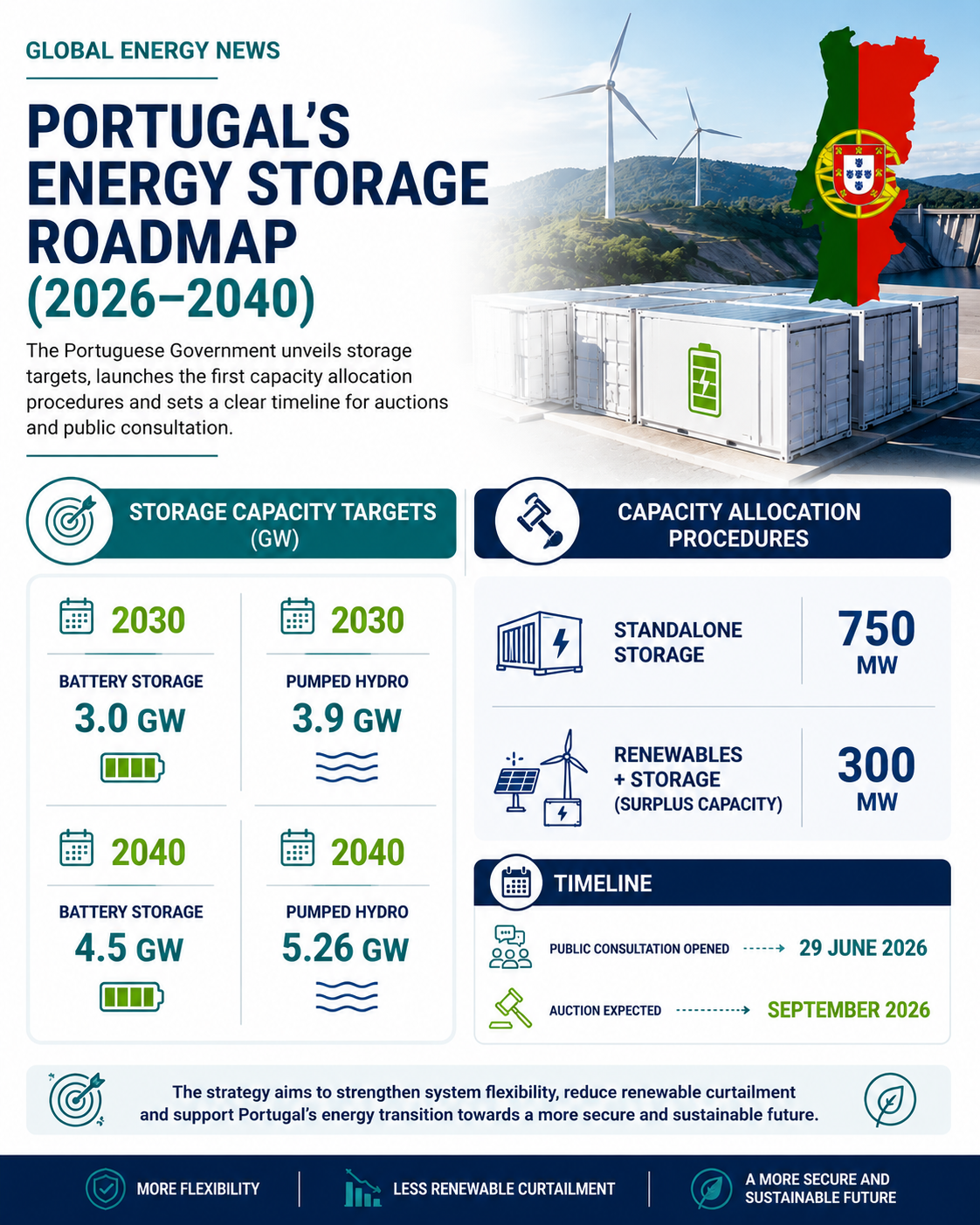
The preparation of the strategy had already been announced by the Government in May, alongside plans to launch a 750 MW standalone battery storage auction. However, during the presentation held on 29 June, the Government unveiled for the first time the storage capacity targets for 2030 and 2040, the design of the new capacity allocation procedures and the regulatory measures that will support their implementation.
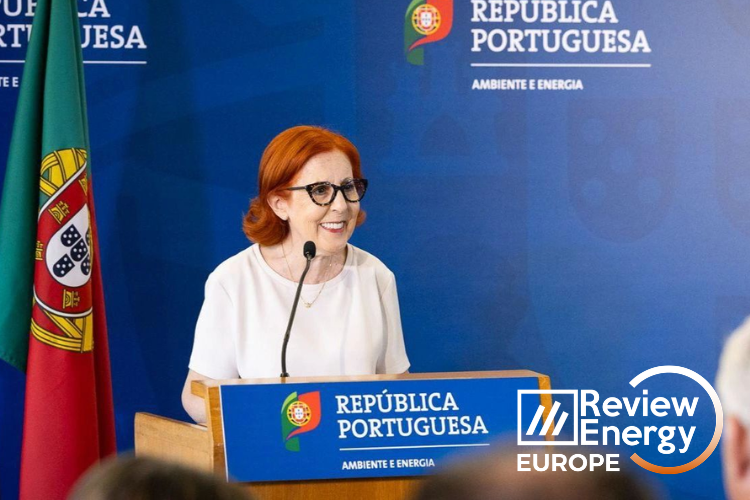
Speaking at the event, Minister for Environment and Energy Maria da Graça Carvalho described energy storage as a key infrastructure for integrating higher shares of renewable generation, increasing power system flexibility and strengthening Portugal's energy security. She also said the country is entering a new phase in which the priority is no longer simply installing additional renewable capacity, but ensuring that new capacity is properly integrated into the grid and delivers value to the electricity system.
Storage targets through 2040 and new allocation procedures
One of the main announcements was the publication of storage targets based on a technical study carried out by INESC TEC and the Instituto Superior Técnico. The study proposes reaching 3 GW of battery storage and 3.9 GW of pumped hydro storage by 2030, increasing to 4.5 GW of batteries and 5.26 GW of pumped hydro by 2040. According to the analysis presented, this deployment would reduce renewable energy curtailment, lower gas-fired generation, improve the integration of wind and solar power and reduce overall electricity system costs.
As part of the strategy, the Government also introduced the first two capacity allocation procedures, marking the beginning of a new model for granting grid access. The first will allocate 750 MW to standalone energy storage projects, while the second will make 300 MW of surplus grid capacity available for renewable energy projects combined with storage. According to the Government, both procedures are intended to become part of a regular and more predictable framework for allocating grid capacity in line with electricity system planning.
Municipal participation and regulatory changes
Another key measure is the introduction of an economic participation mechanism for municipalities hosting these projects. Under the standalone storage procedure, 30% of the revenues generated will be allocated to municipalities, while the remaining 70% will go to the National Electricity System. For projects using surplus grid capacity, the distribution will be reversed, with 70% allocated to municipalities. The Government explained that this compensation will be paid annually throughout the operational lifetime of each project.
The Government also announced a specific incentive for agrivoltaic projects, which will receive a 30% bonus as a tie-break criterion under the surplus capacity procedure, encouraging projects that combine renewable electricity generation with agricultural activities and reduce land-use conflicts.
In parallel, the Minister confirmed the publication of Decree-Law No. 130/2026, which amends the legal framework governing Portugal's National Electricity System by partially transposing the European electricity market legislation and accelerating the deployment of renewable energy. Among other measures, the decree requires developers of new renewable energy projects to submit a community engagement plan during the permitting process and establishes the creation of a National Plan for the Promotion of Knowledge and Public Acceptance of Renewable Energy, to be prepared by the Directorate-General for Energy and Geology (DGEG) within 90 days.
Complementing these measures, the DGEG has opened a public consultation on a draft regulation establishing the technical requirements for connecting and operating energy storage facilities, including provisions related to frequency response, grid-forming operation and synthetic inertia, with the aim of strengthening the technical integration of battery storage into Portugal's electricity system.


Comentarios
Sé el primero en comentar...