


Portugal to launch 750 MWh battery storage auction on 29 June under new energy strategy
Portugal’s Minister for Environment and Energy, Maria da Graça Carvalho, announced a new set of key energy policy measures during her speech at the “Energia que Move o País” conference.
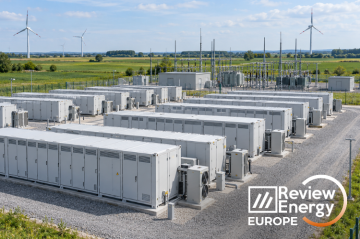
One of the most significant announcement is that the Portuguese government will move forward with a competitive auction for 750 MW of battery storage capacity, a major step to strengthen the national electricity system and accelerate renewable integration. All key details of the scheme — including timeline, locations, and grid connection points — will be formally presented on 29 June.
29 June: a pivotal date for Portugal’s energy system
The minister confirmed that on the same date the government will also launch a public consultation on the National Energy Storage Strategy.
This strategy will formally recognise both electrochemical batteries and pumped hydro storage as core pillars of the energy system. Portugal already has more than 3.6 GW of reversible hydroelectric capacity, which the government aims to further expand and strategically use as long-duration storage.
Storage as the backbone of a renewable system
Carvalho stressed that energy storage is not optional, but a structural requirement for a decarbonised grid: “Storage is not just a technological solution, it is a necessary condition for an efficient decarbonised electricity system.”
The government has already supported more than 43 battery projects, representing around 500 MW of installed storage capacity, under Portugal’s Recovery and Resilience Plan (PRR).
The minister also highlighted data from Portugal’s energy regulator ERSE, noting that in 2025 Portuguese consumers have benefited from electricity prices below the European average.
Portugal also reached a milestone in early 2026, with over 80% renewable penetration in electricity generation during the first quarter, placing the country among the EU leaders in clean energy.
Reducing fossil fuel dependence
The government continues to follow its PNEC 2030 roadmap but has set a more ambitious target: a 50% reduction in fossil fuel dependence by 2034.
To achieve this, the strategy focuses on:
- expansion of electricity grids,
- large-scale energy storage,
- increased renewable generation,
- development of renewable gases such as biomethane, SAF, and e-fuels.
Policy focus: execution and acceleration
Carvalho closed her intervention with a strong emphasis on implementation: “We cannot, nor will we, slow down efforts on climate action and the energy transition. Our focus is execution.”
With 29 June set as a key policy milestone, Portugal is positioning itself to further consolidate its role as one of Europe’s most advanced and renewable-intensive electricity systems.
????????? Participei hoje na conferência “???????????????????????????? ???????????? ???????????????? ???? ?????????????????”, promovida pelo ECO no âmbito da Semana da Energia 2026.
— Maria Graça Carvalho (@mgracacarvalho) May 29, 2026
A conferência reuniu especialistas, empresas e representantes do setor para debater os desafios da transição energética, valorização do… pic.twitter.com/LTaJsJxEKZ

Comentarios
Sé el primero en comentar...