



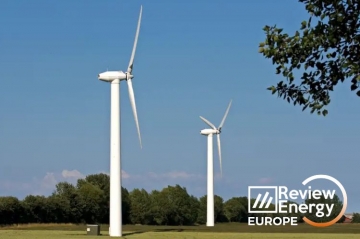
Germany installed nearly 1.6 GW of new onshore wind in the first half of 2023
In the first half of 2023, 331 onshore wind turbines with a cumulative output of 1565 megawatts (MW) were installed in Germany. This is the result of a report by Deutsche WindGuard on behalf of the German Wind Energy Association (BWE) and VDMA Power Systems. The gross addition in the first half of 2023 is already 65 percent of the addition for the whole of 2022.
Despite existing challenges, the upper range of the partnership's forecast of 2.7 to 3.2 GW is likely to be achieved. This is a good industry performance. However, the expansion does not meet the requirements to reliably achieve an expansion target of 115 GW in 2030.
The associations assessed the measures taken by the federal government to date and the current dynamics in construction and approvals as positive. However, they expressly emphasize that even the significantly increasing number of approvals is not sufficient to achieve the expansion path of 10 GW per year from 2025.
However, they added that the discrepancy between reality and targets is still too large and can only be reduced by rapid and consistent implementation of the measures decided at the federal level, above all at the behest of the Federal Ministry of Economics. This requires intensive efforts by other departments, such as the Federal Ministry of Transport, the state ministries involved and local authorities. It is essential to ensure that the gap between the additions and the target does not become larger, but smaller.
In addition, they pointed out that failure to meet onshore wind energy development targets can affect progress in other sectors. Heat pumps, electromobility and green hydrogen can only contribute to achieving climate targets if onshore wind, in particular, achieves the expansion path and, therefore, sufficient green electricity is available. Failures each year increase the pressure in the following years and increase the implementation challenges.
Bärbel Heidebroek, President of the German Wind Energy Association BWE, said that "Schleswig-Holstein, Lower Saxony and North Rhine-Westphalia lead the list of new construction at a moderate level and benefit from the weak development in other federal states. In southern Germany in particular, expansion continues to decline, but there is also significant room for improvement in the leading countries. The strong increase in permits is based in North Rhine-Westphalia, Schleswig-Holstein, Lower Saxony and, to a lesser extent, Brandenburg."
Bottlenecks
But Dennis Rendschmidt, CEO of VDMA Power Systems added that "tedious planning and approval procedures and lack of available space continue to represent the biggest obstacles to expansion. According to the onshore wind agency, processing times have recently increased to a new high in 2021 after a brief decrease and are now 24.5 months . Resolutions and goals are in place. Valuable time should not be lost until the federal states finally implement these regulations. At the current pace, the goals will not be met."
Lengthy approval processes for the transportation of systems are also a real bottleneck for project realization and a heavy burden for the industry. With accelerated and simplified approval procedures, the number of applications should be significantly reduced, industry and authorities should be relieved and approval times and costs should be significantly reduced. In addition, corrective measures are needed in the infrastructure sector to reduce transport bottlenecks. Even before expansion begins, the situation on the street must be resolved quickly and nationwide. Inland navigation will probably only be able to take over a larger share of transport in the medium to long term when access routes, ports, waterways and locks are expanded.
The associations see accelerated repowering as an important lever to quickly achieve expansion targets. "Replacing end-of-life wind turbines with modern turbines increases the efficiency of power generation, reduces costs and supports the acceptance of wind energy. It is important to significantly advance repowering projects by accelerating the approval process. The potential is around 13 600 systems with an output of more than 18 GW by the end of 2028. In the short and medium term, there is a repowering potential of up to 54 GW here," explained Bärbel Heidebroek.
"Manufacturers and suppliers need a market-oriented profitability perspective through projects and the removal of obstacles to utilizing their capacities and managing an acceleration in the future; without this, the necessary investments in research, locations and personnel cannot be made. Strengthening the European supply chain requires better framework conditions and political support for the strategic value of building strong plants in Europe. The previous approaches of the Green Deal Industrial Plan are not sufficient for this," Dennis Renschmidt concluded.

Comentarios
Sé el primero en comentar...