
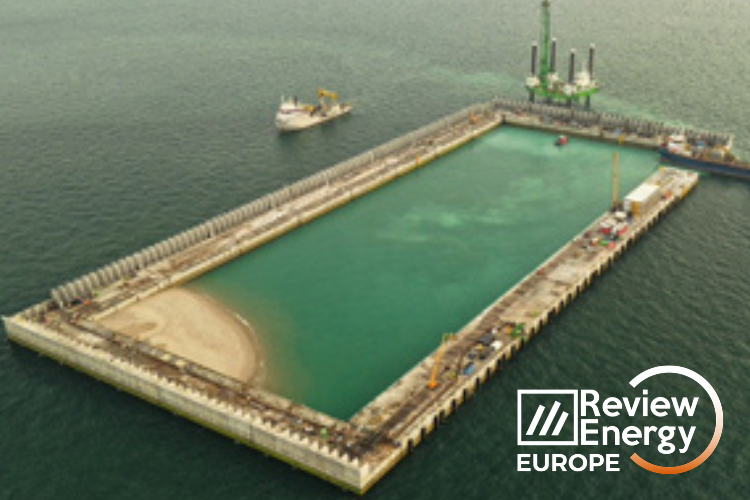


Princess Elisabeth Energy Island reaches key construction milestone
The Princess Elisabeth Energy Island is being built in the Belgian part of the North Sea to bring offshore wind power efficiently to households and businesses onshore. It will enable the connection of Belgium's second offshore wind zone and could also serve as the basis for a future energy interconnector with the UK.
Elia Transmission Belgium CEO Frédéric Dunon described the completion of the foundation works as a major step in expanding Belgium's offshore energy infrastructure, which he said is important for the country's energy transition and energy independence.
The project is also designed with environmental considerations in mind. Elia said the caissons were developed using a nature-inclusive design intended to support and enhance biodiversity on and around the island.
As part of the Reefcovery project, young oysters were raised on rocks and installed around the island in late July. According to Bart Callens, Princess Elisabeth Island project director at Jan De Nul, the rocks help protect the island from erosion while providing the basis for a new oyster reef. The work builds on the partners' experience in oyster reef restoration in the North Sea.
23 caissons weighing 22,000 tonnes each
The scale of the foundation structures reflects the complexity of the offshore construction work. Each caisson measures 58 metres in length, 28 metres in width and between 23 and 32 metres in height, depending on whether it includes a storm wall. Each weighs approximately 22,000 tonnes.
The caissons were built in Vlissingen, the Netherlands, where around 300 people worked on their construction each day. It took approximately three months to build each caisson before they were transported to their offshore locations and installed. The installation process was heavily dependent on weather conditions.
Gert De Smet, Princess Elisabeth Island project director at DEME, said the installation of the final caisson completed one of the project's most complex phases. He highlighted the preparation required to transport and install the 23 concrete structures and described the project as the first of its kind in the world.
With the foundation works now complete, construction of Princess Elisabeth Energy Island moves into its next phase ahead of the planned 2031 completion.



Comentarios
Sé el primero en comentar...