


Alliance to build an industrial-scale ammonia cracking plant in Germany
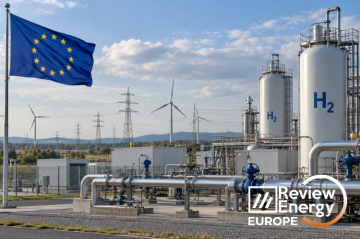
Uniper and thyssenkrupp Uhde have announced a strategic partnership to develop one of the world’s first large-scale ammonia crackers, a crucial technology for advancing the global hydrogen economy. The cracker will catalytically decompose ammonia into hydrogen and nitrogen at high temperatures, followed by a purification process to extract high-purity hydrogen.
As a first step, a demonstration plant with a processing capacity of 28 tonnes of ammonia per day will be constructed at Uniper’s site in Gelsenkirchen-Scholven, Germany. This pilot facility will serve as the foundation for a future hydrogen import terminal in Wilhelmshaven, where the technology is set to be deployed on an industrial scale.
A milestone for the hydrogen economy
The partnership aims to convert imported ammonia into usable hydrogen at scale, making it accessible for energy-intensive sectors such as energy, steel, and chemicals. This cooperation marks a key step in enhancing energy security and accelerating the sustainable transformation of industry. Ammonia’s role as a hydrogen carrier allows for cost-effective transport of green or low-carbon hydrogen from production sites around the world – a vital enabler for scaling up the hydrogen economy.
Holger Kreetz, COO of Uniper SE, commented: “Uniper is committed to establishing hydrogen as a key component of a future energy mix that balances security and sustainability. Meeting Germany’s future hydrogen demand will require imports. This partnership with thyssenkrupp Uhde is a major milestone in scaling hydrogen and decarbonising industry. The ammonia cracker in Scholven lays the groundwork for international hydrogen trade and makes hydrogen available across sectors.”
In addition, Nadja Håkansson, CEO of thyssenkrupp Uhde, added: “Uniper’s strong position in energy markets and their asset management expertise, combined with our proven capabilities in ammonia technology and large-scale plant engineering, form a solid foundation for success. This collaboration ensures the cracker is designed for optimal performance, safety, long-term reliability, and cost-efficiency across its full lifecycle.”
Government support and industrial innovation
The project receives funding from the Ministry of Economic Affairs, Industry, Climate Protection and Energy of the State of North Rhine-Westphalia, supporting the implementation of innovative components of the demonstration plant in Scholven. Both Uniper and thyssenkrupp Uhde are also contributing substantial private investment.
Mona Neubaur, Minister for Economic Affairs, Industry, Climate Protection and Energy of North Rhine-Westphalia, stated: “Hydrogen is a key technology for securing the future of our industry in North Rhine-Westphalia. No other federal state has such a demand for energy and raw materials to sustain its economy. With ammonia cracking technology, we can source green energy globally. This strengthens our region’s resilience and demonstrates how sustainability and supply security can go hand in hand.”
From demonstration to full-scale deployment
Ammonia cracking is widely regarded as the missing link in the development of a global hydrogen infrastructure. With a higher volumetric energy density and established transport logistics, ammonia is ideal for safely moving large quantities of hydrogen internationally. By converting low-carbon hydrogen into ammonia at source and cracking it at destination, the world can unlock clean hydrogen at scale using existing infrastructure.
Following successful laboratory testing, the construction and operation of the demonstration cracker are pivotal steps towards commercial deployment. Data collected during its operation will help optimise the technology and inform scale-up plans for a full industrial plant.
The cracker is being built at Uniper’s power plant site in Gelsenkirchen-Scholven, which is being redeveloped with a focus on sustainability. All necessary approvals have been granted, construction has begun, and commissioning is expected by the end of 2026.

Comentarios
Sé el primero en comentar...