
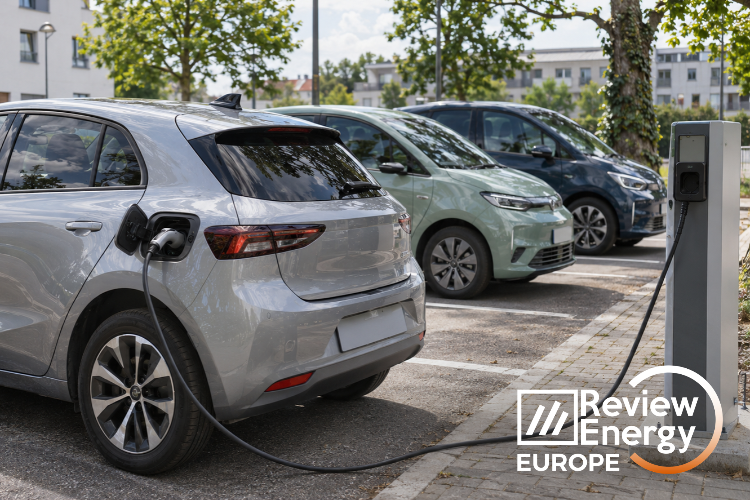


ACEA calls for five years of flexibility on CO2 targets to boost electric car sales in the EU
The European Automobile Manufacturers’ Association (ACEA) called on 25 November for the revised EU CO2 regulation for cars and vans to allow manufacturers to meet their emissions targets over a five-year averaging period starting in 2028. The association warned that limiting the period to three years and capping credit transfers would weaken the incentive to sell more battery electric vehicles (BEVs) in 2028 and 2029.
Under the mechanism, manufacturers whose average new-vehicle emissions fall below their target in one year could use the resulting credits to offset emissions above their targets in later years. ACEA argues that capping the number of credits manufacturers can carry forward would reduce the benefit of bringing more electric vehicles to market early.
Battery electric vehicles could account for 40% of sales in 2030
ACEA estimates that battery electric vehicles would need to account for 50–60% of manufacturers’ sales to meet the 2030 CO2 targets, roughly three times their current market share. A Mobility Global projection cited by the association puts that share at around 40% by 2030 across the 27 EU member states, Iceland and Norway.
ACEA estimates that the industry could face more than €45 billion in penalties between 2028 and 2032 under either the Franco-German proposal or the draft report from the European Parliament’s Environment Committee. Sigrid de Vries, ACEA’s director general, said the penalties could divert funds away from electrification at a time of intense global competition.
What the credit cap could mean for small EVs made in Europe
ACEA also points to the proposed super-credits for small battery electric vehicles made in the EU. The association says the incentive would have a limited effect before 2030 if manufacturers could carry forward only a portion of the credits they earn by beating their emissions targets in 2028 and 2029.



Comentarios
Sé el primero en comentar...