
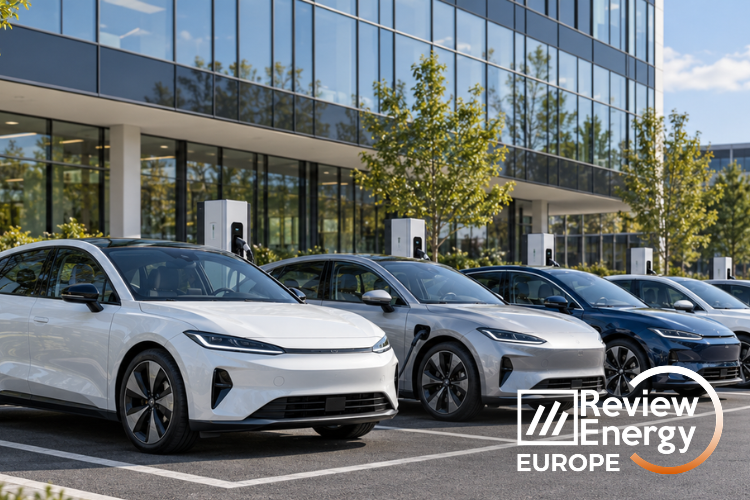


Electrifying company car fleets could generate 344,000 EU jobs by 2030
Electrifying large corporate car fleets could generate 344,000 additional jobs by 2030, according to a study published by Transport & Environment (T&E). The analysis links this potential to a combination of EU-wide electrification targets and national tax incentives restricted to European-made electric vehicles.
Under the most ambitious scenario, these measures could unlock €18 billion in additional investment and increase economic value creation by €20 billion compared with the baseline. Even a more moderate transition could generate 196,000 additional jobs, according to T&E’s announcement.
Tax incentives could accelerate fleet electrification
The analysis focuses on the Clean Corporate Vehicles Regulation (CCVR) and the conditions governing public financial support for company cars.
According to T&E, the framework sets a minimum target for 45% of new car registrations in large corporate fleets to be zero-emission by 2030. The organisation highlights Article 4, which links financial incentives to low- and zero-emission vehicles and European manufacturing requirements from January 2028.
In the most ambitious scenario, where incentives accelerate the replacement of combustion-engine cars, electric vehicles would account for 69% of new cars entering large corporate fleets in 2030.
Under those conditions, economic value creation would rise from €28 billion to €48 billion, while investment would increase from €20 billion to €38 billion, according to the estimates published by T&E.
Germany and Poland among the main beneficiaries
Germany could gain 134,000 additional jobs, representing 39% of the EU-wide employment increase calculated under the strongest scenario. In Poland, the potential would reach 38,500 additional jobs.
The benefits would extend beyond vehicle assembly. In Poland, the study projects that battery cell production could increase from 31 GWh to 81 GWh by 2030, with the battery sector accounting for 82% of the country’s additional employment.
T&E also uses Volkswagen as a case study. Against the group’s plans to cut 35,000 jobs by 2030, the accelerated electrification scenario could support up to 56,300 additional direct jobs at the manufacturer. This figure is a modelling result, rather than an announced recruitment plan.
Guaranteed demand to support European manufacturing
Sofie Grande y Rodriguez, Clean Fleets Policy Manager at T&E, argues that company cars offer a way to turn the electric vehicle transition into European industrial employment. The organisation says maintaining manufacturing requirements and the 2028 implementation timeline would provide greater certainty for investment.
The modelling, commissioned from Fraunhofer ISI, measures employment in full-time-equivalent positions, including direct, indirect and induced jobs. Its results depend on the electrification scenario and the implementation of the incentives assessed.
T&E is urging lawmakers to maintain the link between public financial support and European manufacturing to strengthen the electric vehicle supply chain and help planned battery factories move into construction.



Comentarios
Sé el primero en comentar...