


Europe’s EV transition stalls on structural gaps despite infrastructure growth
Europe’s transition to electric vehicles continued to advance in the second quarter of 2026, supported by new charging infrastructure and improved cost competitiveness for battery-electric vehicles (BEVs). However, according to the European Automobile Manufacturers’ Association (ACEA), structural gaps are still preventing widespread adoption.
The latest quarterly report from Transport & Mobility Leuven (TML) warns that progress in individual indicators has not yet produced a fundamental improvement in the conditions required for the mass electrification of European transport.
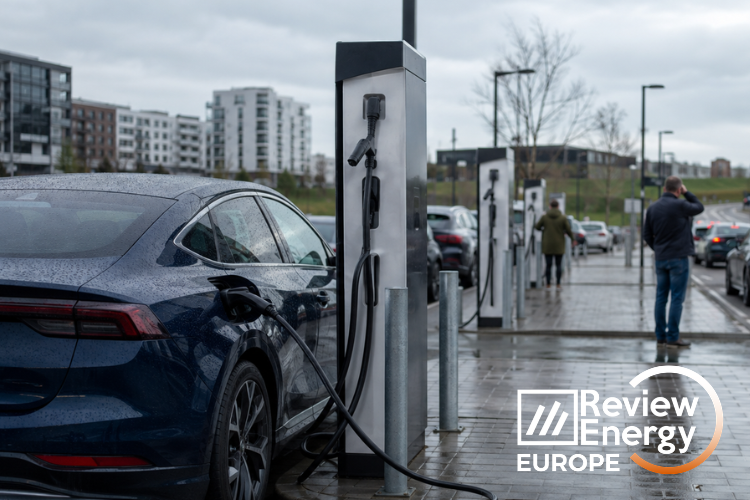
The EU’s total public charging capacity reached 41.6 GW in June 2026, representing a 29% increase from the previous year. Meanwhile, the number of public charging stations rose by 21% year on year, to an estimated 195,082 in May.
Despite this growth, the EU’s approximately 1.2 million public charging points remain well below the European Commission’s target of 3.5 million by 2030.
Infrastructure deployment also varies significantly across the bloc. The gap between the availability of electric charging stations and conventional fuel stations is particularly wide in Italy, Czechia, Poland, Spain, Greece and Bulgaria.
Higher petrol prices improve the relative position of EVs
The report also finds that BEVs have become more cost-competitive when drivers rely exclusively on public fast charging, compared with the second quarter of 2025.
However, TML says this improvement does not reflect a structural decline in electricity prices or charging fees. Instead, the most significant factor has been a 17% year-on-year increase in petrol prices.
The cost of operating an electric vehicle still depends heavily on where and how it is charged. Public charging is more expensive than home charging in every country analysed, with fast public charging proving particularly costly.
This disparity puts consumers without garages or private charging points—including many urban residents—at a significant cost disadvantage. For these drivers, the savings traditionally associated with electric vehicles can be substantially reduced.
Energy prices weigh on European industry
Europe’s high energy costs present another major obstacle. Although the gap narrowed slightly compared with the first half of 2025, industrial electricity prices in the EU remain nearly twice as high as in China and around 2.5 times higher than in the United States.
This disadvantage is especially significant for the energy-intensive manufacturing of electric vehicles and batteries. According to the report, persistently high electricity costs continue to weaken the competitiveness of European manufacturers against their international rivals.
The second-quarter findings reveal a transition moving at two different speeds: Europe is expanding its infrastructure and improving certain indicators, but deeper structural problems threaten to slow electrification.
Insufficient and unevenly distributed charging infrastructure, high electricity prices and the cost gap between drivers who can charge at home and those who depend on public networks continue to shape the economic viability of electric vehicles across Europe.





Comentarios
Sé el primero en comentar...