
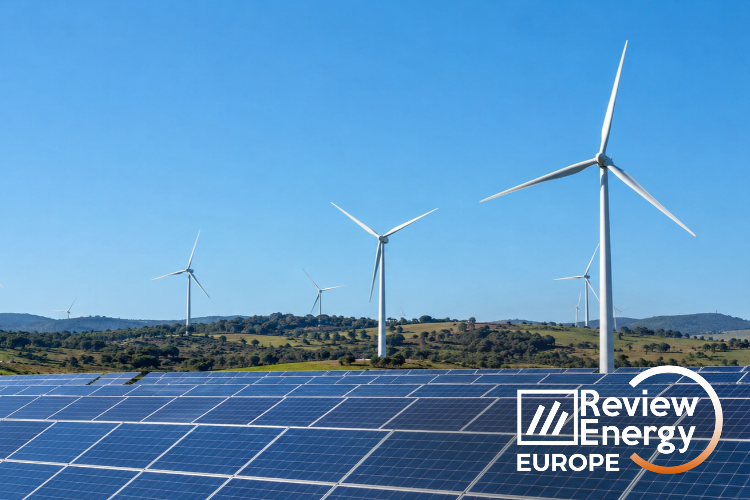


Germany sets third-quarter solar and wind generation records as renewable share reaches 66.5%
Renewable energy accounted for 66.5% of Germany's electricity generation in the third quarter of 2026, compared with 65.0% in the same period of 2025, according to the latest electricity market report published by the Federal Network Agency (Bundesnetzagentur) through its SMARD platform.
Between July and September, electricity fed into the public grid reached 111.1 TWh, up 11% year-on-year, mainly driven by increased solar and wind generation. Solar became the country's largest individual electricity generation source during the quarter, reaching a new record for this time of year.
The report also highlights that Germany returned to a net electricity export position, while wholesale electricity prices increased significantly compared with the third quarter of 2025, amid higher natural gas prices.
Solar generation reaches 31.5 TWh and sets a new quarterly record
Solar photovoltaic generation fed into the grid reached 31.5 TWh between July and September, the highest level ever recorded for a third quarter and the second-highest quarterly solar generation figure in Germany's history.
According to the Bundesnetzagentur, all three months of the period set new records for their respective months. July stood out in particular, with 12 TWh of solar generation, the highest monthly figure recorded to date.
The regulator attributes this performance to both the continued expansion of installed solar capacity and exceptionally sunny weather conditions during the quarter.
Germany also maintained a trend observed since 2024: by September, cumulative solar generation for the year had already exceeded the total recorded during the entire previous year.
SMARD's figures refer to electricity actually fed into the public grid. They therefore exclude electricity generated by residential photovoltaic installations that is consumed directly by households through self-consumption.
Onshore and offshore wind also set third-quarter records
Wind generation also performed strongly compared with the same period in 2025.
Onshore wind farms generated 24.9 TWh, an increase of 16.8% year-on-year, while offshore wind farms contributed 5.9 TWh, up 4%.
Both technologies recorded their highest generation levels to date for a third quarter.
Together, solar and wind generation accounted for 62.3 TWh of electricity fed into the grid, consolidating their position as the main renewable electricity sources during the period.
By contrast, electricity generation from hydropower, biomass and other renewable sources declined compared with the previous year.
Despite these reductions, the overall renewable share increased to 66.5%, exceeding both the 65.0% recorded in the third quarter of 2025 and the 66.4% registered between April and June 2026.
Electricity generation rises 11% as demand increases 1.1%
During the third quarter, total electricity fed into Germany's public grid reached 111.1 TWh, representing an 11% increase compared with the previous year.
Meanwhile, electricity consumption measured as grid load stood at 110.1 TWh, up 1.1% year-on-year.
One of the indicators highlighted by the Bundesnetzagentur is the evolution of residual load, which represents the portion of electricity demand that must be met by sources other than solar and wind.
Residual load reached 47.8 TWh, down 15.8% compared with the third quarter of 2025, reflecting the increased contribution of both renewable technologies to meeting electricity demand.
Regarding conventional generation, electricity production from lignite increased by 1.5% to 15.4 TWh, although its relative share of total electricity generation declined.
Hard coal generation rose by 39.3% to 6.4 TWh, while natural gas-fired generation decreased by 8.1% to 8.9 TWh.
The Bundesnetzagentur links these developments to the sharp increase in wholesale natural gas prices, which altered the relative competitiveness of different generation technologies.
Wholesale electricity prices increase 51.7% year-on-year
Despite the growth in renewable electricity production, Germany's average day-ahead wholesale electricity price reached €125.51/MWh, compared with €82.76/MWh in the third quarter of 2025.
This represents a 51.7% year-on-year increase, against a backdrop of higher natural gas prices, which averaged €64.10/MWh, approximately 91% above the level recorded in the same period of the previous year.
According to SMARD, higher gas prices influenced electricity price formation and reduced the competitiveness of combined-cycle gas power plants relative to other conventional technologies.
The number of periods with negative electricity prices also increased during the quarter. Germany recorded 675 fifteen-minute intervals with prices below zero, compared with 544 in the third quarter of 2025.
At the other end of the spectrum, the market registered 79 fifteen-minute intervals with prices above €300/MWh, compared with 48 a year earlier.
The highest price was recorded on 14 September, when the day-ahead market reached €740.01/MWh between 19:45 and 20:00.
At that time, wind generation was low and solar output was almost nonexistent due to the time of day, meaning electricity supply depended more heavily on conventional generation and pumped-storage hydropower.
Germany returns to a net electricity export position
Cross-border electricity trading also changed significantly during the quarter.
Germany exported 16.8 TWh of electricity, up 39.2% year-on-year, while imports decreased by 22.7% to 15.8 TWh.
As a result, the country recorded net electricity exports of 1 TWh between July and September 2026.
Austria was the main destination for German electricity exports, receiving 3 TWh, followed by Denmark, with nearly 3 TWh, and the Netherlands, with approximately 2.4 TWh.
The largest relative increase was recorded in exports to France, which rose by 209.2% to 1.3 TWh.
The Bundesnetzagentur explains that the sharp rise in French wholesale electricity prices made imports from Germany more economically attractive during certain periods.
Meanwhile, Denmark remained Germany's largest electricity import partner, supplying 3.9 TWh, followed by the Netherlands with 3.3 TWh and France with 2.4 TWh.
Another notable finding is that 72.2% of Germany's electricity exports originated from renewable sources, with solar photovoltaics accounting for the largest share among the generation technologies identified in the export breakdown.
The quarterly figures therefore reflect an electricity system in which solar and wind continue to increase their contribution to domestic generation, while fuel prices and European market conditions remain important factors influencing wholesale electricity costs and cross-border power flows.

Comentarios
Sé el primero en comentar...