


Solar projects are becoming too complex for standard solutions
For years, the solar industry has been driven by scale. Larger projects, more powerful modules and increasingly competitive technologies have helped photovoltaics become one of the world’s leading sources of new electricity generation.
But as the market matures, the challenge is changing. Solar projects are becoming more complex, and the ability to adapt a solution to each site is becoming increasingly important.
Terrain, climate, regulations, land use and construction conditions can vary significantly from one project to another. At the same time, developers and EPCs are under pressure to reduce costs, accelerate construction and maximise energy production over the lifetime of the plant.
This is putting engineering at the centre of project development.
Engineering is no longer a validation stage
Engineering can no longer be seen simply as a technical validation carried out once the main project decisions have already been made. It needs to be considered from the very beginning.
At Alphatracker, we see engineering as a strategic tool to optimise the total cost of a project and maximise its long-term performance. The earlier the technical solution is incorporated into the development process, the greater the opportunity to optimise the layout, reduce civil works and identify potential construction risks.
The objective is not simply to install the maximum possible capacity. It is to find the right balance between energy production, construction costs, structural performance, safety and operational efficiency.
This is particularly relevant as solar projects increasingly move into challenging sites.
We are seeing more plants being developed on steep slopes, irregular terrain and in demanding climatic conditions. These environments make it increasingly difficult to rely on standardised solutions. Instead of adapting the land to the tracker, the industry needs to increasingly adapt the tracker to the land.
At Alphatracker, our structures can be installed on slopes of up to 26% without requiring earthworks, helping to reduce civil engineering requirements and making more complex sites technically and economically viable.
Agrovoltaics requires a different approach
Agrovoltaics is perhaps one of the clearest examples of why flexibility is becoming essential.
Markets such as Germany are seeing growing interest in projects that combine agricultural activity with solar generation. But successful agrovoltaic projects require more than simply installing photovoltaic modules above agricultural land.
The technology needs to work alongside the agricultural activity.
The tracker’s configuration, movement and operating strategy must take into account the crop, access requirements, agricultural machinery and the specific characteristics of the site. This is why having different tracker configurations is important. At Alphatracker, we offer both 1P and 2P solutions, including a 1P tracker capable of reaching up to 90 degrees of tilt, allowing the system to be adapted to different agricultural environments.
The objective is to ensure that solar generation complements agricultural activity rather than compromising it.
And this principle goes beyond agrovoltaics. It reflects a broader transformation in solar engineering: the best solution is not necessarily the most standardised one, but the one that responds most effectively to the reality of the site.
Digitalisation can make better decisions possible
Flexibility also depends on how quickly decisions can be made. The early stages of a solar project often involve analysing terrain, testing different layouts and comparing technical configurations. Traditionally, this process could require significant time and resources.
Digital tools are changing that. With MAXI-DESIGNER, Alphatracker has digitalised part of this initial design process, enabling users to analyse terrain, evaluate different layouts and select an appropriate configuration within minutes.
This can be particularly valuable for smaller EPCs and installers, who need solutions that are quick to configure, easy to supply and straightforward to install.
But digitalisation should not replace engineering. It should make engineering more efficient.
The same applies to plant operation. With Autonomous Tracker, the focus shifts from simply controlling a tracker to making it more responsive to meteorological and operating conditions.
By adapting tracker behaviour, the system can help improve availability, optimise energy production and reduce mechanical loads and maintenance requirements.
This is an important step towards a more intelligent photovoltaic plant — one that does not simply operate according to predefined parameters, but responds to the conditions in which it is operating.
The real objective is project value
The tracker market has traditionally focused heavily on energy yield, and rightly so. Increasing production remains one of the main reasons developers choose tracking technology.
However, maximising yield alone does not necessarily mean maximising project value.
A solution that delivers additional energy but requires extensive earthworks, increases construction complexity or creates higher maintenance requirements may not be the most competitive option overall.
The real challenge is to optimise the entire project equation.
That means looking simultaneously at energy yield, civil works, structural requirements, installation, logistics, maintenance and long-term reliability.
This is where project-specific engineering can make a real difference.
A global industry needs local adaptation
The same principle applies to international expansion.
As solar companies enter new markets, they cannot simply transfer the same solution from one country to another. Different markets bring different terrain, weather conditions, regulations, construction practices and customer requirements.
Our international growth at Alphatracker has reinforced the importance of this flexibility. Internationalisation is not only about expanding geographically. It is also about taking engineering knowledge into new markets and adapting it to local realities.
This is one of the reasons why events such as Intersolar Europe remain so valuable. They bring together developers, EPCs, investors and technology providers facing very different challenges, creating an opportunity to exchange knowledge and understand where the industry is heading.
And the direction is increasingly clear.
The next generation of solar projects will not be defined only by how much capacity they can install, but by how intelligently that capacity is designed and operated.
As photovoltaic projects become more complex, standardisation alone will not be enough. The competitive advantage will increasingly come from combining flexible engineering, digitalisation and intelligent technology to create solutions that fit each site.
The future of solar is not about making every project look the same.
It is about making every project perform at its best.
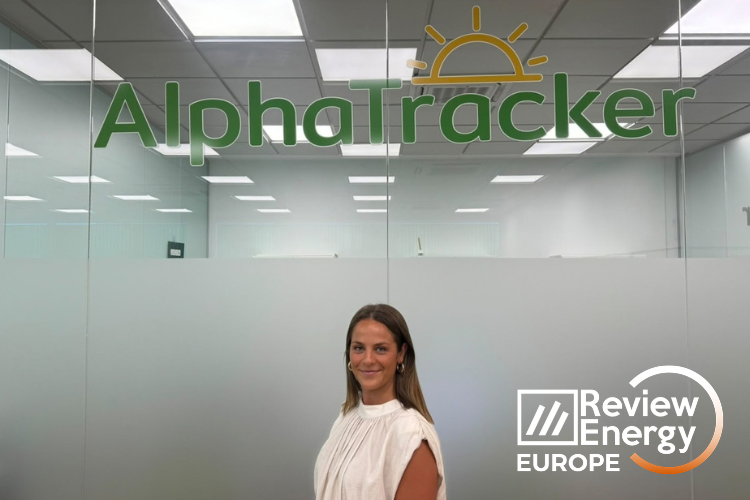
By María de la O Redondo García, Sales Executive at Alphatracker


Comentarios
Sé el primero en comentar...