
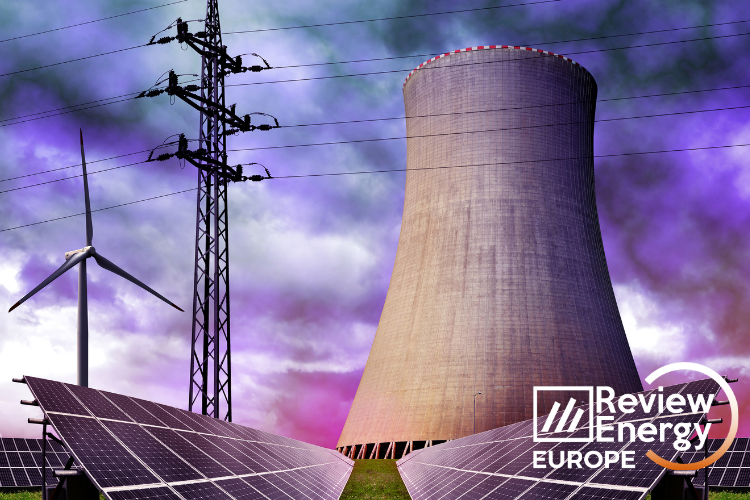


Commission underlines combined role of renewables and nuclear in EU climate goals
The European Commission has presented a new assessment highlighting the essential role of nuclear energy in supporting renewables as the EU pushes to meet its 2040 decarbonization targets. According to the latest Illustrative Nuclear Programme (PINC), over 90% of electricity in the EU is expected to come from decarbonized sources, led by renewables energies complemented by nuclear energy.
While renewables will remain the main driver of the EU’s energy transition, the Commission stresses that nuclear power offers a low-emission, stable backup to ensure grid reliability and energy security, especially during intermittent renewable output.
Reaching these goals will require around €241 billion in nuclear investments by 2050, for both the life extension of current reactors and the construction of new ones. Additional funding is also expected for small modular reactors (SMRs), advanced modular reactors (AMRs), microreactors, and nuclear fusion in the longer term.
“The EU's path to climate neutrality relies on a massive rollout of renewables, complemented by safe, low-carbon nuclear technologies,” the Commission stated.
Nuclear capacity is projected to grow from 98 GWe in 2025 to 109 GWe by 2050.
The Commission also calls for high safety standards, responsible radioactive waste management, and international cooperation to diversify fuel supply and avoid dependency. Talent development, innovation, and support for nuclear start-ups are also considered key for future competitiveness.
The final version of the PINC will be published after review by the European Economic and Social Committee and discussed during today’s Energy Council meeting in Luxembourg.



Comentarios
Sé el primero en comentar...