
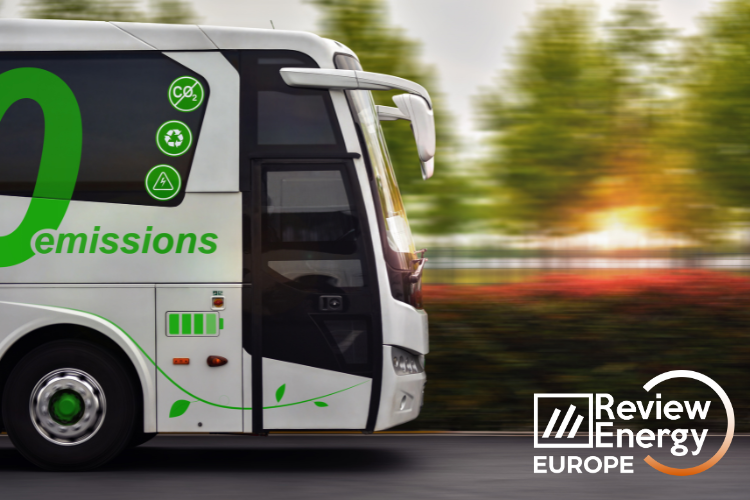


EU reaches landmark agreement to reduce CO2 emissions for heavy duty vehicles
The Council and the European Parliament’s negotiators today reached a provisional political agreement on CO2 emission standards for heavy-duty vehicles (HDVs). The aim is to further reduce CO2 emissions in the road transport sector and to introduce new targets for 2030, 2035 and 2040. The new rules will contribute to fulfilling the EU’s 2030 climate ambitions and reaching climate neutrality by 2050.
The proposal also aims to encourage an increasing share of zero-emission vehicles (ZEVs) in the EU-wide heavy-duty vehicle fleet, while ensuring that innovation in the sector and its competitiveness are preserved and enhanced.
The agreement is provisional pending formal adoption by both institutions.
Scope of the regulation
The co-legislators agreed to expand the scope of the regulation to make almost all new heavy-duty vehicles with certified CO2 emissions – including smaller trucks, urban buses, coaches and trailers – subject to emission reduction targets.
An exemption from the CO2 reduction targets set in the regulation will apply to:
- small-volume manufacturers and vehicles used for mining, forestry and agriculture
- vehicles for use by the armed forces and fire services
- vehicles for use in civil protection, public order and medical care
The provisional agreement also extends the scope of the regulation to vocational vehicles such as garbage trucks or concrete mixers at a later stage (2035). In addition, the Commission will analyse the possibility of including smaller lorries (under 5t) in the scope.
in addition, the provisional agreement also addresses the issue of retrofitted vehicles, that is conventional vehicles converted to ZEVs, allowing for the transfer of such vehicles between manufacturers. The co-legislators agreed to task the Commission with assessing, by 2025, the need to facilitate the market uptake of retrofitted HDVs through harmonised rules for their approval.
New emission reduction targets
In line with the EU’s climate objectives for 2030 and beyond, the Council and Parliament maintained the targets set by the Commission in its proposal for 2030 (45%), 2035 (65%), and 2040 (90%), in addition to the 2025 reduction target of 15% which was already provided for in the current regulation. These targets will apply to heavy trucks over 7.5t and coaches.
The co-legislators agreed to set the targets for trailers at 7.5% and for semi-trailers at 10% (Annex I). They also introduced the definition of ‘e-trailers’ to bring legal clarity and adapt the existing regulation to the technical developments in this new type of trailer, considering the potential of e-trailers to contribute to reducing the CO2 emissions of trailers.
The proposed amendment introduces a 100% zero-emission target for urban buses by 2035, while setting an intermediate target of 90% for this category by 2030. The co-legislators agreed to exempt inter-urban buses from this target and place this type of HDVs under the general targets for coaches.
To the news has reacted the Director General of ACEA, Sigrid. de Vries emphasizing: “Electric charging and hydrogen refilling infrastructure, comprehensive carbon pricing schemes, and meaningful support measures for transport operators to invest quickly: these are the key ingredients for rapidly decarbonising the heavy-duty transport sector, in addition to zero-emission vehicles.” In addition, de Vries explained: “We cannot continue boldly setting ambitious targets for vehicle manufacturers and expect swift and smooth implementation to follow. Without an enabling framework to shore up demand for the zero-emission models, achieving targets will be impossible, especially with the envisaged timeline.”
Next steps
In 2027, the Commission will conduct a comprehensive review of the amended Regulation, assessing its effectiveness and impact on the pre-established objectives. It will focus on developing a common methodology for the measurement and reporting of CO2 emissions in the full life cycle of new heavy-duty vehicles, as well as analyzing the role of a carbon correction factor (CCF) in the transition to zero-emission mobility in the heavy-duty vehicle sector. It will also examine the feasibility of a methodology for registering heavy-duty vehicles using exclusively CO2-neutral fuels.
The resulting provisional agreement is currently awaiting approval, ready to be submitted to the representatives of the Member States in the Council (Coreper) and to the Environment Committee of the Parliament. In case of approval, the text will be formally adopted by both institutions, after review by legal-linguistic experts, before publication in the EU Official Journal and entry into force.





Comentarios
Sé el primero en comentar...