




UK government proposes raising community ownership in renewable energy projects from 5% to 20%
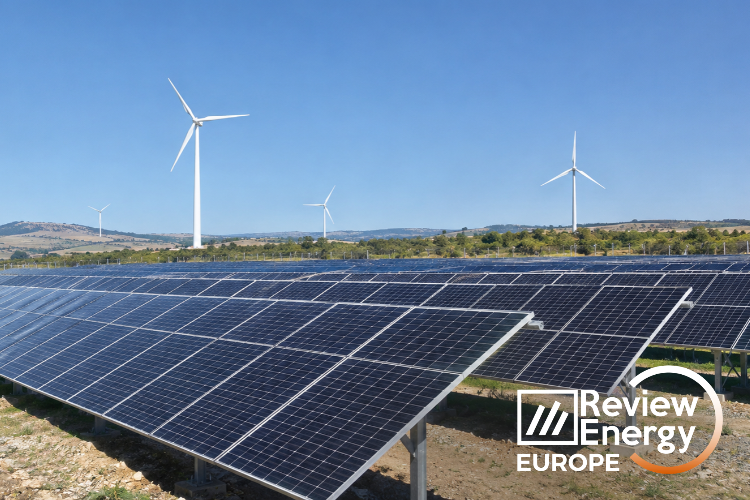
The UK government introduced the Energy Independence Bill to Parliament on 4 November 2026, proposing to expand opportunities for local communities to invest in renewable energy generation projects, with a maximum share of up to 20%, compared with the current 5% limit.
The legislation, introduced by the Department for Energy Security and Net Zero (DESNZ), would amend the Infrastructure Act 2015 to enable the government to require certain developers and operators to offer investment opportunities to local residents and community organisations.
It also proposes lowering the minimum project capacity threshold from 5 MW to 1 MW, potentially extending shared ownership requirements to a wider range of renewable energy developments.
According to the government, the objective is to allow communities located near renewable energy installations to acquire an economic stake and benefit financially from electricity generation projects in their area.
However, the bill must still complete the parliamentary process, and the specific conditions governing its implementation will need to be established through secondary legislation.
Communities could invest in renewable energy projects from 1 MW
One of the proposed amendments concerns the Community Electricity Right, a mechanism established under UK legislation to facilitate community investment in renewable electricity generation projects.
The bill would enable the Secretary of State to introduce regulations requiring developers to offer local communities an investment opportunity representing up to 20% of the capital costs of an eligible development.
This would increase the existing maximum threshold of 5%, although the specific percentage applicable to projects would be determined through subsequent regulations.
The proposal would also allow the minimum installed capacity threshold to be lowered from 5 MW to 1 MW or more, increasing the number of renewable energy projects potentially covered by the mechanism.
According to the government, communities could use income generated through these investments to support local initiatives, including measures to reduce electricity bills, community services and public facilities.
The measure does not mean that communities would automatically receive a 20% ownership stake in renewable energy projects. Instead, it would establish an opportunity to acquire an economic interest, subject to the conditions set out in future regulations and the investment made.
Solar and onshore wind projects above 5 MW would provide community benefits
The Energy Independence Bill also includes provisions concerning financial benefits for communities hosting renewable energy installations.
The government proposes legally binding agreements between developers or operators and host communities for new onshore wind farms and ground-mounted solar photovoltaic projects exceeding 5 MW.
These agreements would provide financial contributions or benefits in kind to support local projects and community needs.
In the documents accompanying the bill, DESNZ sets out the following proposed minimum contribution levels:
-
Onshore wind: £5,000 per installed MW per year.
-
Ground-mounted solar PV: £700 per installed MW per year.
The final amounts would be established through secondary legislation and could vary by technology.
Under these indicative rates, a 50 MW onshore wind project would contribute £250,000 annually, while a ground-mounted solar PV installation of the same capacity would contribute £35,000 per year.
The government indicates that communities would be able to determine how the funding is used, including investment in local infrastructure, skills development and community services.
This community benefits framework is separate from the shared ownership mechanism. Therefore, the 5 MW threshold proposed for mandatory community contributions should not be confused with the 1 MW threshold contemplated for expanding shared investment opportunities.
The bill also includes measures for battery storage and electricity flexibility
The proposed legislation includes provisions relating to battery energy storage and the use of renewable electricity.
Among these, the government plans to introduce powers to remove certain charges applied to electricity that is stored and subsequently exported back to the grid.
The measures would cover technologies such as battery energy storage systems and bidirectional electric vehicle charging, also known as vehicle-to-grid (V2G), alongside certain flexible electricity uses that help absorb renewable generation.
The objective is to address charging arrangements that may discourage electricity storage and consumption during periods of higher generation availability.
The bill would also give the government powers to introduce smart functionality requirements for certain battery storage systems.
These provisions form part of the proposed reforms intended to increase electricity system flexibility and facilitate participation by consumers and distributed energy technologies.
Reforms aim to accelerate electricity network development
The Energy Independence Bill also proposes changes to procedures covering permits, land access rights and works required for electricity infrastructure development.
The government aims to facilitate the construction and upgrading of electricity networks, as well as connections for generation projects and new electricity consumers.
It has also announced plans to introduce a legislative amendment to establish Great British Grid, a public body associated with electricity infrastructure development.
The bill addresses aspects of electricity market regulation and system planning, with the aim of coordinating new generation development and network investment.
The proposed legislation remains at an early stage of parliamentary consideration and does not yet establish when the obligations would come into force.
Implementation of the 20% community investment limit, the potential inclusion of projects from 1 MW and minimum community benefit contributions for solar and onshore wind installations will depend on parliamentary approval and subsequent secondary legislation.




Comentarios
Sé el primero en comentar...