
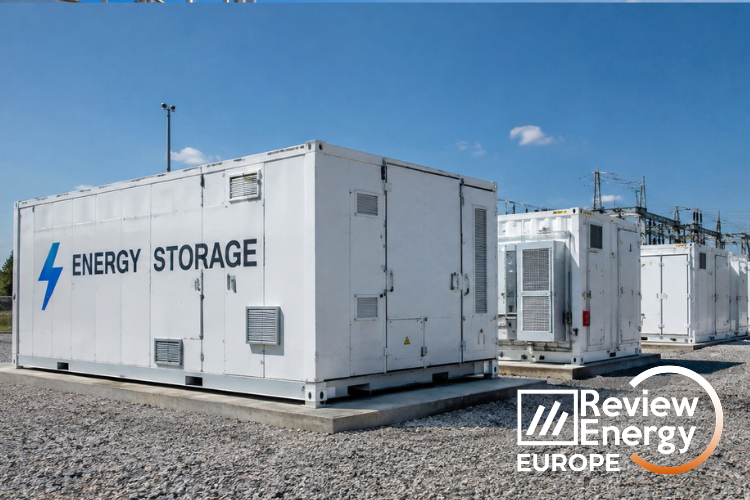


EU report maps technologies to electrify industrial processes
The European Union aims to increase the share of electricity in final energy consumption to 46% by 2040, as it seeks to reduce fossil fuel dependence, improve energy security and strengthen industrial competitiveness. The European Commission’s Electrification Action Plan, presented sets out measures to accelerate the shift from fossil fuels to electricity across the economy.
Renewable energy accounted for 49.9% of gross electricity consumption in the EU in 2025, up from 15.9% in 2004, according to Eurostat. However, electricity still represents only 23% of the bloc’s final energy consumption. The Commission has set 32% by 2030 as a reference for electricity’s share of final energy consumption, under the Clean Industrial Deal and the Affordable Energy Action Plan.
The indicative 46% target for 2040 will be assessed as part of the post-2030 Energy Union package. According to the Commission, reaching this level of electrification could reduce the EU’s annual fossil fuel import bill by €260 billion by 2040.
High electricity prices remain a barrier
Despite the potential economic and environmental benefits, several barriers continue to slow electrification. Electricity often costs three times as much as gas, while grid connections can take years. The Commission also identifies limited incentives for companies to switch from fossil fuels to electricity and difficulties in bringing innovative technologies to commercial scale.
The Electrification Action Plan seeks to narrow the price gap between electricity and fossil fuels and encourage the adoption of technologies such as heat pumps, electric vehicles and batteries.
The Commission highlights the potential savings for consumers. Driving a battery-electric vehicle can cost up to 78% less than driving an equivalent fossil-fuelled car, while replacing a gas boiler with a heat pump can reduce an average EU household’s heating bill by up to 60.
Alongside the action plan, the Commission presented a proposal on 17 July 2026 to amend EU electricity market rules and help make electricity bills more future-proof. The proposal, COM/2026/600, aims to give EU countries greater scope to reduce network charges for certain consumer groups and taxes for energy-intensive businesses. It also seeks to accelerate the deployment of smart meters and ensure that electricity is not taxed more heavily than gas.
To support investment in the transition, the Commission will engage with national promotional banks and provide guidance through the Energy Transition Investment Council. The initiative is intended to facilitate strategic exchanges, gather policy feedback and mobilise long-term private investment in clean energy.
Industrial electrification could halve fossil fuel consumption
Industry accounts for almost a quarter of the EU’s energy demand, but its shift from fossil fuels to electricity remains slow despite significant improvements in energy efficiency.
The Commission identifies sectors such as food and beverages, pulp and paper, and textiles as particularly well suited to electrification. Technologies already available on the market, including industrial heat pumps and electric boilers, can provide process heat at temperatures of up to 400–500°C.
In October 2026, the Commission published a report examining technologies for industrial electrification and energy efficiency. The report covers 189 demonstrators supported by EU programmes, including heat pumps, electric furnaces and boilers, demand flexibility and storage, heat recovery, industrial symbiosis and energy efficiency improvements through motor systems.
According to the Commission, deploying these technologies at scale could halve the share of fossil fuels in industrial energy demand by 2040.
A separate study published in July 2026 identified significant technical potential for industrial electrification, exceeding 2,000 TWh by 2040. However, it also highlighted high electricity costs, grid constraints, investment requirements, competitiveness concerns and policy uncertainty as barriers to progress. The study found that policy ambition and implementation remain uneven across EU countries.
Electrifying transport and integrating the energy system
Transport accounts for around 25% of total greenhouse gas emissions, while fossil fuels supply approximately 90–95% of the sector’s energy consumption, according to the Commission. Road transport represents the largest share, followed by aviation and maritime transport.
The Commission sees transport electrification as an opportunity to integrate the transport, electricity and building sectors. Electric vehicles can support this integration through smart charging, which allows charging to take place when electricity prices are lower or renewable generation is abundant. This can help reduce grid congestion and charging costs while making better use of renewable electricity.
Bidirectional charging could extend these benefits by allowing electric vehicles to feed electricity back into the grid during periods of peak demand or low renewable generation. This would enable vehicles to act as distributed energy storage, supporting grid resilience and creating potential cost savings for owners.
The Commission has also highlighted the role of port electrification in decarbonising transport. In September 2024, it published the report Port electricity commercial model (project pilot), intended to provide insights and guidance for the decarbonisation of European ports.
A broader push for clean electrification
The EU is also seeking to raise the international profile of electrification. On 23 June 2026, the European Commission launched the Electrify Now initiative at London Climate Action Week alongside the COP30 Presidency (Brazil), the COP31 Presidency (Türkiye and Australia), the incoming COP32 Ethiopian Presidency, Canada, the Philippines, the Republic of Korea, the United Kingdom, the International Energy Agency and the International Renewable Energy Agency.
The platform aims to put clean electrification higher on the international agenda, presenting it not only as a climate measure but also as a priority for energy security, competitiveness and economic opportunity. It is open to governments, financial institutions, industry representatives and other partners.
Together, the EU’s electrification measures seek to expand the use of clean electricity beyond power generation and into industrial processes, buildings and transport. However, achieving the bloc’s 2040 ambition will depend on addressing electricity costs, grid constraints, investment needs and the incentives required to accelerate the transition away from fossil fuels.


Comentarios
Sé el primero en comentar...