
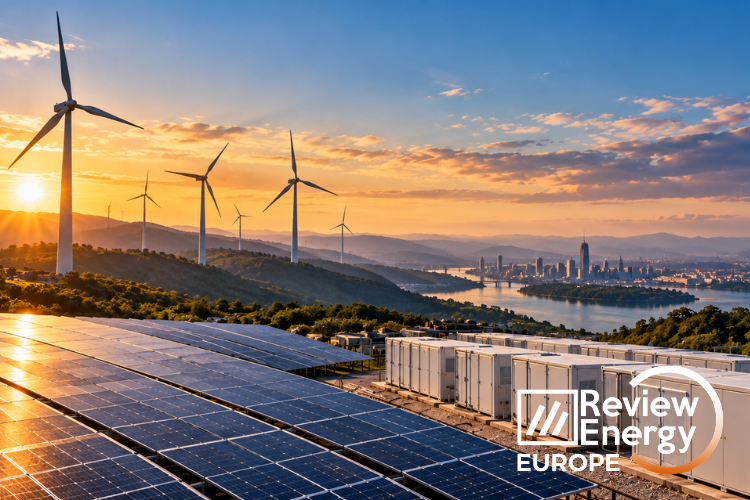


Europe to reach 80% zero-carbon power by 2030 despite missing renewables targets
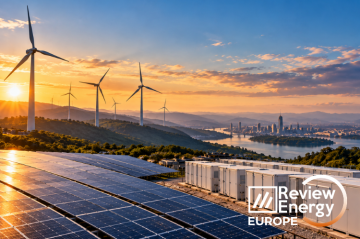
Europe is on track to surpass 80% zero-carbon electricity generation by 2030, according to Wood Mackenzie’s Europe Power Markets Strategic Planning Outlook 2026, although the region is still expected to fall short of its own renewable energy targets.
The consultancy’s outlook, which covers 35 national power markets through 2060, projects that renewables will account for around 65% of electricity supply across the region by 2030. For the EU27 specifically, the share is forecast at 63.7%, below the 65% Fit-for-55 target and the 69% REPowerEU goal.
Wood Mackenzie expects the zero-carbon share of European electricity generation to continue increasing after 2030, reaching 93% by 2050.
Solar and wind continue expanding
Solar PV is expected to record one of the largest capacity increases. Wood Mackenzie forecasts European solar capacity to nearly double to 637 GWac by 2030, with around 61 GW added each year.
Onshore wind capacity is projected to grow by about 17 GW annually, reaching 346 GW by 2030.
Offshore wind is expected to reach 73 GW by 2030 and then accelerate to 148 GW by 2035, although Wood Mackenzie says supply-chain pressures and investor uncertainty have delayed the sector’s trajectory.
Battery storage could exceed 160 GW
Battery storage is also expected to expand sharply, rising from 47 GW to 163 GW by 2030.
Germany, the UK, Italy and Poland are expected to account for more than half of that growth, making storage one of the largest near-term capital deployment opportunities in Europe’s energy sector.
Wood Mackenzie also warns that curtailment risks will increase in markets where grid infrastructure fails to keep pace with renewable capacity additions.
Electricity demand rises as electrification advances
European power demand across the 35 markets covered by the report is expected to reach 4,103 TWh in 2030, 11% above 2025 levels, before increasing to 6,152 TWh by 2050.
In the short term, data centres are expected to be one of the main sources of additional demand.
Over the longer term, electrification will increasingly be driven by transport, hydrogen and heating. Electricity consumption from electric vehicles is projected to rise from 39 TWh in 2025 to 577 TWh by 2050, while on-grid hydrogen demand is expected to reach 417 TWh over the same period.
Gas remains part of the system
Despite the rapid growth of renewables, Wood Mackenzie expects gas generation to remain above its previous forecast in the medium term.
Natural gas generation is projected to average 6% higher between 2026 and 2040 than previously expected, partly because lower offshore wind expectations have created a supply gap.
Gas-fired capacity is forecast to increase by 5% to 273 GW by 2030, while utilisation falls from 27% to 22%, reflecting a shift towards using gas mainly for flexibility and system balancing rather than baseload generation.
Coal generation, meanwhile, is expected to fall from 457 TWh in 2025 to 237 TWh by 2030, while the EU27 coal fleet is projected to exit the mix by 2050.
Wood Mackenzie says the pace of the transition will depend heavily on grid investment and interconnector expansion, as the availability of transmission capacity increasingly determines where new renewable and storage projects can be financed and connected.

Comentarios
Sé el primero en comentar...