
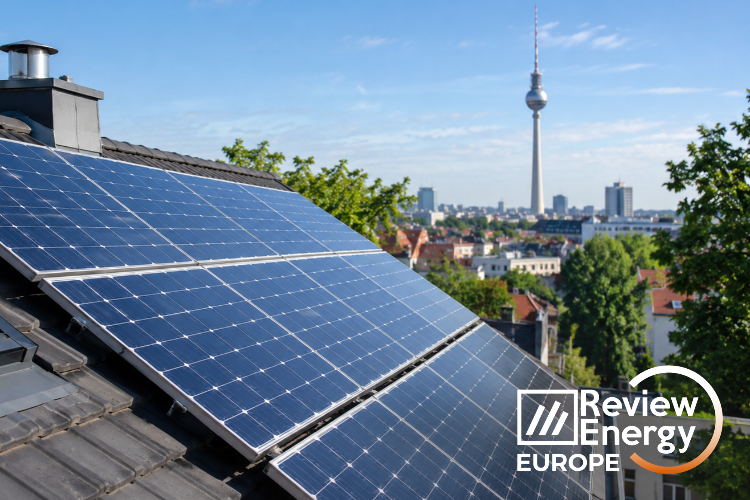


Germany awards 607 MW of solar and biomass capacity in its October 2026 auctions
Germany awarded a combined 607 MW of solar photovoltaic and biomass capacity in auctions held on October 1, 2026, according to results published by the Federal Network Agency (Bundesnetzagentur) on November 3. Of the total, 288 MW was awarded to solar installations on buildings and noise barriers, while the remaining 319 MW went to biomass facilities.
The results reveal contrasting levels of participation across the two technologies. While the rooftop solar auction attracted a higher volume of bids than the previous round, the biomass tender once again received bids for less capacity than was available.
The volume-weighted average award price reached 9.67 euro cents/kWh for solar PV, compared with 18.75 euro cents/kWh for biomass.
“The number of bids submitted for rooftop solar installations increased significantly compared with the previous round. The tendered volume was almost entirely covered,” said Klaus Müller, President of the Bundesnetzagentur.
He also noted that the biomass auction once again received bids for less capacity than the volume offered.
Solar auction attracts 347 MW in bids against 296 MW on offer
The auction for photovoltaic installations on buildings and noise barriers received 177 bids totaling 347 MW, compared with an available volume of 296 MW.
This represented an increase from the June 2026 auction, when developers submitted bids totaling 238 MW. The volume of capacity offered by participants therefore rose by approximately 45.8% between the two rounds.
However, not all bids were accepted. The Bundesnetzagentur excluded 34 bids representing 58 MW, ultimately awarding 143 bids with a combined capacity of 288 MW.
The awarded capacity represented approximately 97.3% of the initially tendered volume.
Award prices ranged from 8.50 to 10 euro cents/kWh, with a volume-weighted average of 9.67 euro cents/kWh. This was slightly below the 9.72 euro cents/kWh recorded in the previous auction.
In terms of geographical distribution, North Rhine-Westphalia received the largest awarded volume, with 66 MW across 38 successful bids.
It was followed by Hesse, with 30 MW and 11 awards; Brandenburg, with 28 MW and 14; Lower Saxony, with 27 MW and 16; and Rhineland-Palatinate, with 19 MW across six successful bids.
Together, these five federal states accounted for 170 MW of the solar PV capacity awarded.
Biomass auction awards 319 MW out of 617 MW offered
In contrast to the solar results, the biomass auction once again attracted less capacity than the volume available.
The Bundesnetzagentur had offered 617 MW, but received 328 bids totaling 442 MW. This means that the submitted capacity represented approximately 71.6% of the initially tendered volume.
As a result, the regulator applied the reduction mechanism established under German legislation.
Under the applicable provisions, when a biomass auction is undersubscribed, the awarded capacity is limited to 80% of the capacity represented by eligible bids.
Consequently, the Bundesnetzagentur awarded 244 bids totaling 319 MW, while 39 bids were excluded from the procedure.
Successful bid prices ranged from 13.95 to 19.80 euro cents/kWh, with a volume-weighted average of 18.75 euro cents/kWh.
The regulator noted that the previous biomass auction had also been undersubscribed, although the press release did not identify the specific reasons behind the lower level of participation.
Existing biomass plants account for 76% of awarded capacity
One of the findings of the biomass auction concerns the distribution of awards between new facilities and plants already in operation.
According to the Bundesnetzagentur, 24% of the awarded biomass capacity corresponds to new installations, while the remaining 76% was allocated to existing facilities receiving continued financial support.
This means that not all the biomass capacity awarded represents additional generation capacity that will be installed in Germany.
The regulator also noted that the participation of new biomass installations has increased in recent auction rounds, although it did not provide a specific quantitative comparison in its press release.
Regarding geographical distribution, Lower Saxony secured the largest awarded volume, with 85 MW across 66 successful bids.
Bavaria followed with 61 MW and 46 awards; Schleswig-Holstein with 40 MW and 21; and North Rhine-Westphalia with 33 MW across 15 bids.
Together, these four federal states accounted for 219 MW of the 319 MW awarded to biomass projects.
Different outcomes for Germany's renewable energy auctions
The October auctions highlight differences in developer participation between solar PV and biomass technologies.
In the solar segment, submitted capacity exceeded the tendered volume, allowing almost all available capacity to be awarded. The volume-weighted average award price also remained close to the level recorded in June.
The biomass auction, by contrast, once again attracted bids totaling less capacity than the volume offered, requiring a reduction in the amount eligible for award under the applicable legal provisions.
Overall, the two auctions concluded with 387 successful bids and approximately 607 MW of awarded capacity, comprising 143 solar PV awards and 244 biomass awards.
The results relate to the allocation of financial support under Germany's renewable energy auction framework and do not mean that all the awarded capacity has already entered commercial operation.

Comentarios
Sé el primero en comentar...