
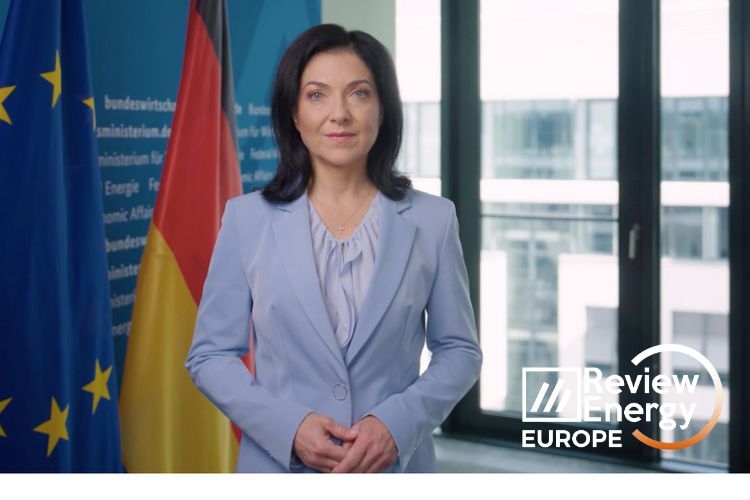


Germany sets out 10 strategic actions for its energy transition
The latest monitoring report on the Energiewende, presented by the Federal Ministry for Economic Affairs and Climate Action (BMWK), warns that Germany will only reach its 2045 climate neutrality targets if it decisively accelerates the expansion of electricity grids, integrates new flexibility options, and strengthens the development of hydrogen.
The report, commissioned by the governing coalition and prepared by research institutes BET and EWI on behalf of the ministry, analyzes six key areas: electricity demand, security of supply, renewable energy deployment, digitalization, hydrogen development, and the state of the grids.
Based on the findings of the monitoring report, Federal Minister for Economic Affairs and Energy Katherina Reiche outlined a set of ten key measures to keep Germany on track toward its climate neutrality goal.
Ten measures to drive the transition
- Based on the report, Federal Minister for Economic Affairs and Energy Katherina Reiche presented ten core measures designed to promote entrepreneurship and competition:
- Honest assessment of needs and realistic planning
- Promote renewable energies in a market- and system-friendly manner
- Expand grids, renewables and decentralized flexibility in sync
- Rapidly implement a technology-open capacity market
- Strengthen flexibility and digitalization of the power system
- Maintain and expand uniform and liquid energy markets
- Review support schemes and systematically reduce subsidies
- Boost research and promote innovation
- Pragmatically scale up hydrogen production and cut excessive requirements
“Secure, clean, and affordable energy is fundamental for the German economy. Today, 60% of our electricity already comes from renewable sources. Our goal is to reach 80% by 2030, and we remain committed to achieving it,” said Reiche.
Rising demand and challenges for renewables
According to the report, electricity demand is projected to reach between 600 and 700 TWh by 2030, driven by electrification in industry, transport, and buildings. To meet this growth, renewable deployment must scale up rapidly: solar PV continues to expand strongly, although rooftop installations are slowing. Onshore wind targets appear achievable, while offshore wind may lag behind, reaching the 30 GW goal only by 2032.
Despite these hurdles, the report considers the 80% renewables share by 2030 technically feasible—though heavily dependent on weather conditions.
Grid and storage bottlenecks
The report highlights that delays in grid infrastructure risk becoming the main brake on the transition. Projected costs for reinforcing the transmission system have surged from €320 billion to €440 billion, while distribution networks will require over €235 billion in investment by 2045.
It also calls for better coordination in planning renewables, storage, and electrolyzers, along with the introduction of variable tariffs and clearer rules for flexible demand use.
Hydrogen and security of supply
Hydrogen is identified as a cornerstone for decarbonizing industry and the energy system, with demand expected to reach up to 650 TWh by 2045. However, the report warns that the 10 GW domestic capacity target for 2030 is unrealistic, leaving Germany heavily reliant on imports.
On security of supply, experts stress the need for new backup capacity, primarily gas-fired plants, though they doubt market incentives alone will deliver them. Import dependence will remain a significant risk factor.
A call for political action
The report concludes that Germany must:
- accelerate permitting for grids and renewables,
- simplify regulation for flexibility operations,
- adapt planning to realistic consumption scenarios, and
- provide a reliable framework for investment in hydrogen and storage.
“Climate targets remain achievable, but only if we immediately reinforce critical infrastructure and better coordinate the rollout of renewables and flexibility,” the document states.

Comentarios
Sé el primero en comentar...