


Ireland allocates €1.28 billion in Budget 2027 to accelerate energy transition
Ireland has allocated €1.28 billion in Budget 2027 to accelerate its energy transition and support the development of a more secure, sustainable and affordable energy sector, according to the Department of Climate, Energy and the Environment.
More than €950 million will be allocated to the department’s Energy Transformation programme, including a record €650 million-plus capital allocation for home and community energy upgrades. The funding will support measures including solar PV, home battery storage, energy efficiency upgrades and a new fossil fuel boiler scrappage scheme.
The government said the measures are intended to reduce Ireland’s reliance on imported fossil fuels while helping households and businesses manage energy costs. The package includes enhanced support for solar installations, insulation and other energy efficiency measures, alongside new and expanded schemes for home batteries and boiler replacement.
Among the measures taking effect from 6 October, solar PV and battery storage will be offered as standard under the fully funded Warmer Homes Scheme. The government has also introduced more generous grants for solar, attic and cavity insulation for certain recipients of Department of Social Protection supports, as well as more favourable eligibility criteria for solar PV and solar thermal installations.
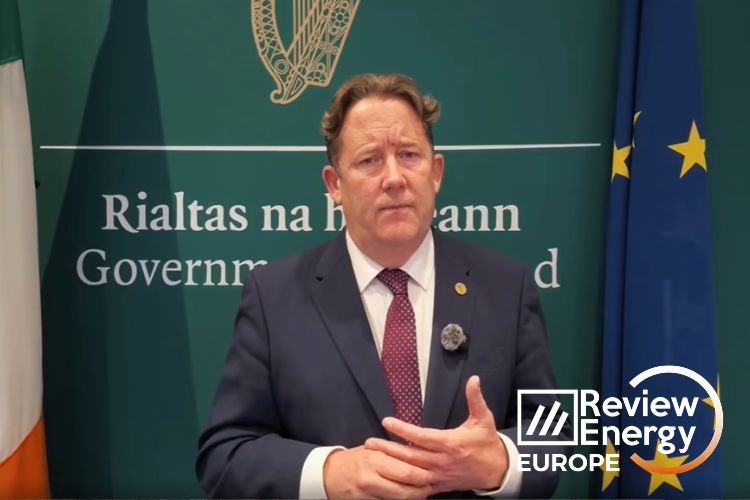
The budget also increases the income tax disregard for household income from microgeneration from €400 to €600, allowing households that sell electricity back to the grid to receive a higher amount before the income is subject to tax. Minister for Climate, Energy and the Environment Darragh O’Brien said the measure is intended to encourage further home solar PV installations.
According to the government, households could save up to €878 per year, depending on the measure installed and the characteristics of the property. Existing whole-home energy upgrade measures, including insulation, window and door replacements and heat pumps, can deliver savings of up to €1,120 per year when installed as part of a whole-home upgrade.
Businesses will also receive enhanced support for energy upgrades. The government said companies using the expanded solar PV support could reduce their annual energy costs by up to €300,000, with additional savings possible through solar thermal and heat pump grants.
The budget includes further funding for climate action and emerging energy sectors. More than €170 million has been allocated to the Climate Action and Leadership programme, including €25 million for Ireland’s EU Just Transition programmes and more than €22 million for local authorities to accelerate climate action.
Ireland is also preparing to expand its biomethane sector. The government said seven anaerobic digestion plants have recently been completed or are under construction, and announced plans to open a €200 million capital grant scheme to support further development of the sector.
The budget also allocates funding to district heating, with nine projects receiving a combined €5 million for pre-construction work through the Climate Action Fund. This comes on top of more than €50 million previously allocated to district heating projects, while a further €50 million to €100 million has been allocated from the Infrastructure Climate and Nature Fund, with the scheme due to open in the first quarter of 2027.
Beyond energy, Budget 2027 provides more than €150 million for the Circular Economy Development programme, including €47 million to address waste contamination sites. More than €10 million will also go to the Maritime Area Regulatory Authority (MARA) to support its role as regulator for Ireland’s maritime area.
Minister Darragh O’Brien said the government’s longer-term approach is to improve energy efficiency and accelerate the transition to home-grown renewable energy as a way of protecting households and businesses from volatile international energy prices.

Comentarios
Sé el primero en comentar...