


Ireland unveils phase two of renewable electricity support initiative for SMEs
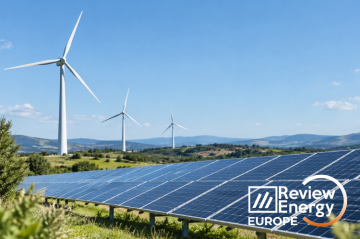
The Irish Government has announced the second phase of its Small Scale Renewable Electricity Support (SRESS) scheme, known as the export phase. This phase aims to enhance market support for Renewable Energy Communities and Small and Medium-Sized Enterprises (SMEs), offering fixed tariffs for solar and wind projects ranging from 50 kW to 6 MW. It is designed to complement microgeneration support for smaller projects and competitive auctions for larger projects under the Renewable Electricity Support Scheme (RESS).
Guaranteed tariff, 20% higher than 2022
SRESS sets tariffs across six categories, including three community rates and three SME rates, for both solar and wind energy. Notably, the largest category, grid-scale community solar projects, will benefit from a guaranteed tariff that is 20% higher than the average community price from the latest RESS auction in 2022.
The initial volumes and tariffs will be monitored to ensure they do not adversely impact energy affordability for households and businesses, and to ensure they reflect the development costs for community and SME projects. Further volumes will be offered based on review and uptake.
SRESS is designed to support renewable electricity installations that do not fit within other support measures, such as the utility-scale RESS and the Micro-generation Support Scheme (MSS). The scheme aims to simplify market access for community projects and enable farmers, businesses, and others to actively participate in the energy transition.
Phase One launched in 2023
Phase One of SRESS, launched in July 2023, offers grants for renewable self-consumers with installations above 50 kW and up to 1 MW through the Non-Domestic Microgen Scheme and the Business Grants and Supports Scheme. Renewable self-consumption involves generating energy on-site for on-site use, with the option to store or sell excess electricity, provided these activities are not the primary commercial activity of the non-household self-consumer.
Phase One has been successful, particularly in accelerating solar rooftop installations. A total of 980 applications, representing €17.6 million in committed costs and a total installation capacity of 88 MW, have been approved.
SRESS is expected to help reduce long-term energy costs for both households and businesses by lowering wholesale electricity prices, as renewable energy generation typically costs less than fossil fuel-based generation.

Comentarios
Sé el primero en comentar...