
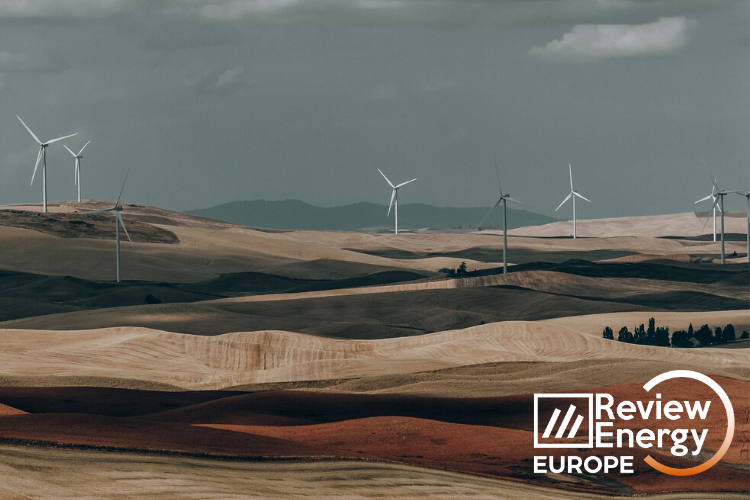


Over 60% of European corporate renewable PPAs are led by ICT, heavy industry, and telecoms
In 2023, Europe's Power Purchase Agreement (PPA) market is reaching unprecedented heights, as data from the RE-Source Platform indicates a remarkable growth. Year to date, a staggering 7.8 GW of renewable capacity has been secured. By the end of Q3, companies in the ICT sector (2 GW), heavy industry (1.8 GW) and telecoms (650 MW) were responsible for signing over 60% of corporate renewable PPAs. Other sectors like retail, transport, and automotive industries are playing an increasingly important role in the decarbonisation of industry and the transition to a renewables-based electricity system.
Just six countries out of the EU27 have yet to host corporate renewable PPAs, after four newcomers – Hungary, Lithuania, Slovenia and Portugal – entered the market in 2023. Four other countries – Bulgaria, Croatia, Austria, Romania – entered the corporate renewable PPA market for the first time in 2022. Data also shows that only six countries – Estonia, Latvia, Luxembourg, Malta, Cyprus and Slovakia – have yet to register their first corporate renewable PPA.
Spain is the largest PPA market in 2023 so far, as it also was in the previous three years. This is a major achievement for a country that did not enter the PPA market until 2018. Big industrial players like Alcoa have been major offtakers for wind power in Spain. Major retail and technology companies like Amazon, Equinix or Ikea have also signed big solar deals.
“Spain has a favourable policy framework, and an excellent renewables offering across solar and wind”, says Annie Scanlan, Impact Director at the RE-Source Platform. “As is the case across all markets, corporates are increasingly interested in procuring renewables portfolios (combinations of wind, solar PV and storage) in order to fully benefit from the complementarity of wind and solar.”
Still a long way to go
However, following this year's RE-Source event in Amsterdam, European renewable industry leaders noted that regulatory barriers to accelerate renewable energy deployment still need to be removed.
They explained that the European Commission’s electricity market design (EMD) proposal and the European Parliament’s work on the file recognise PPAs as a crucial tool for supporting the energy transition in Europe. But the EU measures to address the energy crisis created new challenges for the PPA market. With the clear steer from the Commission to end these measures; and the phase-out of the unhelpful revenue caps in many countries, the future looks even brighter for PPAs.
If Europe wants to see the PPA market’s growth continue and for industry to unlock even greater levels of green energy, the remaining barriers need to be removed. Alongside the critical need to ensure regulatory certainty with the end to market caps, corporate energy buyers are calling for:
- More renewables: Reliable grid access; and faster permitting for new wind and solar farms. A stable, investor-friendly environment and full implementation of all EU legislation is critical.
- Reduced risk: Support to manage price risk and prove bankability.
- Education: Support to demystify PPAs and educate procurement staff in companies.
Annie Scanlan, Policy and Impact Director at RE-Source Platform, emphasises that "to unlock the full potential of PPAs we need to see the Renewable Energy Directive implemented, and we need the Electricity Market Design revision passed swiftly and sensibly. This way, even more companies will see PPAs as a viable option to source competitively priced green electricity.”
The EU wants to reach a share of up to 45% of renewables in energy by 2030. The industry wants to accelerate its road to net zero through cheap, clean electricity. PPAs will play a key role in adding more wind and solar capacity to the grid. Industry leaders also recognise the importance of local energy procurement to reduce supply risks, ever more pressing with the war in Ukraine and unpredictable geopolitics.
Corporate energy buyers are actively engaging in a dialogue to stimulate the deployment of renewable energy by encouraging investments and removing measures that hinder the European energy markets. PPAs remain a focal point of the discussion as an effective tool to facilitate the energy transition.



Comentarios
Sé el primero en comentar...