
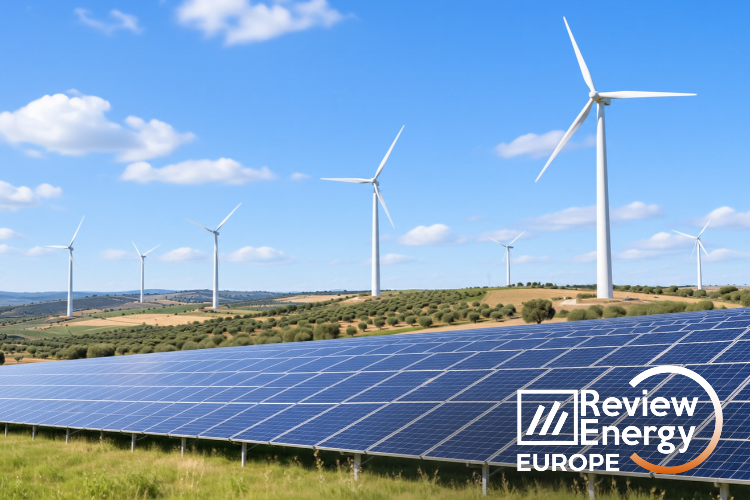


Renewable energy curtailment in Italy could climb from 0.9 TWh to 10.1 TWh by 2035
Italy could see renewable energy curtailment increase more than elevenfold over the next decade, according to the country's first national electricity system flexibility needs assessment, prepared by transmission system operator Terna and approved by the Regulatory Authority for Energy, Networks and Environment (ARERA). The simulations project an increase in curtailment from approximately 0.9 TWh in 2025 to 7.6 TWh in 2030 and 10.1 TWh in 2035, amid expanding solar and wind capacity.
The document, entitled Flexibility Needs Assessment – Italia 2026, prepared by Terna and approved by Italian regulator ARERA, examines the electricity system's flexibility needs for 2030 and 2035, taking into account developments in demand, renewable generation, networks and energy storage resources.
Although the report anticipates an increase in curtailment, Terna concludes that the storage capacity and other flexibility resources considered in its scenarios would enable Italy to achieve its national renewable energy integration targets. Nevertheless, it warns that the growth of variable renewable generation will make constraints on absorbing surplus electricity an increasingly frequent feature of the power system.
Renewable energy curtailment could reach 3.7% of potential generation by 2035
According to Terna's simulations, the proportion of potential renewable energy generation subject to curtailment would rise from 0.7% in 2025 to 3.3% in 2030 and 3.7% in 2035.
In absolute terms, projected volumes increase from 0.9 TWh to 7.6 TWh and 10.1 TWh, respectively. These figures represent average values derived from different climate scenarios and should not be interpreted as inevitable outcomes.
The report indicates that curtailment would be particularly concentrated during weekends, public holidays and the spring months, when periods of lower electricity consumption coincide with higher renewable generation availability.
Terna also identifies a shift in how curtailment is expected to evolve: between 2030 and 2035, the number of hours affected would remain relatively stable, at around 4,000 hours annually, while the amount of generation capacity requiring curtailment during those periods would increase.
The simulations show that curtailed output could reach approximately 45 GW in a given hour in 2030 and approach 60 GW during the most demanding hourly scenario in 2035.
Results also vary according to the climate conditions considered. For 2035, annual renewable energy curtailment ranges from 8.4 TWh to 14.3 TWh across the eight scenarios analysed.
Italy's scenarios include 82 GWh of utility-scale storage by 2035
Energy storage plays a central role in Terna's projections. The operator's scenarios include 50 GWh of utility-scale energy storage in 2030 and 82 GWh in 2035.
Including distributed storage systems and capacity contracted through the capacity market, total storage capacity considered in the scenarios reaches 75.1 GWh in 2030 and 109.4 GWh in 2035, compared with 17.9 GWh assumed for 2025.
These figures represent capacities included in planning scenarios and should not be interpreted as already operational installations or new awards approved through the report.
Terna notes that approximately 10 GWh of utility-scale storage has already been contracted through the MACSE auction for delivery in 2028.
The MACSE mechanism, designed to procure long-term electricity storage capacity, is one of the instruments through which Italy aims to deploy resources capable of managing the growth of renewable generation.
According to the analysis, the projected capacity would be sufficient to meet the flexibility needs identified for both time horizons. However, the operator considers that additional storage deployment could be economically beneficial in further reducing reliance on conventional generation.
Hourly flexibility needs could triple by 2035
The growth of photovoltaic generation will have direct implications for the flexibility requirements of Italy's electricity system.
Terna estimates that the hourly flexibility indicator will increase by 133% in 2030 and 200% in 2035 compared with 2025, mainly due to variations in photovoltaic output between daytime and nighttime hours.
Meanwhile, the daily flexibility indicator is projected to increase by 25% in 2030 and 43% in 2035, primarily driven by developments in wind generation. Seasonal flexibility requirements are also expected to rise by 60% and 98%, respectively.
The simulations identify energy storage systems as one of the main resources available to address these needs, particularly during periods of hourly variation in renewable electricity production.
In the 2035 scenario, utility-scale batteries would provide approximately 42% of hourly flexibility, while residential batteries would contribute a further 7% and pumped-storage systems approximately 9%.
The report also considers the contribution of interconnections, dispatchable hydropower plants, demand response resources and other technologies capable of adjusting generation or consumption profiles.
Terna considers renewable integration targets achievable
Despite the projected increase in curtailment, the simulations conclude that Italy could meet its renewable electricity targets with the flexibility resources included in the scenarios.
For 2030, Terna estimates that renewables will cover an average of 63% of electricity demand, in line with the target established in the National Integrated Energy and Climate Plan (PNIEC).
By 2035, renewable electricity's share would reach approximately 70% in the main scenarios analysed, exceeding the 68% reference value used in the study.
The operator states that it does not identify any uncovered flexibility needs for these time horizons, provided the assumptions regarding generation, storage, demand and grid development are met.
This conclusion does not mean that the system would be able to use all available renewable electricity. Indeed, the analysis itself projects increasing curtailment, although this remains compatible with achieving renewable integration targets.
Grid infrastructure and demand-side flexibility in Italy's planning
The study also incorporates assessments by distribution system operators of local flexibility needs, particularly in light of expanding distributed generation, electric vehicles and storage installations connected to medium- and low-voltage networks.
Terna identifies opportunities to increase the participation of distributed batteries, charging infrastructure and other controllable resources through mechanisms that allow their operation to be adjusted to system requirements.
The document notes that, although Italy's regulatory framework allows distributed and aggregated resources to participate in electricity markets, their effective participation remains limited.
Against this backdrop, the report identifies storage deployment, grid digitalisation and demand response as key factors influencing the system's ability to manage surplus renewable generation.
The central finding of the simulations is that Italy could achieve its 2030 and 2035 renewable energy targets with the planned resources, while facing a growing volume of generation curtailment. The evolution of these reductions in output will depend on the actual deployment of storage, networks and flexibility resources considered in electricity system planning.

Comentarios
Sé el primero en comentar...