
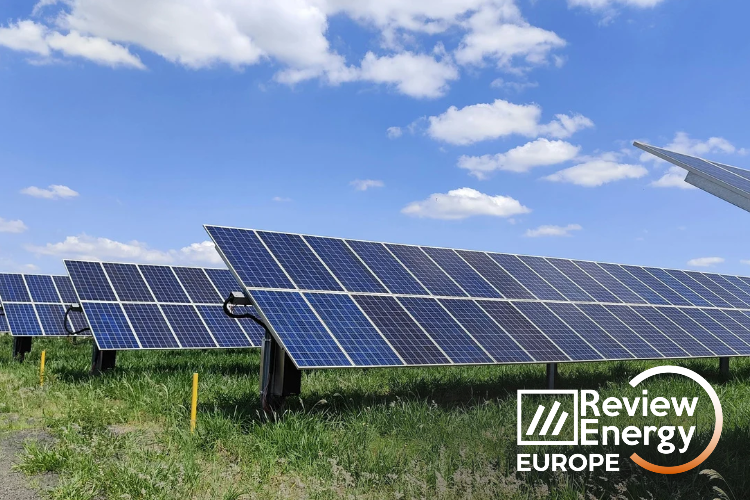


Italy adds 4.83 GW of solar PV and 1.95 GWh of battery storage in the first nine months of 2026
Italy continued to expand its solar and energy storage fleet in the third quarter of 2026, with 1.742 GW of new photovoltaic capacity connected, up 37% from the 1.269 GW installed in the same period of 2025 and 5% higher than in the previous quarter.
In the first nine months of the year, the country added 4.834 GW of new solar capacity through 147,632 new installations, according to calculations by ITALIA SOLARE based on Terna’s Gaudì data, updated to September 30.
By that date, Italy had 2,314,113 photovoltaic installations connected to the grid, with a total installed capacity of 48.347 GW.
The number of new connections also increased during the third quarter, rising from 38,660 in the second quarter to 58,459 between July and September, an increase of 34%.
Utility-scale solar drives new installations
Growth in the Italian solar market is increasingly being driven by larger projects and commercial and industrial installations.
Between January and September, the utility-scale segment, covering plants of at least 1 MW, added 2.241 GW through 473 new connections, accounting for 46% of all new photovoltaic capacity installed in Italy during the period.
The commercial and industrial segment, covering installations between 20 kW and 1 MW, added another 1.697 GW through 11,905 new projects, equivalent to 35% of newly connected capacity.
The residential market, comprising systems of up to 20 kW, added 897 MW through 135,254 new connections, representing 19% of the new capacity.
In the third quarter alone, utility-scale projects added 858 MW, compared with 457 MW in the same quarter of 2025. Of this volume, 394 MW came from projects between 1 MW and 10 MW, while another 464 MW came from installations above 10 MW.
The C&I segment reached 543 MW, up from 500 MW a year earlier, while residential additions increased from 312 MW to 341 MW.
Paolo Rocco Viscontini, president of ITALIA SOLARE, said the third-quarter figures confirm continued growth in the Italian solar market, with large-scale projects playing an increasingly important role and the commercial and industrial segment maintaining a positive trajectory.
The association nevertheless said the residential market remains an area to monitor after contracting in the first half of 2026 compared with the previous year.
Sicily leads new solar capacity additions
At regional level, Sicily ranked first for newly connected photovoltaic capacity in the first nine months of 2026, with 686 MW, followed by Lombardy with 644 MW, Piedmont with 498 MW, Veneto with 463 MW, Emilia-Romagna with 443 MW and Lazio with 432 MW.
The composition of growth varied significantly by region. Of the 686 MW added in Sicily, 476 MW came from installations larger than 10 MW, reflecting the strong contribution of utility-scale projects.
In Lombardy, by contrast, the commercial and industrial segment accounted for a significant share of new capacity, with 405 MW, while large-scale installations were largely absent.
By number of new installations, Lombardy ranked first with 22,999 connections, followed by Veneto with 18,099, Emilia-Romagna with 13,405 and Sicily with 11,653.
Italy approaches 20 GWh of energy storage
The expansion of solar capacity is being accompanied by further growth in electrochemical energy storage.
As of September 30, Italy had 984,829 connected storage systems, with a total capacity of 19.983 GWh and a combined power rating of 8.338 GW.
Of this capacity, 12.552 GWh was associated with photovoltaic installations, while 7.368 GWh came from stand-alone storage systems. A further 57 MWh was linked to thermal power plants and 6 MWh to wind installations.
During the first nine months of 2026, Italy connected 98,197 new storage systems, adding 1.953 GWh of capacity and 907 MW of power.
Almost all new installations by unit count were batteries associated with photovoltaic systems: 98,186 units, representing 1.486 GWh of capacity and 773 MW of power.
By contrast, just 11 new stand-alone storage systems added a combined 467 MWh of capacity and 134 MW of power, highlighting the significantly larger average size of these projects.
Solar-linked storage capacity rises despite fewer installations
During the third quarter, storage systems associated with photovoltaic installations added 480 MWh of new capacity, 252 MW of power and 31,039 new units.
Compared with the third quarter of 2025, newly connected storage capacity increased by 15%, from 417 MWh to 480 MWh, even as the number of installations declined from 32,697 to 31,039.
The figures also show a change in the size profile of newly installed batteries. Storage systems associated with photovoltaic installations of up to 6 kW added 242 MWh during the third quarter, compared with 129 MWh in the previous quarter.
By contrast, systems associated with photovoltaic installations between 6 kW and 20 kW fell from 229 MWh to 105 MWh, while storage linked to installations above 20 kW added a combined 133 MWh.
Across the first nine months of the year, storage systems associated with photovoltaic installations of up to 6 kW added 481 MWh, those linked to systems between 6 kW and 20 kW added 596 MWh, and those associated with installations above 20 kW added a total of 409 MWh.
Lombardy also leads distributed storage
Lombardy also recorded the highest amount of new storage capacity associated with photovoltaic systems between January and September, with 206 MWh, followed by Emilia-Romagna with 155 MWh, Veneto with 146 MWh and Sicily with 144 MWh.
The region also ranked first by number of new systems, with 14,672 installations, ahead of Veneto, Emilia-Romagna and Sicily.
On a cumulative basis, Lombardy now has 164,950 storage systems associated with photovoltaic installations, representing 2.095 GWh of capacity. It is followed by Veneto with 1.562 GWh and Emilia-Romagna with 1.154 GWh.
According to ITALIA SOLARE, the figures show that the Italian market is evolving both in terms of overall volumes and the composition of new installations. The association said the effective integration of storage and renewables will be one of the key elements shaping the future development of Italy’s power system, and called for a regulatory framework capable of properly recognising the value of flexibility.


Comentarios
Sé el primero en comentar...