


Renewable energy in Germany exceeds fossil fuels for the first time
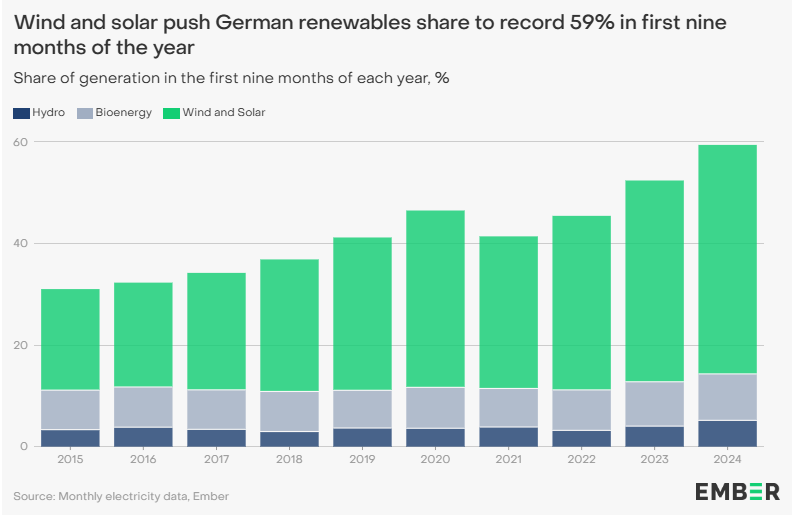
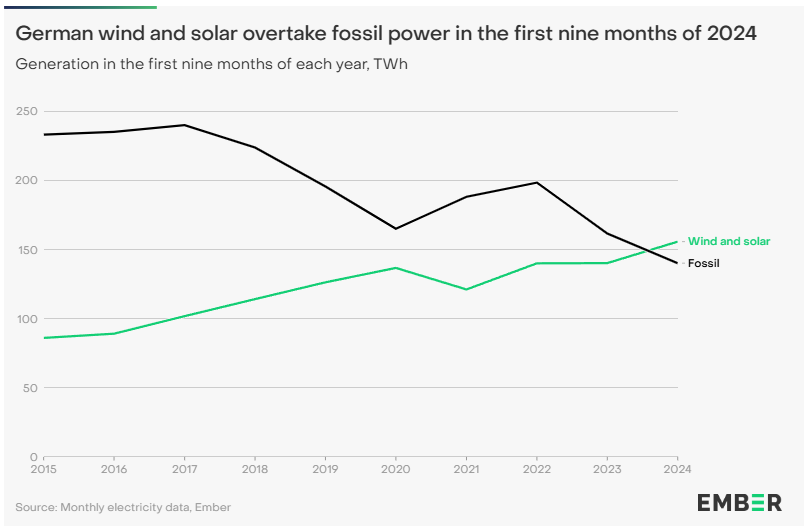
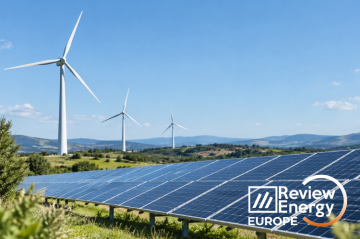
Germany has set a new record for renewable power generation, according to an analysis by Ember. In the first nine months of 2024, wind and solar energy combined accounted for 45% of Germany’s electricity mix, surpassing fossil fuels for the first time in history. This landmark achievement is a testament to Germany’s rapid acceleration in renewable energy deployment, particularly in solar power, which has been growing at an unprecedented pace.
Source: Ember
Record growth in solar energy
From January to September 2024, Germany generated a total of 206 TWh from renewables, an 11% increase compared to the same period in 2023. Wind and solar together contributed to a significant portion of this growth, with solar alone generating 62 TWh, up by 18% from the previous year. This surge is largely attributed to the country’s focus on speeding up solar capacity installation, which has been fueled by reforms that simplify grid connections for smaller photovoltaic systems, increase subsidies, and reduce bureaucratic barriers. Since 2023, Germany has added over 15 GW of solar capacity, double the 7.5 GW installed in 2022. In 2024, solar installations have continued at this accelerated pace, with 11 GW added by the end of September—meaning more than 100,000 solar panels are being installed every day. As a result, Germany exceeded its target of 88 GW of total solar capacity by April 2024.
Wind power continues to grow, but at a slower pace
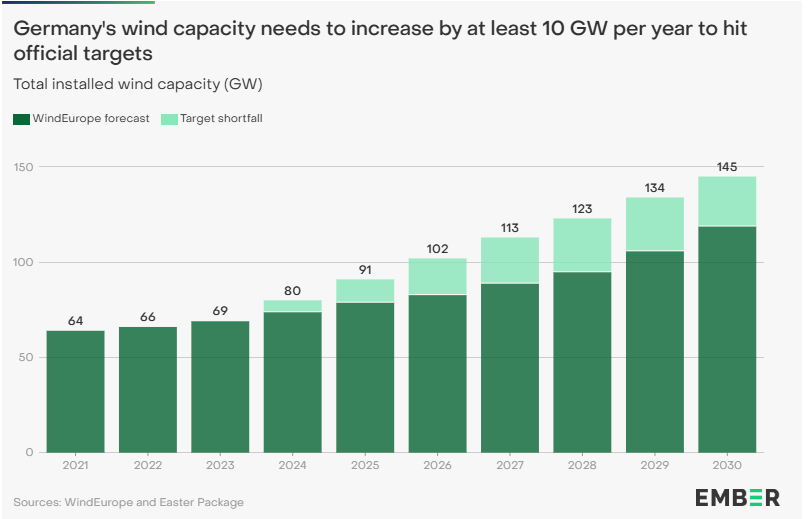
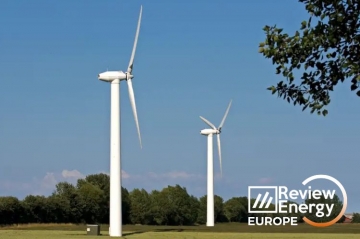
Meanwhile, wind energy continues to be a vital part of Germany's renewable strategy. While its growth has not been as fast as solar, wind still contributed significantly, generating 94 TWh in the first three quarters of 2024, a 7% increase from the previous year. This increase in wind power generation was supported by strong wind conditions earlier in the year and the ongoing expansion of wind capacity. Germany has installed 2.3 GW of new wind capacity in 2024, maintaining the pace of wind installations seen in 2023. However, experts warn that Germany may miss its target of 80 GW of total wind capacity by the end of 2024 unless it accelerates its efforts in the final months of the year.
 Source: Ember
Accelerated wind growth expected in coming years
Looking ahead, Germany has ambitious plans for wind energy, with a target to reach 145 GW of installed wind capacity by 2030. This target is among the highest in the world, trailing only behind China and the United States. Although wind capacity additions have been slower than desired, the government’s recent initiatives to streamline permitting processes and reduce delays are expected to result in faster growth in the coming years. For example, Germany has prioritized renewable energy projects by granting them "overriding public interest" status, enabling faster approvals for wind projects. In addition, a recent onshore wind auction awarded a record 3 GW of capacity, and permitting approvals for wind farms in the first half of 2024 were up by 32% compared to 2023.
The overall growth of renewables in Germany has been remarkable, with renewable energy sources now making up 59% of total power generation—an increase from 52% in the same period in 2023. This shift away from fossil fuels represents a key milestone in Germany’s transition to a cleaner energy system. The country’s success in expanding solar and wind energy highlights its leadership in Europe and its ability to meet renewable energy goals despite challenges.
Germany’s progress in renewable energy serves as a model for other nations looking to reduce their carbon footprint and increase their share of clean energy. With continued policy reforms, investment in green technologies, and public support for renewable energy, Germany is on track to meet its long-term sustainability goals and lead the way in Europe’s green transition.

Comentarios
Sé el primero en comentar...