


Renewable generation limits the impact of higher gas prices in Europe during the first half of 2026
Europe's growing renewable generation helped cushion the impact of rising gas prices during the first half of 2026, although weaker wind and hydropower output exposed structural weaknesses in the continent's electricity system. This is the main conclusion of a mid-year analysis published by Eurelectric using data from its pan-European electricity platform, ELDA.
Following the outbreak of the conflict between the United States and Iran, Title Transfer Facility (TTF) gas prices increased by 60% between February and March. Despite this, the EU average day-ahead electricity price fell by 9% over the same period, supported by lower seasonal demand and stronger renewable generation during the spring.
According to Kristian Ruby, the first-half data confirms that replacing imported fossil fuels with domestically produced renewable electricity makes Europe less vulnerable to external energy shocks while strengthening energy independence.
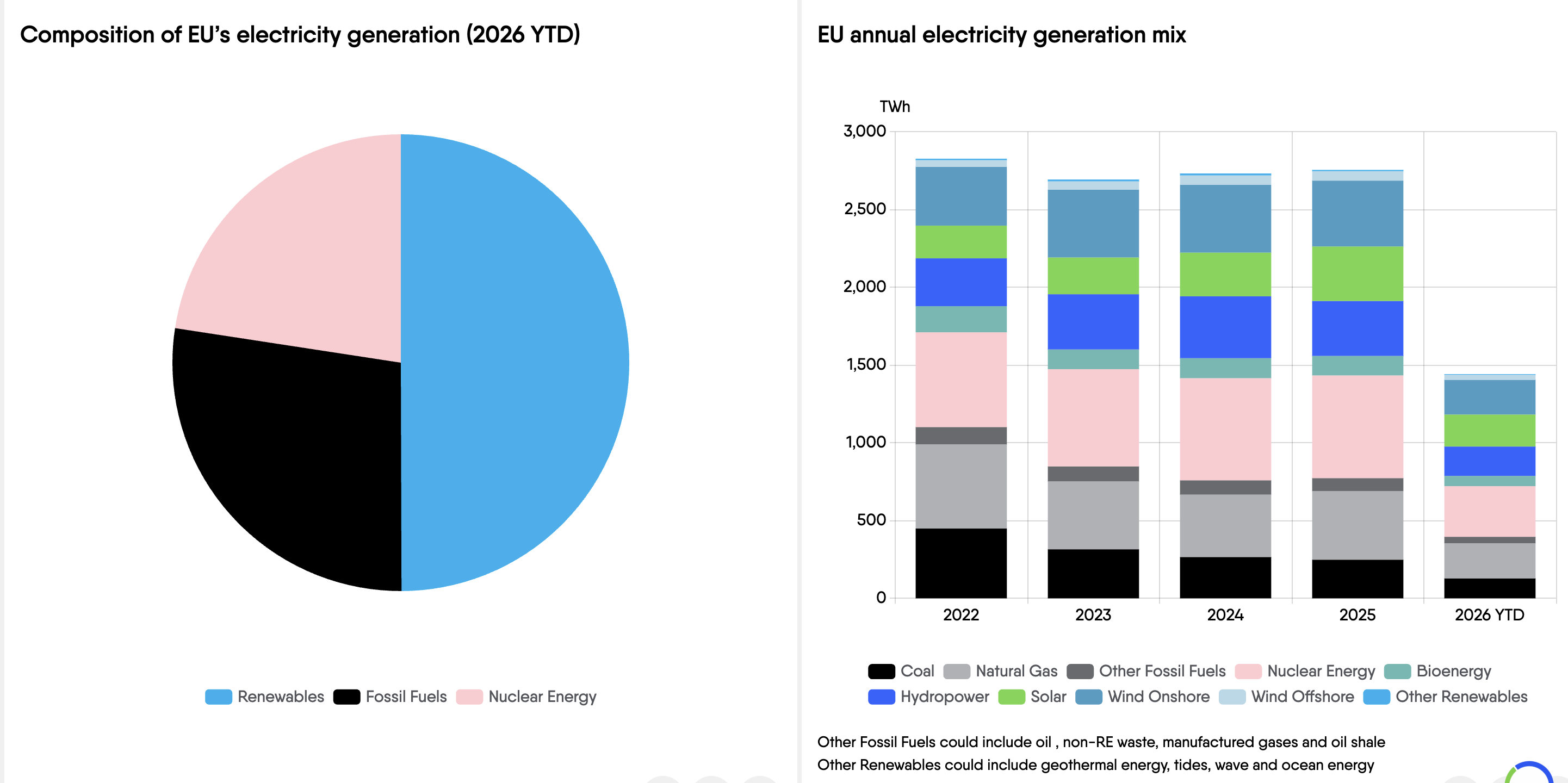
Solar power played a central role in this resilience. In May, it became the largest source of electricity generation in the EU27, accounting for 22.57% of the generation mix. Solar production reached a record 48 TWh during the month—almost equivalent to Hungary's annual electricity demand—helping reduce daytime electricity prices and limiting the need for gas-fired generation.
 Source: Eurelectric
Price gap widens outside solar hours
While renewables reduced Europe's exposure to fossil fuel price volatility, the analysis also highlights increasing price pressures during periods of low renewable availability.
Below-average wind and hydropower generation, combined with nuclear maintenance outages in several countries, increased reliance on more expensive fossil-fuel generation whenever solar production declined.
During May and June 2026, the average hourly electricity price across the EU27 before 09:00 and after 18:00 reached €122/MWh, compared with €90/MWh during the same period in 2025. By contrast, average daytime prices remained significantly lower at around €56/MWh.
Gas-fired generation reflected the same trend. While output from gas plants increased by only 1% during sunny hours, it rose by 15% outside those periods, illustrating the growing dependence on thermal generation once solar production falls.
According to Eurelectric, this divergence highlights Europe's flexibility gap, where insufficient storage, demand response, interconnections and other flexible low-carbon resources prevent the system from balancing daily fluctuations efficiently.
Storage, grids and interconnections become the next priority
The Nordic countries illustrate how weather conditions continue to influence electricity markets. During the first half of 2026, electricity prices across the region were higher than a year earlier due to lower hydropower availability, weaker wind generation and reduced nuclear output during maintenance.
Belgium also demonstrated the importance of system flexibility. With its entire nuclear fleet unavailable between early April and the end of June because of maintenance, domestic electricity generation fell by 23% year on year during the April–June period. However, electricity demand increased by 7%, while net imports surged by 150%, allowing the country to maintain security of supply through cross-border interconnections.
Eurelectric concludes that although Europe's electricity system is becoming less exposed to fossil fuel shocks thanks to the rapid expansion of renewable generation, maintaining stable electricity prices throughout the day will require significant investment in electricity grids, battery storage, demand-side flexibility, interconnections and other low-carbon flexible resources capable of supporting the system during periods of low wind, hydropower or solar output.

Comentarios
Sé el primero en comentar...