



Solar and wind curb gas use as US electricity demand rises
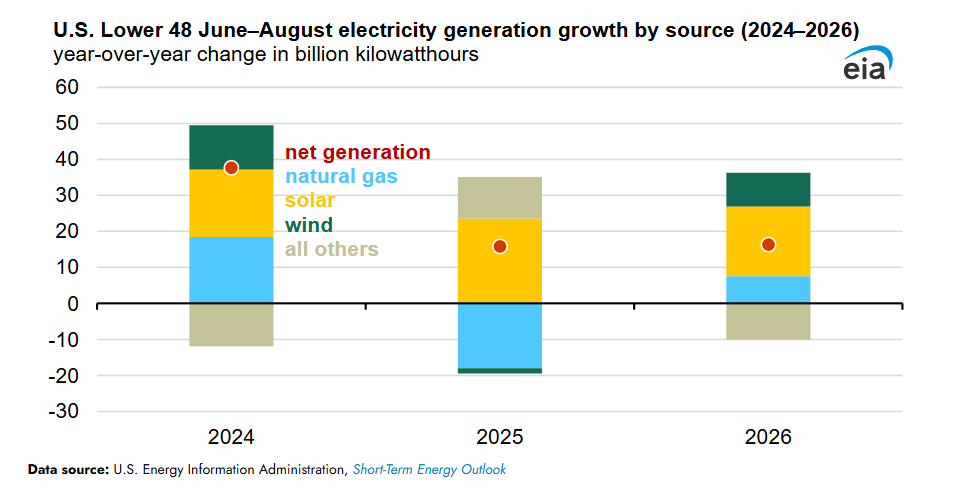
Increased solar and wind generation reduced the amount of additional natural gas needed to meet rising electricity demand in the US during the summer of 2026, according to data from the US Energy Information Administration (EIA).
Between June and August, solar generation increased by approximately 19.4 TWh compared with the same period in 2025, while wind generation rose by another 9.3 TWh. By comparison, natural gas-fired generation increased by 7.5 TWh.
The EIA estimates that additions of renewable capacity and higher solar and wind output reduced the amount of natural gas needed to meet electricity demand growth during the summer.
The increase in renewable generation came during a period of exceptionally high temperatures. In July, the average temperature across the contiguous US reached 77°F, the highest recorded for the month, according to National Oceanic and Atmospheric Administration data cited by the EIA.
More renewables meet rising electricity demand
Natural gas-fired power plants typically increase generation during periods of high temperatures as electricity consumption rises, particularly due to air-conditioning demand. However, expanding renewable generation limited part of that additional gas requirement during summer 2026.
Combined solar and wind generation increased by around 28.7 TWh compared with the previous summer, nearly four times the increase recorded in natural gas-fired generation over the same period.
The EIA said higher renewable generation, combined with record natural gas production and elevated storage inventories, also helped limit upward pressure on gas prices.
Between June and August, the Henry Hub natural gas spot price averaged US$2.93 per million British thermal units (MMBtu), around 6% lower than during the same period in 2025, despite higher electricity demand associated with hot weather.
US gas production heads for another record
Although renewables reduced the amount of additional gas required by the power sector, US natural gas production continued to increase.
The EIA estimates that natural gas production between June and August 2026 was 2% higher than during the same period a year earlier, equivalent to an increase of around 2.7 Bcf/d.
In its September Short-Term Energy Outlook, the agency forecasts that US dry natural gas production will reach a record 111.2 Bcf/d in 2026.
Storage inventories also remained elevated. The US entered the 2026 injection season with 1,906 Bcf in storage, around 4% above the previous five-year average, while monthly injections remained above historical averages for much of the period.





Comentarios
Sé el primero en comentar...