
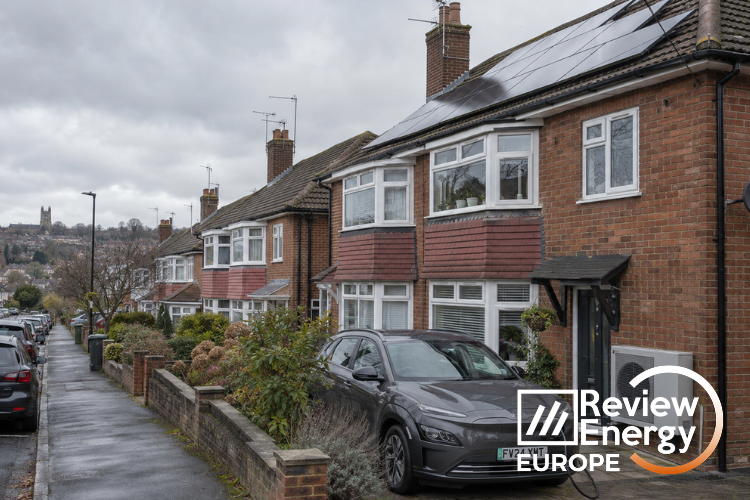


UK households lag on electrification despite growth in solar, batteries and electric vehicles
The UK has made significant progress in cleaning up its power system, but household electrification remains behind, particularly in heating and transport. A new report from Ember argues that faster adoption of technologies such as rooftop solar, home batteries, heat pumps and electric vehicles could reduce British households’ exposure to volatile global oil and gas prices.
According to the analysis, 64% of UK electricity came from clean power last year, while most households still depend on fossil fuels for heating and transport.
Ember describes the shift as “electro-fortification”: equipping homes with modern electric technologies so they can access cleaner, more secure and lower-cost energy. The think tank says modern electrified homes can be up to ten times better protected from energy price shocks, while also reducing emissions and delivering lower and more stable energy costs.
“British households pay for fossil fuel dependence every day at the pump, every summer through heat waves and every year through economy-wide inflation,” said Frankie Mayo, Ember analyst and report co-author.
She added that electric vehicles, rooftop solar, heat pumps and battery storage can act as “protective armour” for households by helping stabilise bills while cutting carbon emissions.
6,000 home batteries installed every month
Despite the UK’s broader lag in household electrification, Ember points to signs of accelerating adoption.
Around 6,000 homes install a battery every month, while roughly 15,000 households add rooftop solar and about 48,000 electric cars are purchased monthly.
Home battery uptake has doubled every year for more than three years, according to the report, and almost half of new rooftop solar installations now include a battery.
This combination allows households to consume more of the electricity they generate themselves and reduce their exposure to market power prices.
Ember also highlights the economic benefits of combining technologies. According to its estimates, having rooftop solar can reduce the annual cost of charging an electric vehicle by more than £500.
Wales leads household electrification
Progress varies significantly across the UK because of economic, demographic and policy differences.
Wales has the highest uptake of domestic rooftop solar, batteries and heat pumps in the country. It also accounts for seven of the ten fastest-growing constituencies for rooftop solar installations.
In Scotland, rural areas stand out for heat pump adoption. More than 10% of homes in the Orkney and Shetland islands already use the technology.
For Ember, these regional differences show that electrification policies should be tailored to local conditions.
“Over the next decade, the UK has a massive opportunity to electrify households,” said Josie Murdoch, Ember analyst and report co-author.
She said that bringing the benefits to consumers more quickly will require approaches adapted to the needs and characteristics of individual communities and regions, while prioritising the easiest opportunities first.
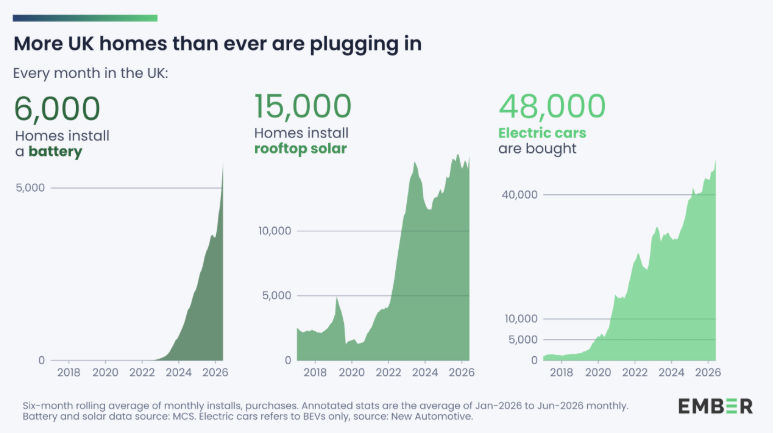 Source: EMBER
Reducing exposure to global energy markets
The report links household electrification not only to emissions reductions but also to energy security.
Although the UK already generates a large share of its electricity from clean sources, continued dependence on fossil fuels for heating and transport leaves consumers exposed to fluctuations in international oil and gas markets.
Expanding rooftop solar, batteries, heat pumps and electric vehicles would shift a larger share of household energy consumption towards an electricity system increasingly supplied by domestic clean power.
For Ember, this transition could become the UK’s next major technology shift, while delivering lower emissions, greater efficiency and stronger protection for households against future energy price shocks.


Comentarios
Sé el primero en comentar...