


French renewable energy association urges government to finalize regional PPE 3 targets
The French Renewable Energy Association (SER) has welcomed the proposals submitted by the Regional Energy Committees (CRé) to distribute the targets of France’s third Multiannual Energy Programme (PPE 3) across the country’s regions. However, it has called on the French government to finalize regional targets and establish the conditions needed to achieve them.
The PPE 3 sets out France’s energy strategy for 2026–2035, including targets for renewable energy development, security of supply and the expansion of energy infrastructure.
Its implementation includes a regional planning process established under French legislation, through which regional committees propose targets tailored to each territory’s energy potential. These bodies bring together representatives of government authorities, local administrations and energy sector stakeholders.
The committees were convened during the second quarter of 2026 to prepare their proposals. According to information updated by the French government in October, the decree formalizing the regional allocation of targets could be approved in the first quarter of 2027.
Against this backdrop, the SER published an assessment of the regional proposals, identifying technologies whose targets exceed national projections and others that remain below the objectives set out in the national energy plan.
Regional proposals exceed some national renewable energy targets
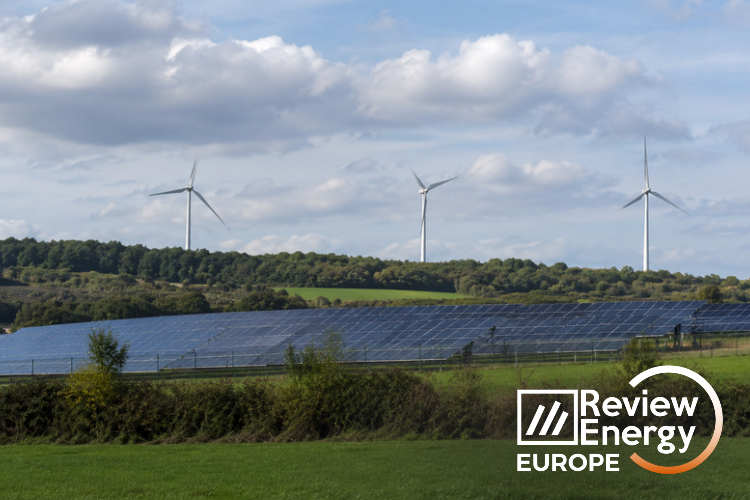
For solar photovoltaic energy, the regional committees propose reaching 51.1 GW by 2030, compared with the 48 GW envisaged under the PPE 3. For 2035, the proposals range from 63.8 GW to 85.5 GW, while the national target ranges from 55 GW to 80 GW.
For onshore wind, the regions propose 30.6 GW by 2030, slightly below the national target of 31 GW. However, for 2035, regional proposals range from 35.4 GW to 40.8 GW, compared with the national range of 35 GW to 40 GW.
Hydropower also exceeds the target set for 2030, with regional proposals totaling 27.03 GW compared with the national target of 26.3 GW. For 2035, however, regional projections remain below the national target of 28.7 GW.
The SER considers these results evidence of the regions’ willingness to participate in renewable energy development, although it notes differences between technologies and territories.
SER questions wind restrictions and calls for adjustments to other technologies
One of the association’s main criticisms concerns Hauts-de-France, where the regional committee approved a moratorium by a one-vote margin, proposing to set wind power capacity at 6.6 GW for both 2030 and 2035, despite the region already having 6.7 GW installed by the end of June 2026.
The association warns that this decision could restrict the repowering of existing wind farms, a process that allows installed capacity to increase through the replacement of turbines.
For biomethane and shallow geothermal energy, regional proposals also remain below national targets. Although the regions envisage increasing biomethane production by between 3.3 and 4.3 times and shallow geothermal production by between 2.4 and 3 times in less than a decade, the SER considers that these projections require adjustments.
In light of these differences, the association is calling on the government to publish the PPE 3 regionalization decree, ensure that the combined regional targets are sufficient to meet national objectives, and take grid connection requirements into account when planning energy infrastructure.
The organization is also calling for continued opportunities for wind power development in Hauts-de-France and for measures to help turn regional proposals into renewable energy generation projects.



Comentarios
Sé el primero en comentar...