
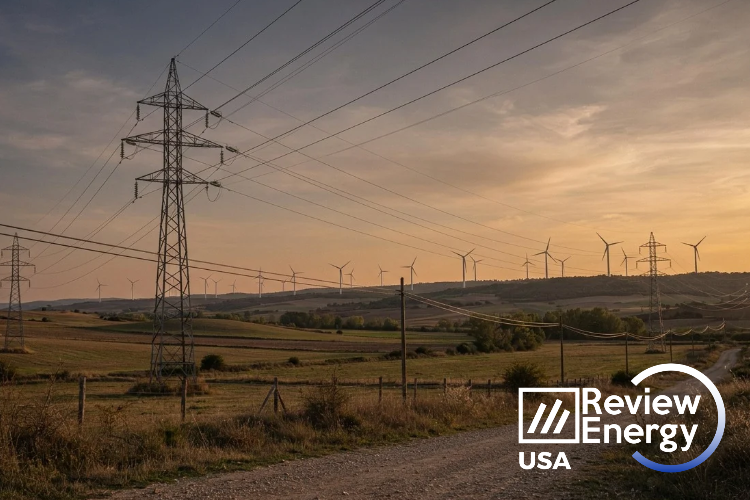


US Senate passes BAAJA to accelerate renewable energy, storage and grid infrastructure
The US Senate passed the Bipartisan American Affordability and Jobs Act of 2026 (BAAJA) on November 19, advancing a permitting reform package aimed at accelerating the development of energy and infrastructure projects across the country.
The legislation passed with 62 votes in favor and 33 against, according to the official Senate voting record. It now heads to the House of Representatives for consideration before it can proceed to the presidential approval stage.
The reform introduces changes to federal environmental reviews and permitting procedures, with provisions covering renewable energy, energy storage, electricity transmission, data centers and other infrastructure. It also seeks to address grid constraints and rising electricity demand associated with the expansion of artificial intelligence and large computing facilities.
New deadlines for renewable energy and storage permits
One of the main measures for the renewable energy sector is included in Section 2213, which establishes new deadlines for processing rights-of-way applications for eligible projects on federal lands managed by the Department of the Interior and the Department of Agriculture.
Under the proposed provisions, the relevant agencies must notify developers within 30 days whether an application is complete or requires additional information. For projects requiring an Environmental Impact Statement, the agencies must issue a notice of intent within 90 days of determining that the application is complete.
Once environmental reviews and other applicable legal requirements have been completed, the agencies must grant or deny the application within 30 days of receiving the complete submission. If a decision cannot yet be issued, they must identify the outstanding requirements, the actions still needed from the agency and the corresponding deadlines.
BAAJA also requires the Departments of the Interior and Agriculture to develop or adopt categorical exclusions under the National Environmental Policy Act (NEPA) within 180 days of enactment. These would cover certain low-disturbance activities associated with renewable energy projects.
The measures include individual surface disturbances of less than five acres that have already undergone site-specific environmental analysis, as well as commercial solar photovoltaic installations on buildings, rooftops, parking lots and other structures. They also extend to solar installations on previously disturbed or developed land covering less than 10 acres.
The legislation expressly includes energy storage in the definition of eligible projects under the Energy Act of 2020, alongside electricity generation. It also requires the Bureau of Land Management's National Renewable Energy Coordination Office to establish standardized project review standards within two years, which regional offices will be required to adopt.
Grid expansion and energy storage infrastructure
The reform also seeks to accelerate the development and modernization of electricity networks.
Section 2101 would amend the Federal Power Act to modify the Federal Energy Regulatory Commission's authority to issue construction permits for electricity transmission facilities.
The legislation also introduces measures to improve regional and interregional transmission planning, requiring the Department of Energy to assess grid capacity constraints and congestion and publish updated reports at least every three years.
In addition, the bill promotes the deployment of advanced transmission technologies, including high-performance conductors and grid-enhancing technologies, to increase the capacity of existing infrastructure.
Section 2214 complements these measures by requiring the Departments of the Interior and Agriculture to develop or adopt environmental exclusions within 180 days for certain transmission and distribution activities. These include the installation of infrastructure within approved rights-of-way corridors, as well as the repair, replacement, upgrading and optimization of existing facilities.
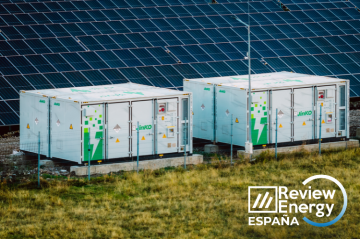
The provisions specifically include reconductoring, which involves replacing existing conductors to increase transmission capacity, and the installation of grid-enhancing technologies. The construction, operation, upgrading and decommissioning of battery systems and other energy storage technologies on previously disturbed or developed land would also be covered.
AI and data centers included in the permitting reform
BAAJA also incorporates digital technologies into electricity infrastructure planning, particularly through measures targeting generator interconnection queues.
Section 2110 directs FERC to initiate a rulemaking requiring public utility transmission providers to use advanced computing technologies, including artificial intelligence, machine learning and automation, to improve the processing of generator interconnection requests.
The legislation also introduces requirements for access to grid data needed to conduct interconnection and transmission studies, with the aim of facilitating the automation of these processes.
Another relevant provision concerns the electricity demand associated with data centers, artificial intelligence infrastructure and other large computational facilities.
Clean energy industry groups call for next step in permitting reform
The Senate’s approval of BAAJA has drawn support from major clean energy industry associations, which see the legislation as an opportunity to accelerate project development and expand electricity supply in the United States.
The Solar Energy Industries Association (SEIA) estimates that the proposed reforms could unlock 167 GW of additional solar capacity between 2028 and 2035, raising solar’s share of US electricity generation to more than 18% by 2035. Its analysis also projects a reduction of approximately 20% in cumulative power sector CO? emissions and $54 billion in avoided public health damages.
“America is now one step closer to lower energy costs, more clean energy and a more reliable electric grid. Senators Lee, Capito, Heinrich, and Whitehouse deserve tremendous credit for advancing this bipartisan bill,” said Tim Pawlenty, CEO of SEIA.
The American Clean Power Association (ACP) also welcomed the vote, highlighting the potential to bring more clean energy projects to construction and strengthen rural communities. Its CEO, Jason Grumet, stressed that the legislative process must now move forward in the House of Representatives.
“The ACP applauds the U.S. Senate’s passage of permitting reform legislation. BAAJA is a clean energy bill that will modernize America’s energy systems and lower consumer prices. The Senate has cleared a path to enable the construction of hundreds of additional clean energy projects and strengthen rural communities. Abundant, affordable energy will power a growing American economy. Now the House must act,” he said.

Comentarios
Sé el primero en comentar...