
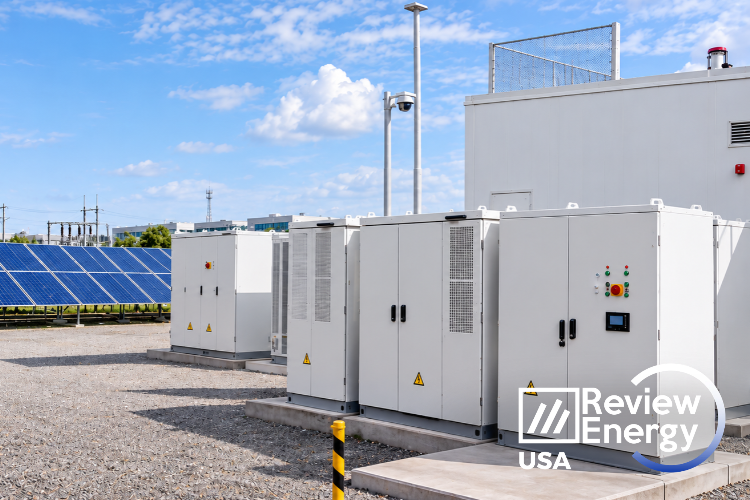


Virtual power plant capacity reaches 47.2 GW in North America
Flexible capacity managed through virtual power plants (VPPs) in North America reached 47.2 GW in 2026, representing a 25.9% year-over-year increase, according to the 2026 North America Virtual Power Plant Market Report, published on November 18 by Wood Mackenzie.
The study indicates that capacity growth outpaced increases in the number of enterprise deployments, energy service buyers, and utility and market programs, each of which recorded growth rates below 15%. This development reflects a faster expansion of capacity managed by virtual power plants than the growth in participating entities and programs.
VPPs aggregate and coordinate distributed energy resources, including batteries, solar installations, electric vehicles, and demand management systems. By operating these resources collectively, they can provide grid flexibility, manage electricity consumption, and participate in electricity markets.
Distributed energy storage gains ground in virtual power plants
Wood Mackenzie identifies distributed battery energy storage systems (BESS) as one of the most economically relevant components of the virtual power plant market.
According to the consultancy, rising power turbine costs, electricity affordability concerns, and difficulties responding quickly to growing large-load demand are driving interest in these solutions.
The report states that capital costs for large power turbines have increased by more than 80% since 2020, while battery-based virtual power plants offer a cost-per-kilowatt advantage over these alternatives in 2026.
In this context, distributed batteries maintain a cost advantage in Wood Mackenzie's comparison, reinforcing their role in electricity flexibility programs.
Meanwhile, residential VPP capacity participating in wholesale electricity markets recorded 155% year-over-year growth. Its share of total VPP capacity in these markets more than doubled, supported by opt-out enrollment mechanisms and the integration of batteries through electricity retailers.
The study also identifies 19.7% year-over-year growth in the relative penetration of energy storage and electric vehicles compared with smart thermostats, exceeding the increase recorded in 2025.
Virtual power plants identify 1 GW of capacity for data centers
One of the report's findings is the emergence of data centers as a new demand segment for virtual power plants.
VPP providers have reported a 1 GW capacity pipeline specifically dedicated to meeting data center electricity demand, a category that was not included in the previous edition of the analysis.
Wood Mackenzie notes that PJM and ERCOT, which account for some of the largest electricity supply commitments associated with data centers, also report the highest volumes of contracted virtual power plant capacity.
The report also identifies growth opportunities in the MISO market and in states such as Arizona, Illinois, and Virginia, where demand flexibility programs are being developed.
In MISO, summer capacity prices increased from $30 to between $384 and $424 per MW per day in 2026. However, the consultancy warns that rules governing distributed energy resource aggregation continue to limit the expansion of these solutions.
In California, market developments will depend, according to the analysis, on regulatory decisions related to the SB 913 initiative and the continued availability of funding mechanisms for distributed generation programs.
Financing and market participation rules shape future growth
Despite capacity growth, Wood Mackenzie identifies challenges related to compensation for distributed energy resources, project financing, and electricity market participation requirements.
The consultancy explains that financiers use different approaches to incorporate VPP revenues into energy storage business models. Some include these revenues directly in battery leasing agreements, while others pass them on to consumers through electricity bill credits or direct incentives.
These differences in revenue treatment are becoming a factor in competition among commercial and industrial aggregation service providers.
Wood Mackenzie also warns that installed battery storage capacity does not automatically translate into capacity available to a virtual power plant. Battery participation also depends on contractual arrangements, market participation mechanisms, and access to device data.
Programs using automatic enrollment with an option to opt out have demonstrated the ability to bring distributed resources into VPP portfolios rapidly. By contrast, voluntary enrollment models and barriers to accessing device information continue to constrain growth.
The report concludes that the expansion of North America's virtual power plant market will depend not only on the deployment of batteries and other distributed resources, but also on aggregation, compensation, and market participation mechanisms that enable this capacity to meet electricity system needs.


Comentarios
Sé el primero en comentar...