



Energy storage surges in the US: record 57.6 GWh added in 2025
The United States installed a record 57.6 GWh of new energy storage capacity in 2025, marking the largest annual battery deployment ever recorded, according to the latest U.S. Energy Storage Market Outlook Q1 2026 published by the Solar Energy Industries Association (SEIA) and Benchmark Mineral Intelligence. The figure represents a 30% increase year-on-year and quadruples the capacity installed by the industry just three years ago, underscoring the accelerating role of energy storage in strengthening grid reliability and lowering electricity costs.

By the end of 2025, total installed utility-scale storage reached 137 GWh, while commercial and industrial systems accounted for 19 GWh and residential storage totaled 9 GWh, consolidating batteries as a central pillar of the U.S. power system. Looking ahead, cumulative installations are expected to surpass 600 GWh by 2030, driven by growing electricity demand, grid modernization efforts, and the rapid expansion of renewable generation.
Despite ongoing policy uncertainty in Washington, deployment continued at a strong pace, with two-thirds of all new utility-scale projects located in states won by President Donald Trump, including nine of the top fifteen states for new installations. Texas, in particular, is on track to overtake California in 2026 as the largest energy storage market in the country, reflecting the state’s rapid clean energy expansion and rising power demand.
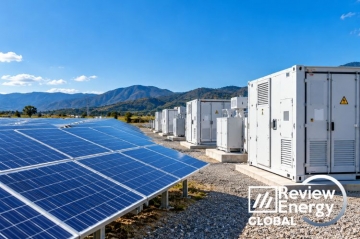
Utility-scale systems dominated new installations in 2025, with nearly 30 GWh of standalone storage added, while solar-plus-storage projects contributed 20 GWh. Meanwhile, the residential storage segment grew by 51% year-on-year, reaching 3.1 GWh, driven largely by the expansion of virtual power plant programs in states such as Massachusetts, Texas, Arizona, and Illinois.
On the manufacturing front, U.S. battery production capacity also expanded significantly. Several cell manufacturers shifted focus from electric vehicles to stationary energy storage applications, lifting domestic lithium-ion cell production for grid storage above 21 GWh in 2025. Total U.S. manufacturing capacity for battery energy storage systems now stands at 69.4 GWh, strengthening supply chain resilience and supporting domestic energy independence.
“This record-breaking year for energy storage is just the beginning of its rise as a cornerstone of America’s energy future,” said Darren Van’t Hof, Interim President and CEO of SEIA, warning, however, that policy headwinds could threaten future deployment and lead to higher power prices and reduced grid resilience.
Benchmark Mineral Intelligence highlighted the structural role of storage in balancing electricity markets and supporting peak demand, particularly as data centers and AI infrastructure drive rapid load growth. “Energy storage is playing a pivotal role in reducing price volatility and ensuring the grid can scale reliably and efficiently,” said Iola Hughes, Head of Research at Benchmark Minerals.
As electricity demand continues to climb, the report concludes that battery storage will be critical to maintaining grid stability, lowering system costs, and supporting the long-term energy transition across the United States.



Comentarios
Sé el primero en comentar...