


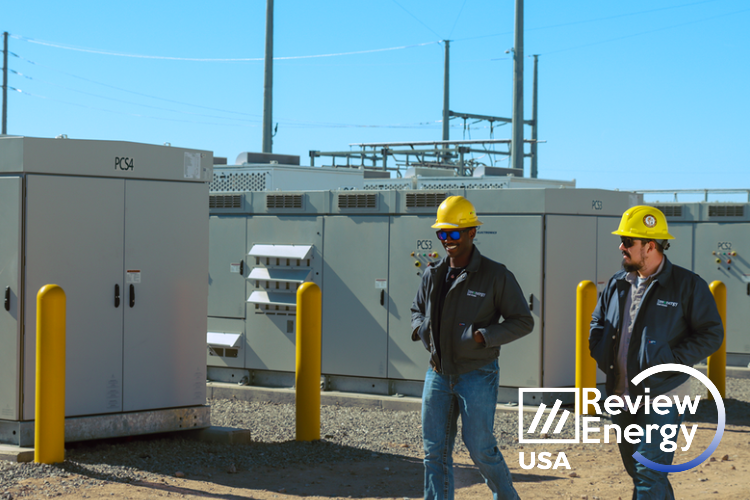


United States surpasses 200 GWh of installed energy storage
Installed energy storage capacity in the United States has surpassed 200 GWh, according to the U.S. Energy Storage Market Outlook Q4 2026, produced by the Solar Energy Industries Association (SEIA) and Benchmark Mineral Intelligence.
During the third quarter of 2026, 14.3 GWh of battery energy storage systems (BESS) entered operation. These additions brought total deployments during the first nine months of the year to 48.3 GWh, representing a 20% year-on-year increase.
The volume installed between July and September was 1% lower than in the same quarter of 2025. However, the cumulative results for 2026 reflect growth in both grid-connected projects and behind-the-meter storage.
Utility-scale projects account for most deployments
Utility-scale projects represented most of the storage deployed during the first nine months of 2026, with 40.8 GWh, while the behind-the-meter segment added 7.5 GWh.
In the third quarter alone, the utility-scale market added 12.2 GWh across 45 projects. Three projects with gigawatt-hour-scale capacity began operations during the period.
Commercial and industrial storage added 1.3 GWh during the quarter, an increase of 29% year on year. Between January and September, this segment reached 5.4 GWh, exceeding the 4.8 GWh installed during the whole of 2025.
SEIA and Benchmark attribute part of this growth to data centre expansion and the difficulties these consumers face in securing sufficient grid capacity. BESS can be combined with on-site solar or wind generation to manage demand, shift renewable output and provide short-duration backup power.
Residential storage, meanwhile, added 746 MWh during the third quarter, up 16% year on year and the highest volume recorded for a third quarter. Nevertheless, installations through September remained 12% below the level recorded during the first nine months of 2025.
Texas leads state-level deployment
Texas led utility-scale energy storage deployment through the end of the third quarter, adding 12.3 GWh of capacity. Arizona ranked second with 7.7 GWh, followed by California with 6.8 GWh.
Eleven states had already surpassed their previous annual energy storage installation records by the end of September: Colorado, Massachusetts, Utah, Michigan, Georgia, Mississippi, Virginia, Iowa, Montana, Alabama and Illinois.
The report identifies a shift in state policy from setting storage targets to conducting procurement processes. During 2026, New York awarded contracts to eight projects totalling approximately 950 MW in its first bulk energy storage solicitation, while Illinois secured around 600 MW in its first dedicated procurement.
A previous SEIA analysis attributed part of the reduction in average wholesale electricity prices between the summers of 2021 and 2026 to the combined growth of solar and energy storage: 42% in Texas and 51% in California. seia.org
2030 forecast increases to 708 GWh
SEIA and Benchmark raised their forecast for cumulative US energy storage capacity in 2030 by 3.7%. The updated outlook expects the country to reach 708 GWh across grid-connected and behind-the-meter systems.
The revision reflects the number of projects under development, state procurement programmes and the growing need for flexibility across the electricity system.
Energy storage can shift electricity from periods of high production to hours of greater demand, respond to fluctuations in renewable generation and provide grid services. Its deployment can also reduce the need to use additional generation facilities during demand peaks.
Battery cell manufacturing capacity reaches 92.4 GWh
US manufacturing capacity for energy storage cells also increased during the third quarter.
Production of lithium iron phosphate cells for stationary energy storage began at a facility in Tennessee in July. Another facility opened in Indiana in October, increasing total US cell manufacturing capacity to 92.4 GWh, a 50% rise.
The report estimates that lithium iron phosphate (LFP) chemistry will represent 92% of lithium-ion BESS deployments in 2026, up from 77% in 2023. Overall, lithium-ion batteries are expected to account for more than 97% of installations.
Industry calls for permitting reform
The report’s publication coincides with a request from more than 300 solar and energy storage companies for Congress to approve the Bipartisan American Affordability and Jobs Act (BAAJA).
The companies argue that the reform would shorten permitting procedures for energy infrastructure, reduce development costs and accelerate the connection of new projects.
SEIA maintains that expanding energy storage infrastructure can increase the capacity available to meet electricity demand growth and support the integration of renewable generation into the US grid.


Comentarios
Sé el primero en comentar...