




Belgium reshapes rules for 700 MW offshore wind auction to attract investment
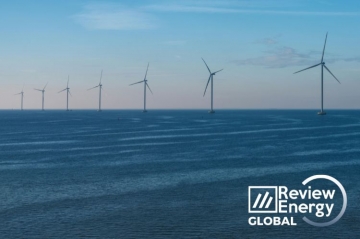
The Belgian government has approved a new regulatory framework that will allow the relaunch of the tender for the first offshore wind farm in the Princess Elisabeth Zone (PEZ 1), a project with an expected capacity of approximately 700 MW and one of the country's flagship offshore wind developments.
The reform follows the cancellation of the previous auction in July 2025, when the government concluded that key legal and financial conditions were not yet in place. At the time, uncertainties remained over the support mechanism, State aid approval, the timeline for the Princess Elisabeth Energy Island (MOG II), and the required onshore grid reinforcements.
Under the new framework, the maximum construction period has been extended from four to five years to reflect supply chain constraints and seasonal restrictions affecting offshore installation activities in the North Sea. In addition, the government has removed the strike price cap, allowing competition among bidders to determine the lowest reference price.
One of the most significant changes is the adoption of a single two-sided Contract for Difference (CfD) support mechanism. Developers will submit bids with their own strike prices. If the market price falls below the strike price, the producer will receive the difference. Conversely, if market prices exceed the strike price, the producer will repay the surplus. According to the government, the mechanism provides long-term revenue certainty for investors while protecting public finances from windfall profits.
The revised framework also removes the separate support regime previously designed for fixed-price power purchase agreements (PPAs). Instead, all bidders will compete under a single set of rules, while remaining free to sign PPAs with industrial customers or other electricity buyers after the project is awarded.
Tender aligned with the Net-Zero Industry Act
For the first time, the offshore wind tender fully incorporates the requirements of the Net-Zero Industry Act (NZIA). The government has introduced mandatory prequalification criteria covering supply chain resilience, cybersecurity, responsible business conduct, and environmental sustainability.
Among the new provisions, at least 75% of the project's wind turbines must not be manufactured or assembled in China. In addition, only a limited number of critical components may originate from or be assembled in China, while permanent magnets sourced from China are also subject to a maximum threshold. The measures are intended to reduce dependence on a single supplier, strengthen the security of strategic energy infrastructure, and support Europe's clean energy manufacturing base.
The government has also simplified several administrative and financial requirements to lower barriers for developers and reduce legal and financial risks associated with the tender process. Officials expect the streamlined framework to encourage stronger competition and deliver more competitive bids while limiting costs for electricity consumers.
As part of the package, the Council of Ministers also set 1 October 2031 as the deadline for commissioning the first phase of the Princess Elisabeth Energy Island (MOG II), which will connect future offshore wind farms in the Princess Elisabeth Zone to Belgium's electricity grid.
Before the auction can be officially relaunched, the amended Royal Decree must receive the opinion of the Council of State and be notified to the European Commission under State aid rules. Once these steps are completed, the Belgian government intends to reopen the PEZ 1 tender as soon as possible.


Comentarios
Sé el primero en comentar...