


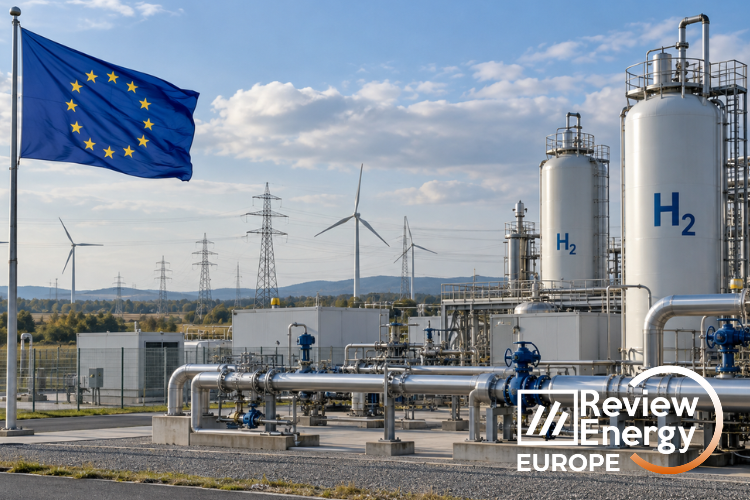


ACER urges stronger scenarios for planning electricity, gas and hydrogen infrastructure
The European Union Agency for the Cooperation of Energy Regulators (ACER) has called for greater transparency and stronger methodologies in the scenarios used to plan Europe’s future electricity, gas and hydrogen infrastructure.
In its Opinion dated 8 July 2026, announced on 9 July, ACER assessed the draft TYNDP 2026 Scenarios Report, prepared jointly by ENTSO-E and ENTSOG under the TEN-E Regulation.
These scenarios provide the common foundation for the European Ten-Year Network Development Plans (TYNDPs). They support the identification of infrastructure gaps and the cost-benefit assessment of cross-border electricity and hydrogen projects.
ACER welcomes several improvements, including continued joint scenario development across the three energy carriers, the introduction of High and Low Economic Variants, and greater stakeholder involvement through the Stakeholder Reference Group.
The Agency also welcomes the Innovation Roadmap, updated every two years, which sets out planned improvements to scenario-modelling tools and methods.
However, ACER considers that the scenarios still need to provide a more credible representation of the transformation required to meet European climate and energy objectives.
The ENTSOs’ package distinguishes between National Trends (NT), based on nationally submitted data reflecting energy and climate plans and other policies, and National Trends+ (NT+), the central scenario produced after applying a methodology to close gaps with EU targets.
For 2030, this adjustment reduces EU final energy consumption from 10,081 TWh to 8,866 TWh, a decrease of 1,215 TWh, or 12.1%. The report explains that demand for solids and liquids is reduced while demand for other energy carriers and conversion remains unchanged.
ACER’s concern is that these reductions do not sufficiently reflect the corresponding deployment of clean alternatives and efficiency measures. The Agency therefore calls for greater transparency about the remaining gap with EU targets and the limitations of the adjustment methodology.
This distinction matters for infrastructure planning: changes in electrification, hydrogen deployment and energy efficiency affect the demand that future networks will need to accommodate.
Stronger economic variants and more consistent infrastructure planning
The High and Low Economic Variants, developed for 2035 and 2040, test how the energy system responds to different economic conditions.
The ENTSOs’ methodology explains that these variants are constructed from the NT dataset before the target-alignment adjustment. They vary demand, technology uptake and cost assumptions while keeping installed supply and infrastructure capacities fixed.
They are designed as sensitivity tests rather than separate policy scenarios. The methodology also acknowledges that they explore a narrower range of futures than the alternative scenarios used in previous TYNDP cycles.
ACER welcomes their introduction but calls for stronger differentiation between variants, particularly given uncertainty surrounding hydrogen demand and supply.
The Agency also seeks greater consistency with the European Resource Adequacy Assessment (ERAA), which examines whether the electricity system will have sufficient resources to meet future demand. Significant differences between the assumptions used in the two exercises should be clearly documented and explained.
Infrastructure assumptions are another area requiring attention. ACER calls for more transparent and consistent criteria for including electricity and hydrogen projects in the reference network, particularly regarding project maturity and expected delivery.
The ENTSOs’ annexes provide further context by documenting national data differences, modelling simplifications and other limitations. They caution that cross-border flows and corridor utilisation are modelling outcomes, rather than forecasts of future trade or assessments of individual projects’ economic viability.
Joint planning remains important because electricity generation, electrolysis, hydrogen production and gas use interact across the energy system. The scenarios provide a common framework for examining these relationships and their implications for infrastructure needs.
For the final TYNDP 2026 report, ACER’s recommendations focus on transparency around target alignment, methodological limitations and differences with ERAA.
For future cycles, the Agency expects broader improvements in scenario robustness, economic variants, infrastructure assumptions, stakeholder scrutiny and the timeliness of the development process.
The European Commission will take ACER’s Opinion into account when assessing the draft report, before deciding whether to approve it or request amendments.

Comentarios
Sé el primero en comentar...