


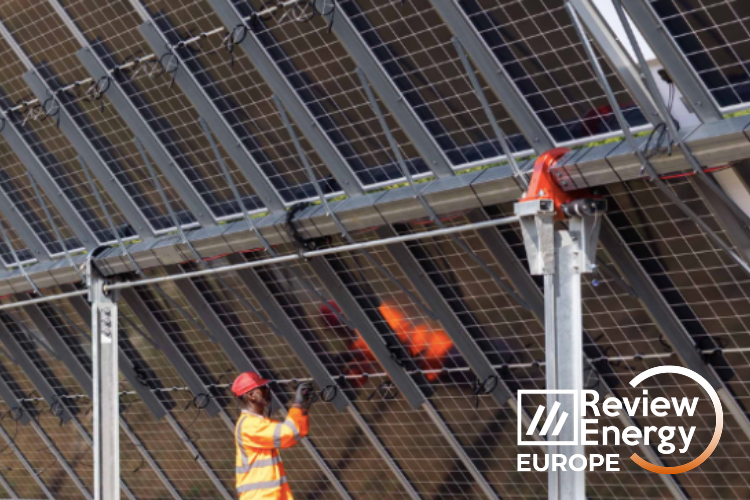


Solar and battery storage supported 982,000 jobs in the EU in 2025
Europe’s solar and battery storage sectors supported 982,000 jobs in 2025, according to SolarPower Europe’s EU Solar Jobs Report 2026, with solar accounting for 874,000 jobs and battery storage for a further 108,000.
Solar employment grew by 1% in 2025, twice as fast as overall EU employment, which increased by 0.5%. The sector also exceeded previous employment forecasts after solar installations in the EU reached 69 GW during the year.
The report, which assesses battery storage employment alongside solar for the first time, estimates that storage supported 108,000 jobs across manufacturing, deployment, operations and maintenance, and end-of-life activities. The EU’s battery storage fleet grew twelve-fold over the past four years to around 80 GWh.
Deployment remained the largest source of solar employment, accounting for around 85% of the sector’s jobs in 2025. At the same time, utility-scale solar employment marginally surpassed rooftop solar employment for the first time, representing 50.2% of total solar jobs.
Germany was the EU’s largest solar employer in 2025, with around 165,000 jobs, narrowly ahead of Spain, which supported a similar number. Italy ranked third, with approximately 85,000 jobs. Germany, Spain and Italy together accounted for almost half of Europe’s solar workforce, while France, Romania and Poland were also among the EU’s largest solar employment markets.
Despite continued growth in solar employment, SolarPower Europe warns that the pace is slowing. Under the current market trajectory, the report projects that solar employment could decline by 2030 as deployment growth stalls, productivity gains reduce labour demand and challenging investment conditions weigh on new projects.
The report identifies rising curtailment, increasing negative electricity prices and insufficient deployment of flexibility solutions as growing challenges for solar deployment and employment. SolarPower Europe is calling for solar skills to be placed at the centre of Europe’s competitiveness and industrial agenda, alongside faster electrification and flexibility deployment and greater investment in training, apprenticeships and reskilling.

Comentarios
Sé el primero en comentar...