
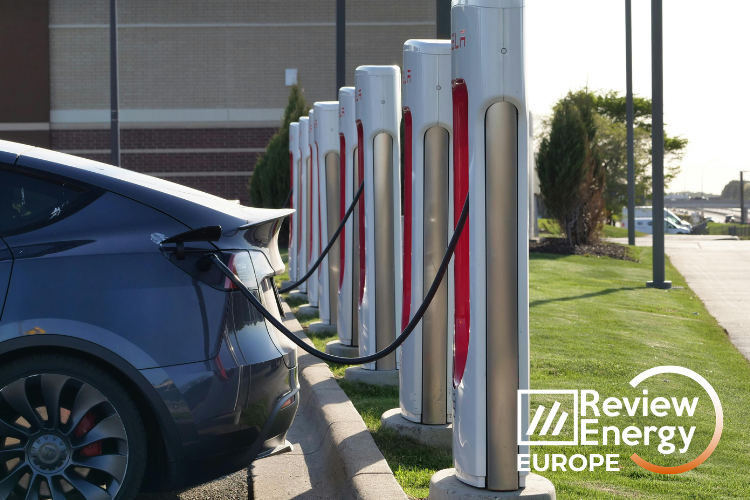


Electric cars gain a 33% cost advantage over gasoline cars in Europe
Battery electric vehicles (BEVs) are strengthening their economic advantage over conventional vehicles in Europe as battery costs continue to fall and fuel prices remain high, according to the International Council on Clean Transportation (ICCT).
The organisation’s EV Transition Check 2026 finds that BEVs were on average 33% cheaper to drive than gasoline-powered cars in the European Union in 2025. The gap widened further in early 2026, when the oil crisis pushed the energy costs of combustion-engine cars up by between 12% and 36%, while the energy costs of battery electric cars remained largely unchanged.
The report assesses the progress of Europe’s road transport transition towards zero emissions, covering passenger cars as well as trucks and buses. It examines vehicle affordability, running costs, charging infrastructure, emissions, manufacturing and the wider competitiveness of the European automotive sector.
BEVs gain ground on both upfront and running costs
The economic advantage of electric cars is no longer limited to their lower running costs. According to the ICCT, BEVs had already reached upfront price parity with comparable internal combustion engine vehicles in Germany in the three largest car segments in 2025.
The analysis is based on price data covering around 100,000 vehicles in Germany, Europe’s largest automotive market. The number of BEV models available in the country also quadrupled between 2020 and 2025, reaching around 160 models.
Battery costs are a major factor behind the change. Global battery costs fell by 35% between 2020 and 2025. Over the same period, inflation-adjusted BEV prices in Germany, accounting for vehicle characteristics such as range, declined by 18%, while prices for internal combustion engine cars increased by 2%.
The ICCT says the difference between the decline in battery costs and the evolution of vehicle prices indicates that there could still be room for further reductions in BEV prices.
“We’ve observed that car prices haven’t fallen as quickly as battery costs have,” said Peter Mock, Europe Director at the ICCT. He argued that this leaves room for electric cars to become cheaper and increases the competitive pressure on automakers to maintain and deepen investment in electrification.
Electric trucks move closer to diesel cost parity
The shift is also becoming more relevant for commercial vehicles. The ICCT finds that battery electric and diesel trucks could reach total cost of ownership parity in the long-haul segment as early as 2030.
Germany has already reached that point in both regional and long-haul trucking, according to the report. Road toll exemptions for zero-emission vehicles have contributed to the economics of electric trucks in the country.
The ICCT gives the example of a long-haul electric truck that already costs 11% less to own and operate than its diesel equivalent in Germany.
However, the report stresses that policy support will remain important during the early stages of the transition. According to Mock, fleet operators are particularly sensitive to total cost of ownership and are more likely to shift to electric models once the economics clearly favour electrification.
EV uptake accelerates across Europe
The improving economics are coinciding with faster BEV adoption. Fully electric cars accounted for 22% of new passenger car registrations in the EU during the first half of 2026, according to the ICCT. Electric truck sales also increased, with battery electric medium trucks reaching a 21% share of sales and heavy-duty trucks reaching 2.3%.
The report also highlights significant differences between European markets. In the first half of 2026, BEVs accounted for 80% of new passenger car registrations in Denmark, 36% in Belgium, 28% in France and 26% in Germany. Italy reached an 8% share, while Spain stood at 10%.
Across the EU, battery electric vehicles on the road are already estimated to save around €4.5 billion a year in fossil fuel imports, according to the ICCT.
The transition is also changing the composition of European vehicle production. Internal combustion engine vehicles accounted for 72% of EU car production in 2025, down from 91% in 2020, while BEVs represented 19% of total output.
Charging infrastructure expands, but costs remain uneven
The expansion of the electric vehicle market is taking place alongside a rapid increase in public charging infrastructure. The ICCT estimates that the number of public chargers in the EU reached 1.16 million by June 2026, almost eight times the level recorded in 2020.
The organisation says the current number of public chargers is sufficient for the EU’s existing vehicle fleet, although their distribution remains uneven. The Netherlands, Germany and France account for 55% of public chargers.
Charging costs, however, vary significantly depending on where vehicles are charged. In June 2026, average ad hoc prices across the EU stood at €0.50 per kWh for AC charging and €0.62 per kWh for DC charging, including VAT. Public charging rates were around twice as high as private charging rates.
The ICCT says smart charging and vehicle-to-grid technologies could provide additional savings as their deployment expands. It estimates that smart charging could reduce European peak power output by 6% in 2035.
Electrification and Europe’s energy security
The report also links the economic case for electrification to Europe’s dependence on imported fossil fuels. The EU imported €336.7 billion worth of petroleum oils and natural gas in 2025, according to Eurostat data cited by the ICCT.
At the same time, the growth of BEVs is increasing the share of electric vehicles in both European sales and production. The ICCT notes that BEVs accounted for 19% of EU passenger car production in 2025 and that manufacturers are largely on track to meet the EU’s CO? standards for new vehicles, provided investment in the transition continues.
The report also points to the global nature of the shift. In the first half of 2026, BEVs represented 47% of new passenger car sales in Vietnam, 36% in Thailand and 35% in China, according to ICCT data cited in the study.
For Europe, the ICCT concludes that the transition is increasingly being driven not only by climate policy but also by the economics of vehicle ownership, energy security and the competitiveness of the automotive industry.





Comentarios
Sé el primero en comentar...