


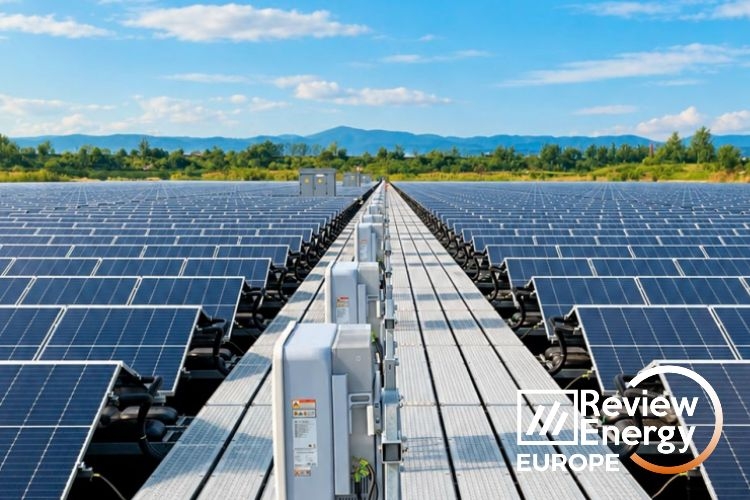


Solar BOS components account for 33% of EU utility-scale solar costs amid growing integration challenges
SolarPower Europe has called on the European Union to strengthen its solar Balance of System (BOS) industry through measures to support European inverter manufacturing, improve grid flexibility and cybersecurity, and harmonise technical standards. In its report, Solar Balance of System Explained: The hidden components enhancing solar generation, published on 27 October, the association also recommends recognising both fixed mounting structures and solar trackers under the EU’s Net-Zero Industry Act and introducing dedicated customs codes for these components to improve trade monitoring and supply chain resilience.
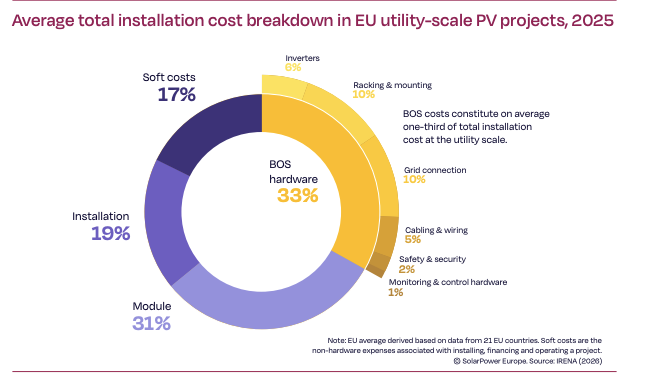
The report highlights the growing importance of components beyond solar modules as electricity systems integrate more renewable generation, storage and digital technologies. According to SolarPower Europe, BOS hardware accounted for 33% of the average total installation cost of utility-scale solar projects in the EU in 2025, compared with 31% for the modules themselves. The association expects these components to play an increasingly important role as the energy system requires greater flexibility and integration with storage.
Seven recommendations to support the European BOS industry
SolarPower Europe sets out seven policy recommendations covering inverters, mounting systems and the wider electrical and digital infrastructure needed to operate solar installations.
For inverters, the association proposes introducing a Union-origin requirement under Phase I of the Industrial Accelerator Act, potentially from 2028, to support European production. It also calls for full implementation of EU flexibility provisions, including recognising inverters for flexibility services and collective self-consumption, and promoting DC-coupled connections for high-power renewable energy systems.
The report further recommends developing a European roadmap for grid-forming services to address future electricity system stability needs, establishing harmonised EU-wide inverter standards covering grid connection, flexibility, cybersecurity, digital communication and safety, and strengthening the implementation of existing EU cybersecurity legislation.
For solar mounting systems, SolarPower Europe calls for an update to the Net-Zero Industry Act component list to recognise both fixed mounting structures and trackers for resilience purposes. It also recommends introducing dedicated Harmonised System (HS) or customs codes for mounting structures and trackers, which currently fall under broader product categories, to improve trade data and supply chain monitoring.
BOS technologies become increasingly important for grid integration
The report examines inverters, mounting structures, electrical infrastructure and digital solutions, including cabling, transformers, monitoring systems and control software. These components help convert, connect and manage solar electricity, while supporting installation performance, operational reliability and grid integration.
SolarPower Europe argues that their role is expanding as the sector faces grid constraints, curtailment and lower capture prices, alongside growing demand for electrification and battery storage. Although battery energy storage systems themselves are outside the report’s scope, the association highlights the importance of power conversion, control and coordination technologies in integrating storage into the electricity system.
The report also points to Europe’s existing manufacturing capabilities across several BOS segments, including inverters, transformers, switchgear, specialist cabling and mounting systems. According to the association, targeted and proportionate policy measures could help strengthen this industrial base while maintaining affordable solar electricity.


Comentarios
Sé el primero en comentar...